
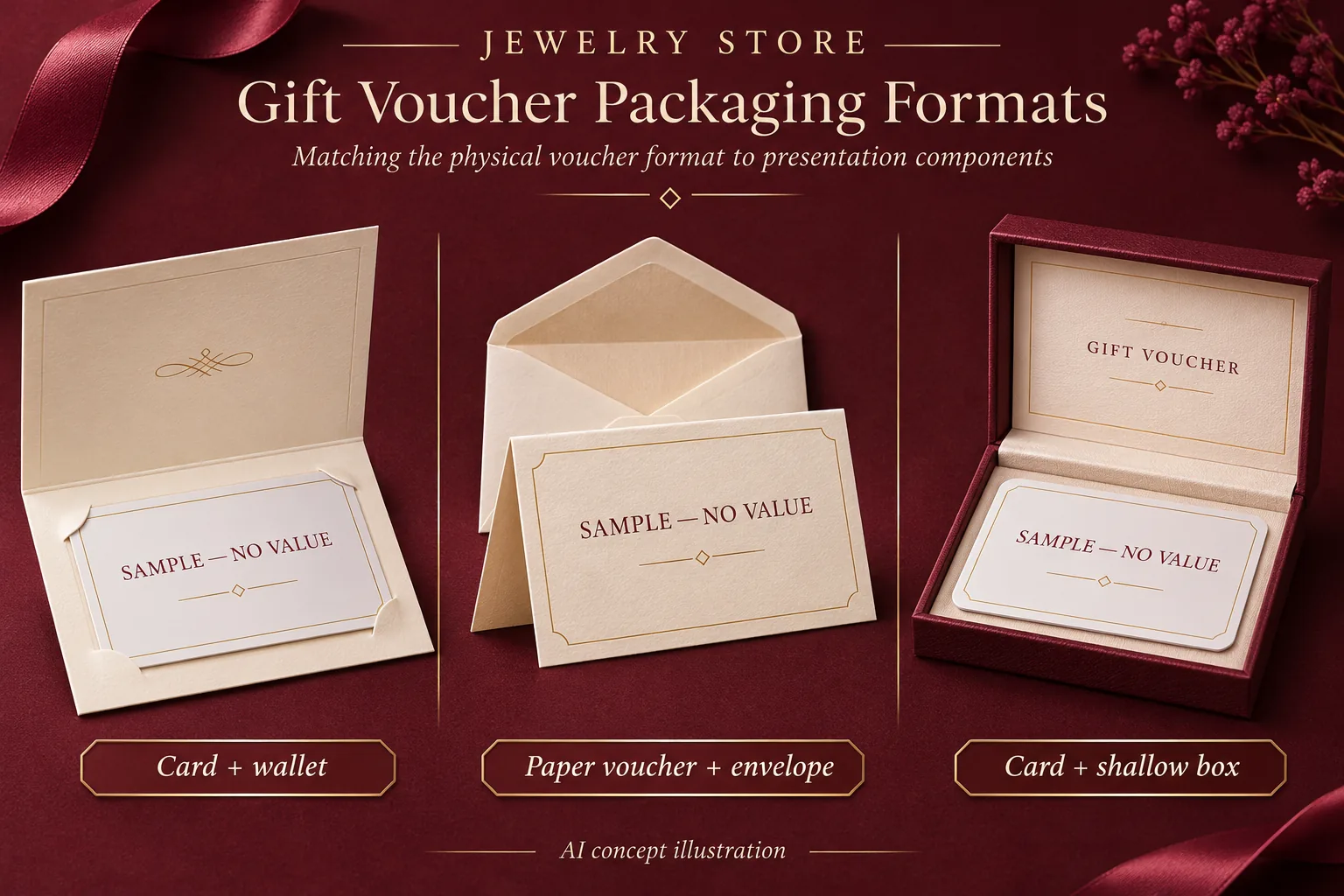
Choose jewelry gift card packaging around the physical voucher the recipient will receive. A rigid card may suit a wallet or a shallow presentation box with a holder. A larger paper certificate may need a folder or envelope. Decide the voucher format and how it is removed before ordering branded packaging.
AI concept comparing jewelry gift-card wallets, paper-voucher envelopes and shallow boxes.
This purchase serves a jewelry gift without containing the chosen jewelry yet. The recipient receives the opportunity to select a piece later, so the card or certificate is the main item in the presentation. A greeting card tucked beside a necklace solves a different task.
Define the physical gift before choosing its holder
Identify whether the customer receives a rigid gift card, a paper voucher or a printed version of a digital gift. Those formats need different retention and reading arrangements.
A jeweler selling both physical and electronic gifts should separate their packaging demand. An emailed code has no holder to purchase unless the business also offers a deliberate printed handover option. A decorative card that tells a recipient to check their email is different from a redeemable physical card, even when both carry the same brand.
Tiffany’s US gift card page describes a physical card presented in its branded box. It is a useful example of a jewelry retailer treating the voucher itself as a gift. Its presentation does not establish the right holder, dimensions or service model for another jewelry business.
For your own brief, use an inactive sample showing the real size, thickness, orientation and required readable areas. Mark any sample identifier as invalid. The packaging supplier needs to understand the physical object; an active balance or usable redemption code adds no value to a fit review.
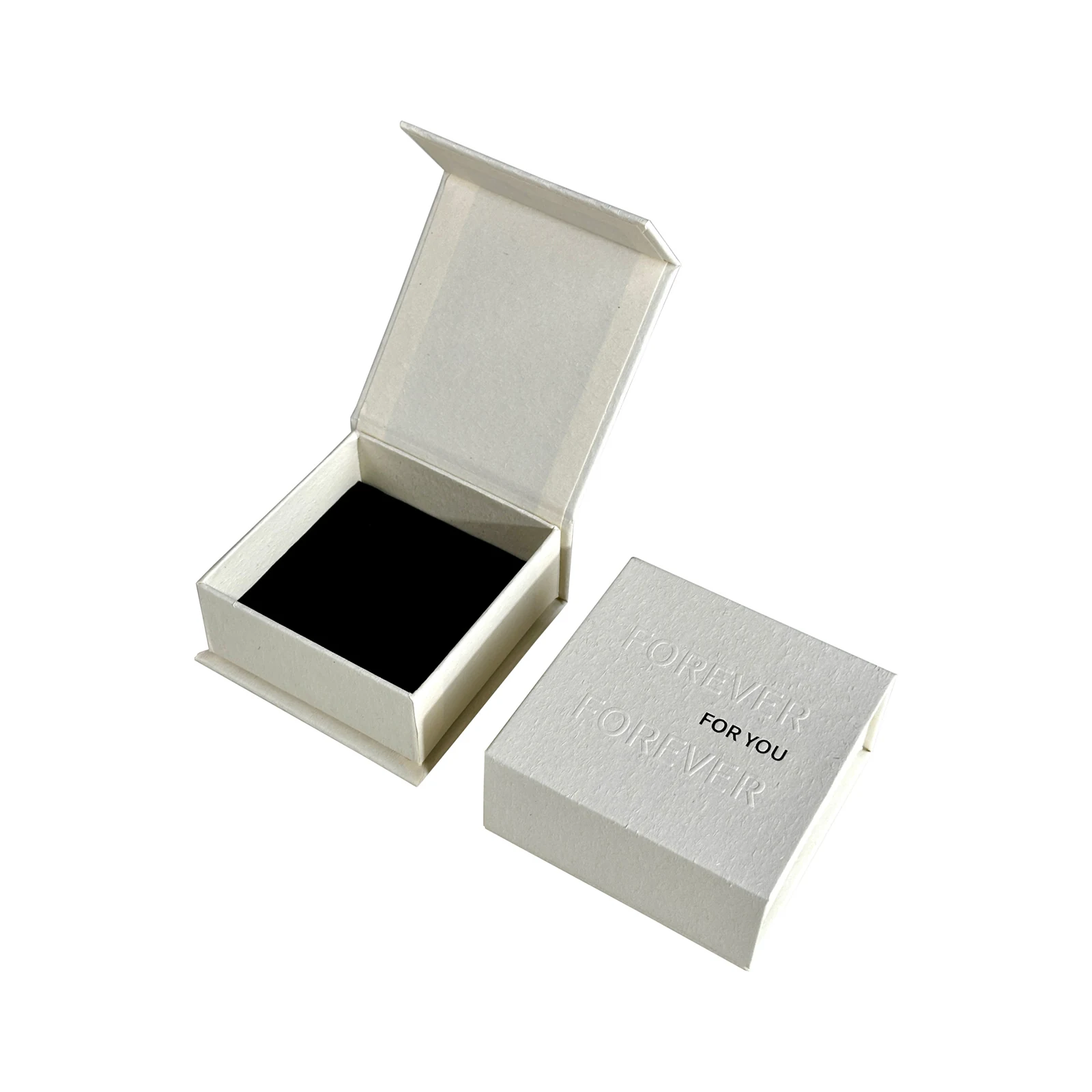
Supplier reference photograph, used with owner-confirmed permission; resized and re-encoded for web. The pictured enclosure is not a tested voucher holder. Full original reference photograph.
Compare a wallet, envelope and shallow box by their jobs
Choose a wallet when a compact opening and retained card suit the handover. Choose an envelope or folder around a paper certificate. Consider a shallow box when the jewelry brand deliberately wants a boxed presentation for the voucher.
Suppliers such as AP&D publish separate card-holder, rigid-holder and voucher-envelope formats. The distinction is useful because the packaging should follow the actual card or paper, rather than requiring the document to be folded or forced into an attractive stock box.
A wallet can present the card immediately when opened and reserve another area for the giver’s message. Its retaining feature might be a pocket, a sleeve or a cut arrangement. Specify which component is included. A printed flat cover is not a complete holder if the proposed card-retaining piece is omitted from the purchase.
A paper certificate needs enough room for its agreed folded or unfolded state. If staff write a recipient’s name or add an authorized stamp, show where that happens before the certificate is enclosed. Keep required redemption information readable in the final presentation, and decide whether the recipient must remove the paper to read it.
A box introduces a separate decision about the internal holder. An ordinary jewelry insert may have ring slots or a necklace mount that does not serve a voucher. Ask for a proposed holder around the card itself. The outer box, holder and any message component should appear as separate items in the specification.
| Actual voucher | Format to explore | Buying question |
|---|---|---|
| Rigid physical card | Wallet with pocket or retaining feature | Can the customer remove it without bending it? |
| Paper certificate | Folder or envelope | Is the agreed paper state retained and readable? |
| Rigid card offered as a boxed gift | Shallow box with a separate card holder | Are both the box and holder included? |
| Electronic voucher only | No physical holder unless a print option is offered | What physical item is the packaging actually intended to carry? |
Keep the redemption areas accessible
Place retaining features around the card’s required reading and handling areas. Show the supplier which faces must remain accessible without sharing active customer credentials.
A barcode, magnetic stripe, printed identifier or covered code may appear in different locations on different cards. The jewelry business or its gift-card provider should identify the areas that must remain clear. Do not move, cover or recreate those elements as part of a packaging design change without their approval.
Check how staff activate or record the card under the business’s actual process. If they need to remove it from the holder, the packing trial should include that step. A holder that photographs neatly can still create unnecessary repacking if the card must be taken out immediately before every sale.
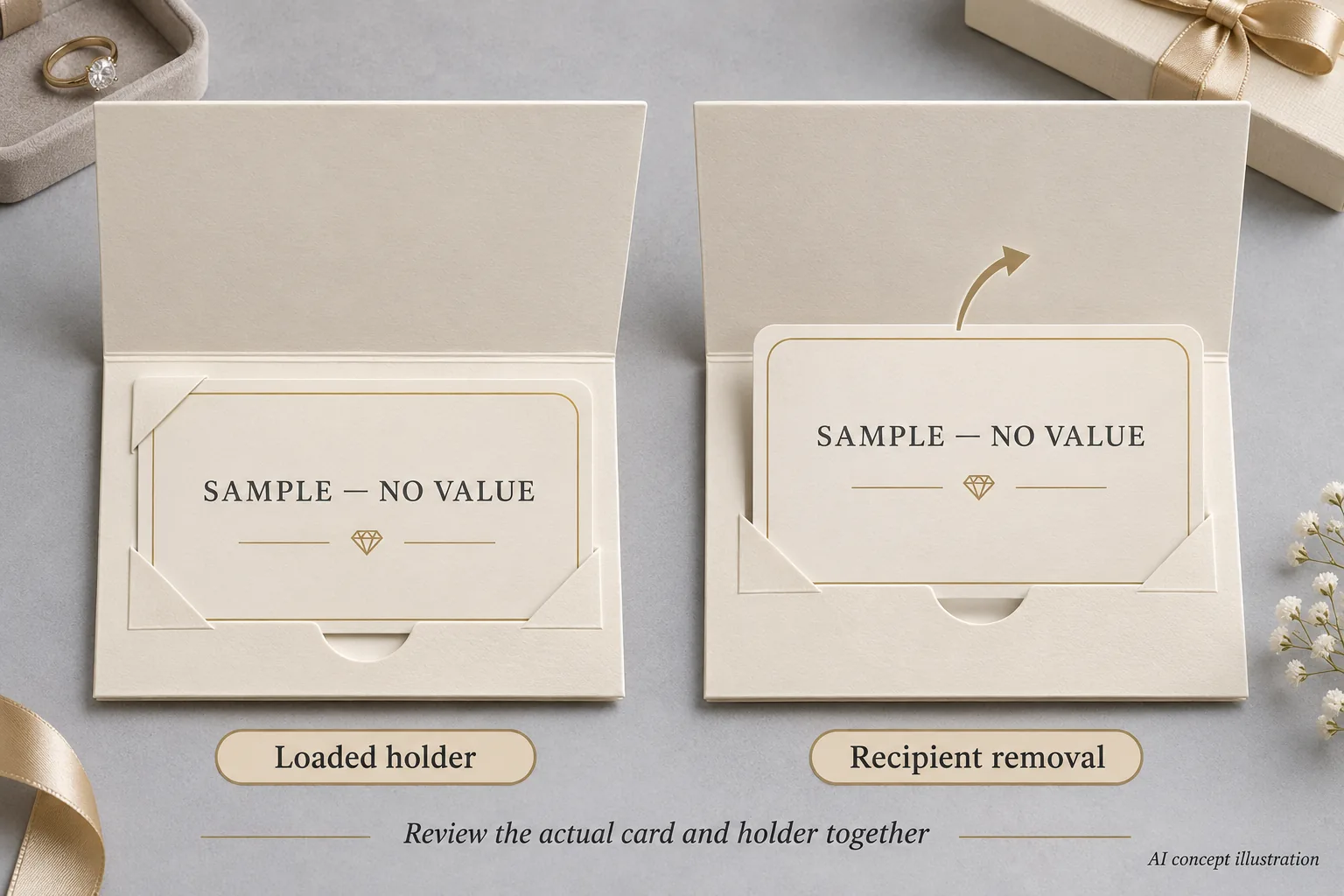
Trial the recipient’s removal using the inactive sample. A finger opening, an exposed card edge or an opening sleeve can provide access, depending on the construction. The useful observation is whether the intended user can remove the card as planned and return it if desired. Do not prescribe a universal slot size from a screen illustration.
Separate physical concealment from fraud prevention. Closing a wallet hides part of the card from casual view, but that alone establishes no security performance. Keep payment processing and the gift-card system outside the packaging supplier’s brief unless a separate authorized scope exists.
Separate the personal message from the voucher details
Give the giver’s message its own clear place when it is offered, while leaving the voucher’s identity and redemption information intact. Printed packaging should not imply that a blank or inactive sample has monetary value.
A fixed brand message can be printed on the wallet or box. A personal note can use a blank panel or separate card. Decide whether staff write it before inserting the voucher, and whether it remains visible at the first opening. The existing personalized gift packaging guide addresses names and changing messages; here the principal purchase is the voucher holder.
If several voucher values share one holder, avoid printing an amount on a permanent packaging component unless the business deliberately wants separate versions. Staff should follow the approved gift-card system for value and activation. Packaging copy cannot substitute for that process.
A fictional independent jeweler might use one branded wallet for its physical cards and a different envelope for paper certificates. The wallet includes a writing panel but no printed amount. The certificate envelope is sized around the existing folded document. This is an illustrative purchasing plan, not a Packrivo client case or evidence of cost savings.
Request a complete holder sample and purchase scope
Ask for a sample that includes the real retaining construction, not only a printed front proof. Review it with an inactive card or certificate in the same state the customer will receive.
Include the holder, any outer box, message card, envelope and supplied assembly in the inquiry. State whether the pack is handed over at a jewelry counter or placed inside a separate parcel. The customer-facing holder is not automatically a shipping pack, and an envelope format does not establish postal eligibility.
Use the jewelry box collection for general presentation directions if a box is being considered. Confirm the card holder separately rather than assuming that a standard jewelry interior will carry the voucher appropriately.
Before ordering, keep the approved document format, holder drawing, copy and sample observations together. Ask Packrivo about a holder for your jewelry brand’s physical gift cards or vouchers with the format, inactive sample and intended handover identified. The proposed structure and actual sourcing availability need confirmation for that scope.