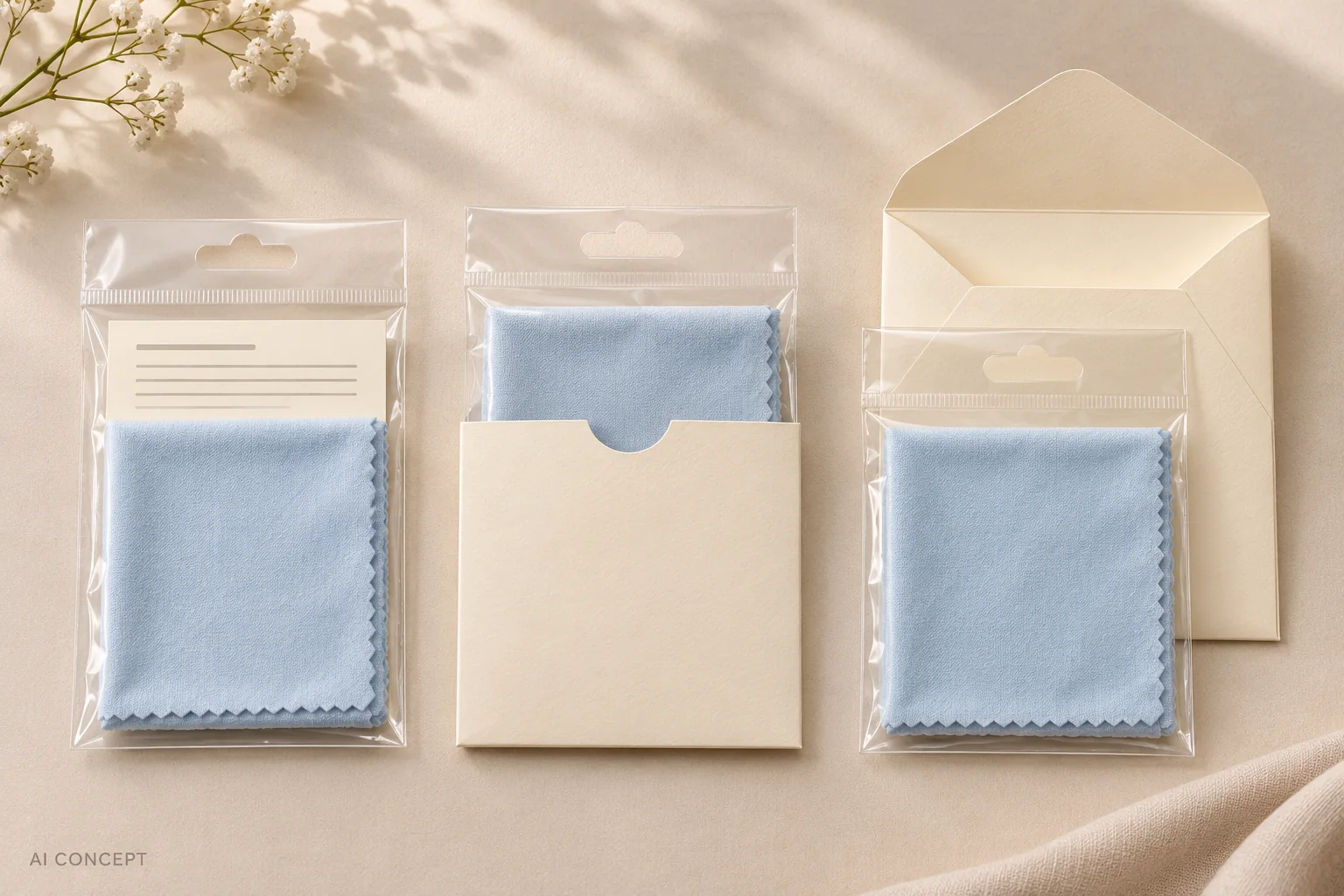
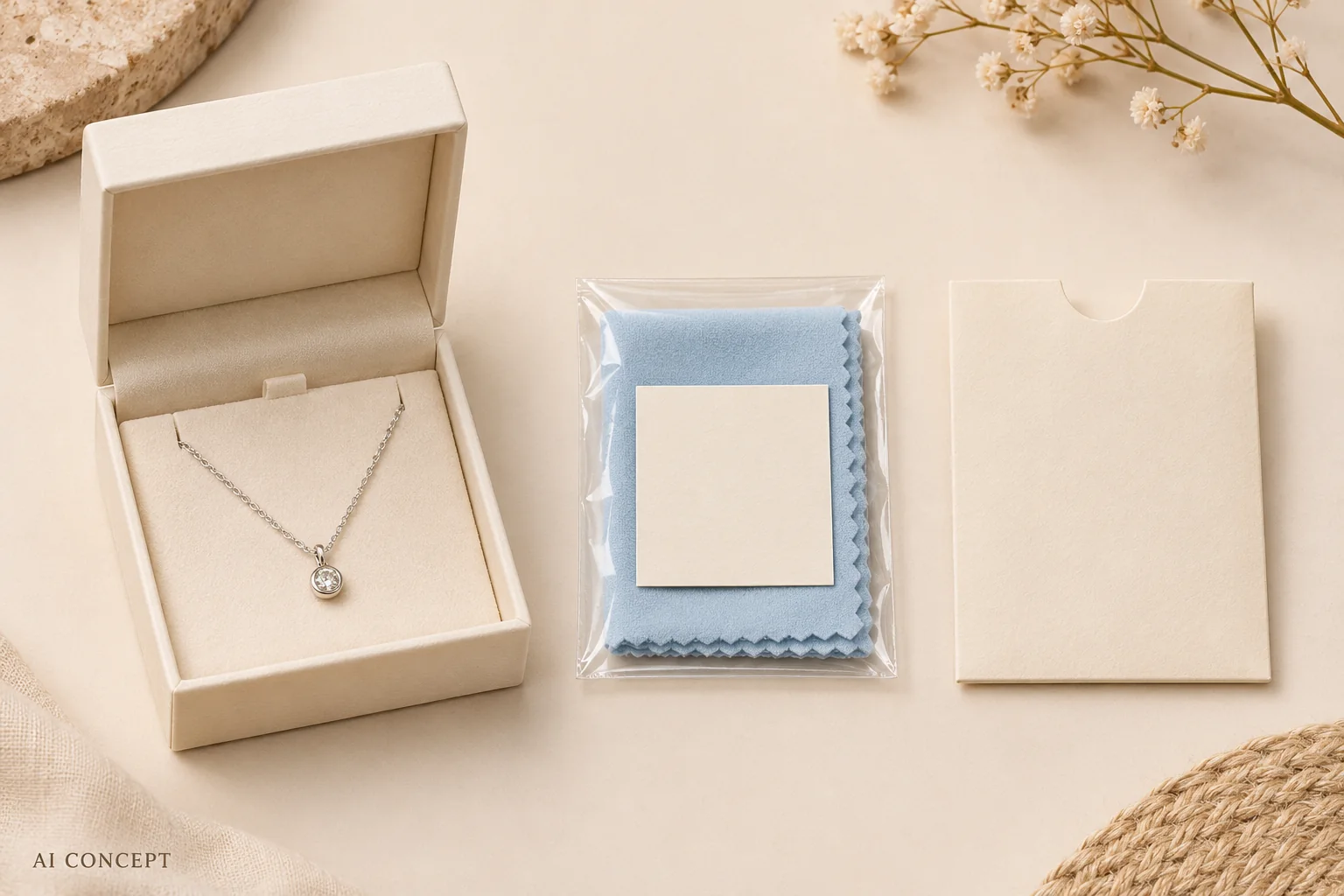
AI concept comparing a supplied cloth packet, paper sleeve and closing envelope.
For a jewelry brand, this is an accessory-packaging decision. A cloth offered separately at the counter needs a clear identity; one included with a necklace needs a place that the customer can find. Attractive paper alone cannot establish what the cloth is intended to clean or how it should be used.
Identify the cloth before choosing its wrapper
Keep the cloth supplier’s product identity, treatment and approved instructions together before changing its packaging. A plain textile accessory and a treated polishing product can look similar while requiring different customer information.
Stuller’s custom-branding information lists treated and untreated polishing cloths, including individually wrapped and bulk configurations. Those are examples of distinct supply states, rather than a specification for every cloth. Ask which exact state the proposed quotation covers.
Record whether the cloth arrives folded, sealed, printed or packed with its own instruction card. If the manufacturer already supplies a complete retail packet, first consider whether a branded outer sleeve is enough. Repacking should not casually discard the original identification or substitute general jewelry-care wording.
The packaging brief should name who approves the customer instructions. A packaging supplier can quote a paper envelope without being qualified to approve cleaning advice for a plated pendant, gemstone setting or other finished piece. Keep that decision with the cloth and jewelry product owners.
Choose the format around the customer’s first action
A sleeve suits a cloth packet that should slide out; an envelope adds an opening step; a small carton provides a different presentation for a larger folded bundle. Choose the action deliberately, then check that the actual cloth can be loaded and removed in that format.
The Kingswood Company’s polishing-cloth range gives a concrete manufacturer example: its smaller cloth is supplied in a clear envelope and its larger cloth in an acrylic box. This illustrates how a cloth range can use different packs. It does not establish a size threshold at which other brands must move from paper to a rigid box style.
For a separate counter accessory, consider which face carries the product identity when stacked or handed over. A narrow sleeve can leave a manufacturer’s packet partly visible. A fully covering envelope needs enough approved information on its own surface or an accessible accompanying card.
For a cloth included with a ring or necklace, begin with the handover sequence. Decide whether the customer should see the jewelry first and discover the cloth underneath, or remove the cloth packet before lifting the jewelry. This choice affects placement and copy, rather than requiring the whole jewelry box options to be redesigned automatically.
Measure the folded bundle and its loading route
Use the cloth’s supplied folded dimensions and thickness, including any existing wrapper and card, to discuss the new pack. The unfolded cloth size identifies the accessory but does not describe the bundle that enters an envelope.
Ask the cloth supplier for a representative physical unit in the intended supply state. Record its fold direction, edges, seams and attached label. Avoid assuming that folding it again will be acceptable: another fold can hide instructions or change how a layered cloth is opened.
Then identify the entry route. A bundle that rests inside an envelope may still drag at the mouth or catch below a flap during loading. Check how a packer holds the packet, whether the printed face stays correctly oriented and whether closing requires compressing the cloth.
Where the accessory joins a jewelry box, add it to the identified complete arrangement rather than checking an empty cavity. The jewelry insert measurement guide helps describe the product arrangement. The cloth packet is an additional component with its own entry, resting and removal questions.
Keep the care information available after opening
Place approved instructions where the customer can keep or find them after removing the wrapper. If opening destroys the only instruction panel, provide an agreed retained information component instead of assuming the customer will remember it.
The Kingswood product page includes instructions specific to its treated, layered cloth, including a direction not to wash it. That instruction belongs to that product; it cannot be transferred automatically to a different cloth. Retain the actual manufacturer’s instructions and review any shortened version with the responsible product owner.
Keep the cloth’s identity distinct from the jewelry’s care card. A jewelry brand may use one care-card layout across a collection, while only some orders include this particular accessory. The customer should be able to tell which information applies to the supplied cloth and which applies to the finished jewelry.
The care-card placement guide addresses the added paper component’s space and retrieval. Cloth packaging adds a separate task: retaining the correct accessory identity and instructions when the packet is opened or removed.
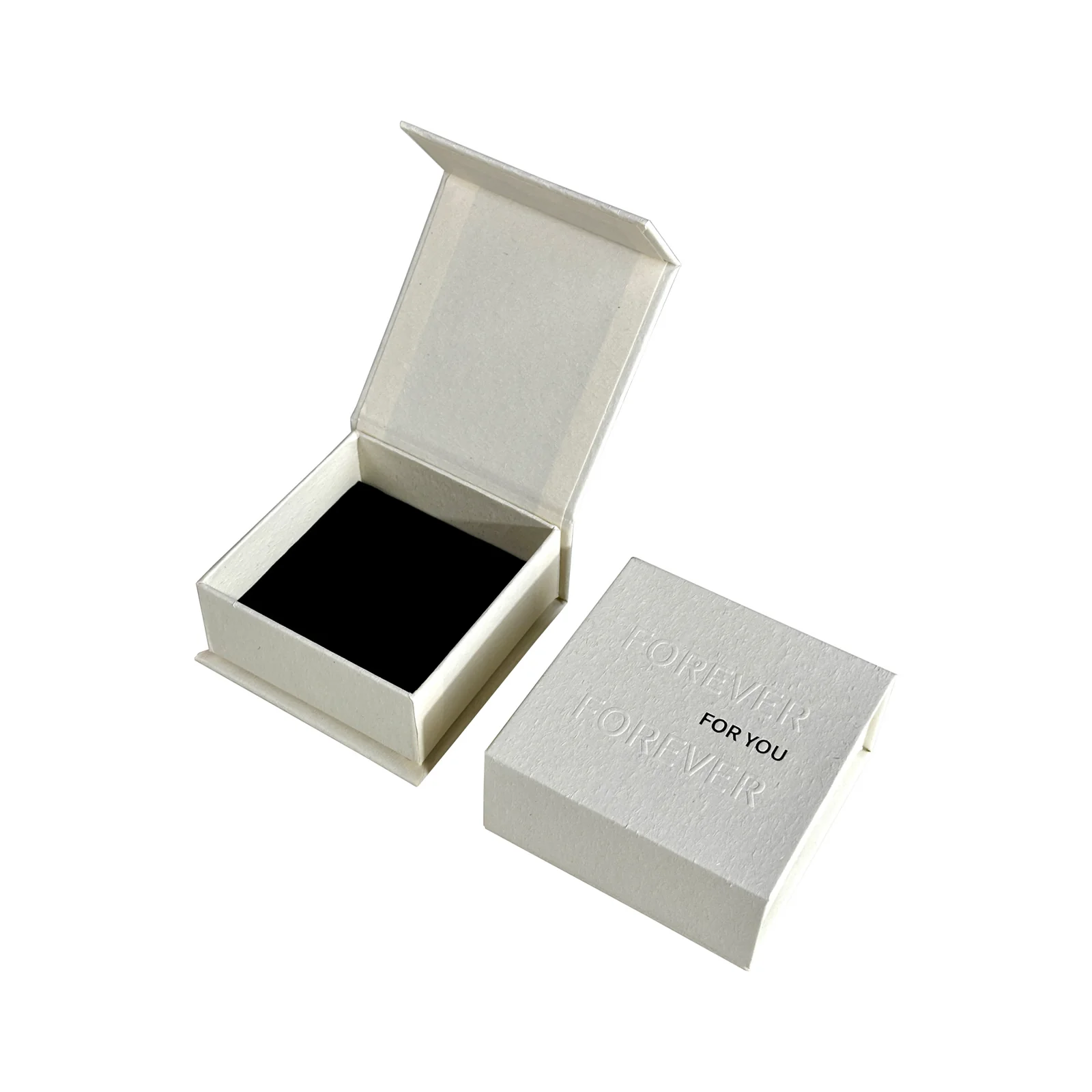
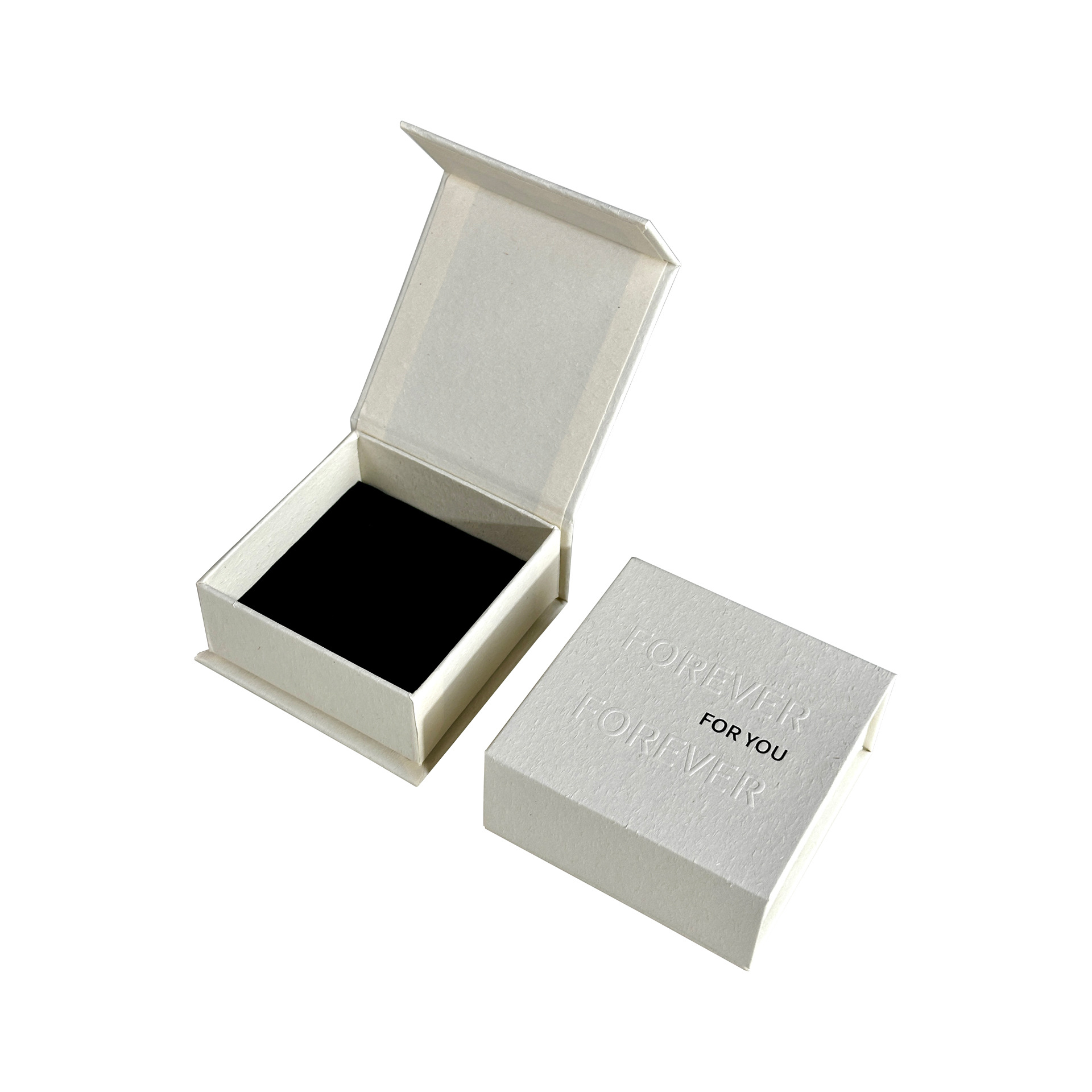
Source: owner-authorized supplier photograph, 智百川, 1688 item 1073881998300. View original reference photograph.
The pictured box illustrates an enclosure format only; it contains no cloth and establishes no accessory fit.
Compare complete offers with one filled decision record
Compare offers that name the cloth supply state, wrapper construction and packing responsibility together. A quotation for empty envelopes differs from a quotation that includes receiving, folding and inserting the cloth.
Consider this invented planning example for a jewelry brand’s necklace gift. The brand already has an individually wrapped cloth with an approved instruction card. It wants a coordinated paper presentation without changing the cloth or the necklace insert. No physical sample has been tested in this example.
Scroll horizontally if columns extend beyond the view.
| Candidate | What remains intact | Question for the sample | Decision direction |
|---|---|---|---|
| Printed sleeve over existing packet | Manufacturer’s wrap and card | Does the packet slide out without hiding its identity? | Compare first when keeping the supplied packet is the priority |
| Printed closing envelope | Same existing packet and card | Can the flap close and can the customer retrieve the packet? | Compare when a closed paper presentation is required |
| Loose cloth below jewelry insert | Original packet removed | Who approves repacking, information and contact? | Hold pending a separate accessory decision |
The first two candidates preserve the same supplied accessory. The third changes the product’s delivery state and introduces questions beyond paper appearance. This distinction helps a buyer avoid treating three different offers as equivalent merely because they contain a cloth.
Send the selected candidate with a photograph of the intended position, a representative supplied cloth packet, approved information and the quantity needed. Specify whether the quotation covers empty packaging or an agreed packing operation. Keep price, production timing and material suitability open until the actual offer and sample are reviewed.
Bring that cloth-packaging brief to Packrivo’s packaging inquiry. State whether the accessory is handed over separately or included with a named jewelry pack, so the discussion starts with the correct packaging task.