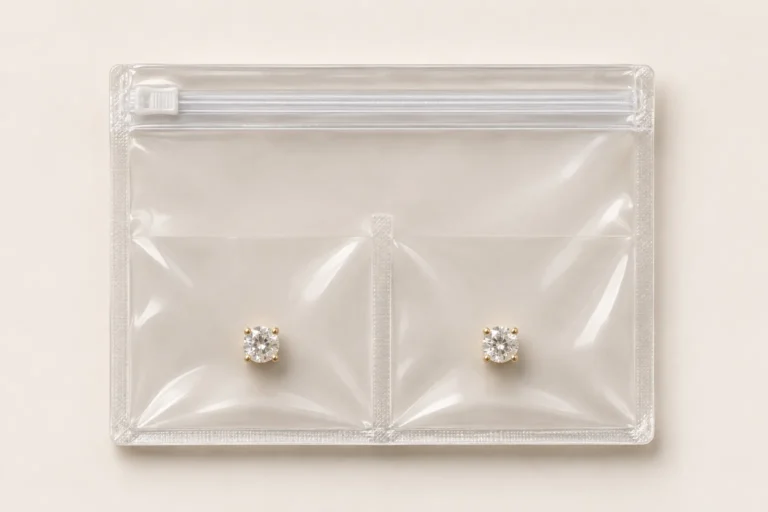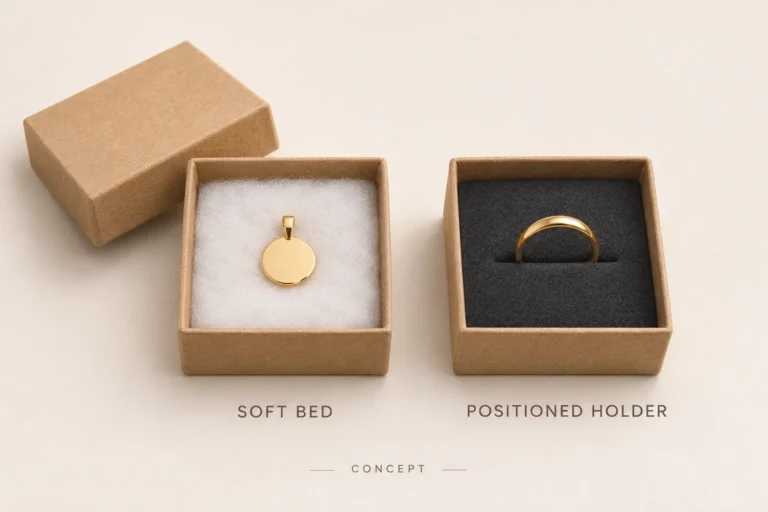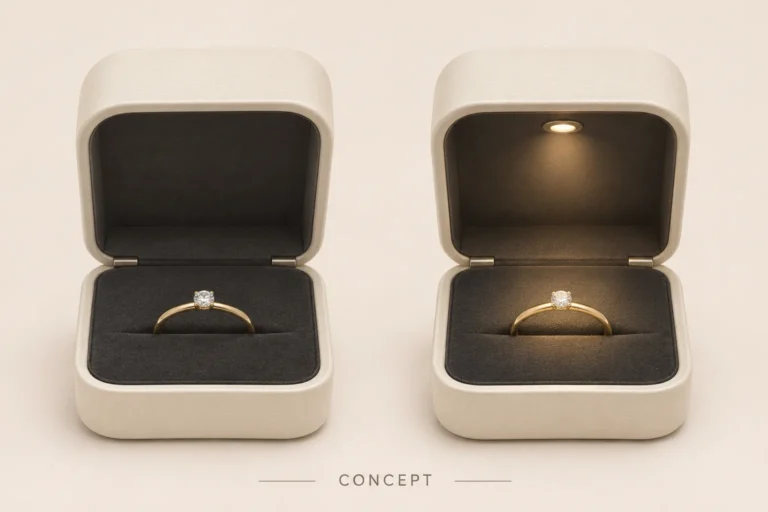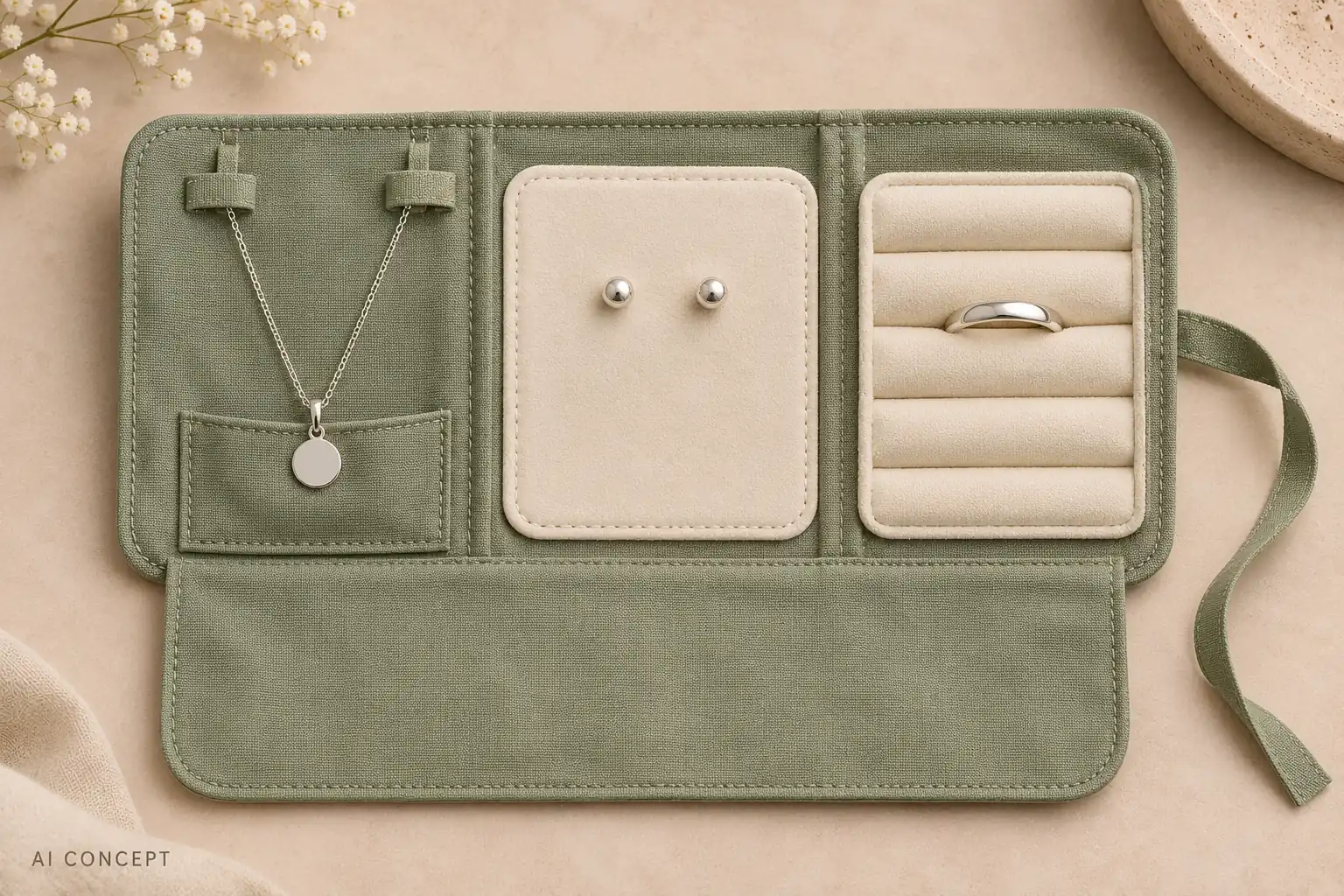
AI concept allocating a necklace, stud earrings and ring to separate areas.
A roll can be a compact accessory pack, a gift presentation or an additional branded product. Those uses need a clear brief. A neatly photographed empty organizer does not show whether your necklace, earrings and ring can occupy it together or remain separate through the actual closing sequence.
Define the brand’s handover configuration
Specify whether the customer receives the roll empty, preloaded with jewelry or beside separately boxed pieces. Each configuration changes the contents, assembly work and information that a packaging supplier needs to quote.
An empty roll sold as an accessory can be reviewed with representative contents, with its stated capacity kept within the evidence. A preloaded gift needs the actual saleable jewelry arrangement. A roll included alongside a necklace box also needs a decision about the outer gift presentation and which component the customer opens first.
Keep that role separate from general travel advice. The buyer’s task here is selecting a supplied packaging format for a jewelry brand. The roll does not become an established shipping container because it closes around the contents; distribution packaging requires its own scope and evidence.
For a single piece handed over in a simple bag, the jewelry pouch specification guide may be the more direct starting point. A multi-compartment roll becomes relevant when the buyer needs to allocate several distinct pieces or functions within one folding format.
Match features to the pieces that actually use them
Choose ring bars, earring panels, chain retainers and closing pockets according to the intended contents. Counting compartments alone cannot establish how many of your pieces a particular roll can accept.
Nautica’s jewelry travel case lists snap rolls for rings or earrings, zip pockets and elastic loops. These are manufacturer-listed features of that product, rather than a universal configuration that every roll should copy.
For a ring, identify the complete setting and the action needed to open or release its holder. For earrings, include the backs as part of the packed item. An earring panel needs a proposal for both the front presentation and the rear space occupied by posts and backs.
For a necklace, map where the clasp, pendant and remaining chain go. A short chain loop and a long pendant necklace may need different allocations. The necklace chain-route guide describes that local layout task; a roll adds the relationship between that route and neighboring compartments during folding.
Review separation in the closed roll
Check which surfaces and contents meet when the loaded roll folds, because separated pieces on an open layout can overlap after closing. Include raised settings, pocket contents, closure hardware and the thickness of the loaded sections in that review.
Ask for clear views of both sides of each fold or flap. Identify what a fabric separator actually covers and where its edges end. A feature called a divider may leave the end of a chain or the back of an earring outside its coverage.
NoblePack’s multi-purpose travel pouch is a useful contrasting product example with a leather-like outer surface, velour interior and zippered compartments. Its construction illustrates another arrangement to compare; its product description does not prove suitability for a different brand’s loaded jewelry set.
Observe the closure without forcing an overfilled sample into shape. Note whether a fastener sits over a raised piece, whether a flap lies where intended and whether the roll closes consistently with the identified contents. Keep these observations separate from claims about impact protection, security or resistance to tangling.
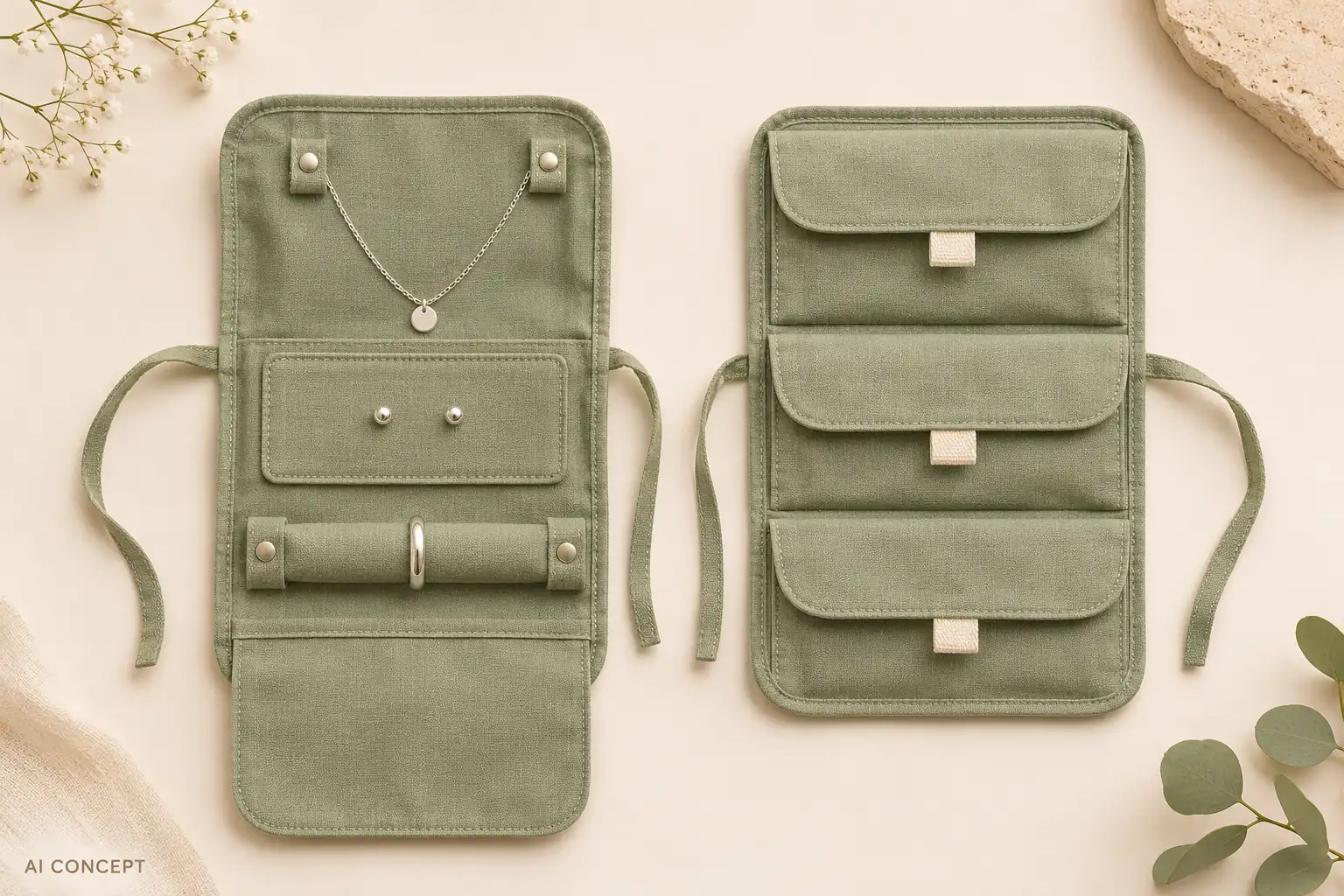
Use one complete set to compare competing layouts
Compare candidate rolls with the same identified jewelry set before changing compartment count or overall size. This keeps the purchasing decision tied to how the offered construction handles the contents, rather than to an empty organizer’s appearance.
For an invented brand handover, consider one pendant necklace, a pair of stud earrings with backs and one ring. The brand is comparing a roll with a chain section, earring panel and ring bar against a roll with separate closing pockets. No size, fit or successful handling result is assumed.
Scroll horizontally if columns extend beyond the view.
| Item | Feature-led candidate | Pocket-led candidate | Observation needed |
|---|---|---|---|
| Pendant necklace | Named chain retainers plus pendant position | One closing pocket for the complete necklace | Where do the pendant and loose chain rest after folding? |
| Stud pair with backs | Earring panel with rear clearance | Separate closing pocket | Can the pair be retrieved without losing the backs? |
| Ring | Opening ring bar | Separate closing pocket | Does the setting meet another loaded section? |
| Complete set | All three features used together | All allocated pockets loaded together | Can the roll close and reopen with the intended separation? |
A feature-led layout may make the pieces easy to identify on opening, while a pocket-led layout changes how the customer finds and removes them. Neither direction wins without the actual set and the required presentation. Record a preference only after the relevant observations exist.
Keep each open question attached to its component. If the ring setting meets a flap, ask for a response to that contact rather than simply requesting a larger roll. A size change may add bulk without changing the position of the flap or fastener.
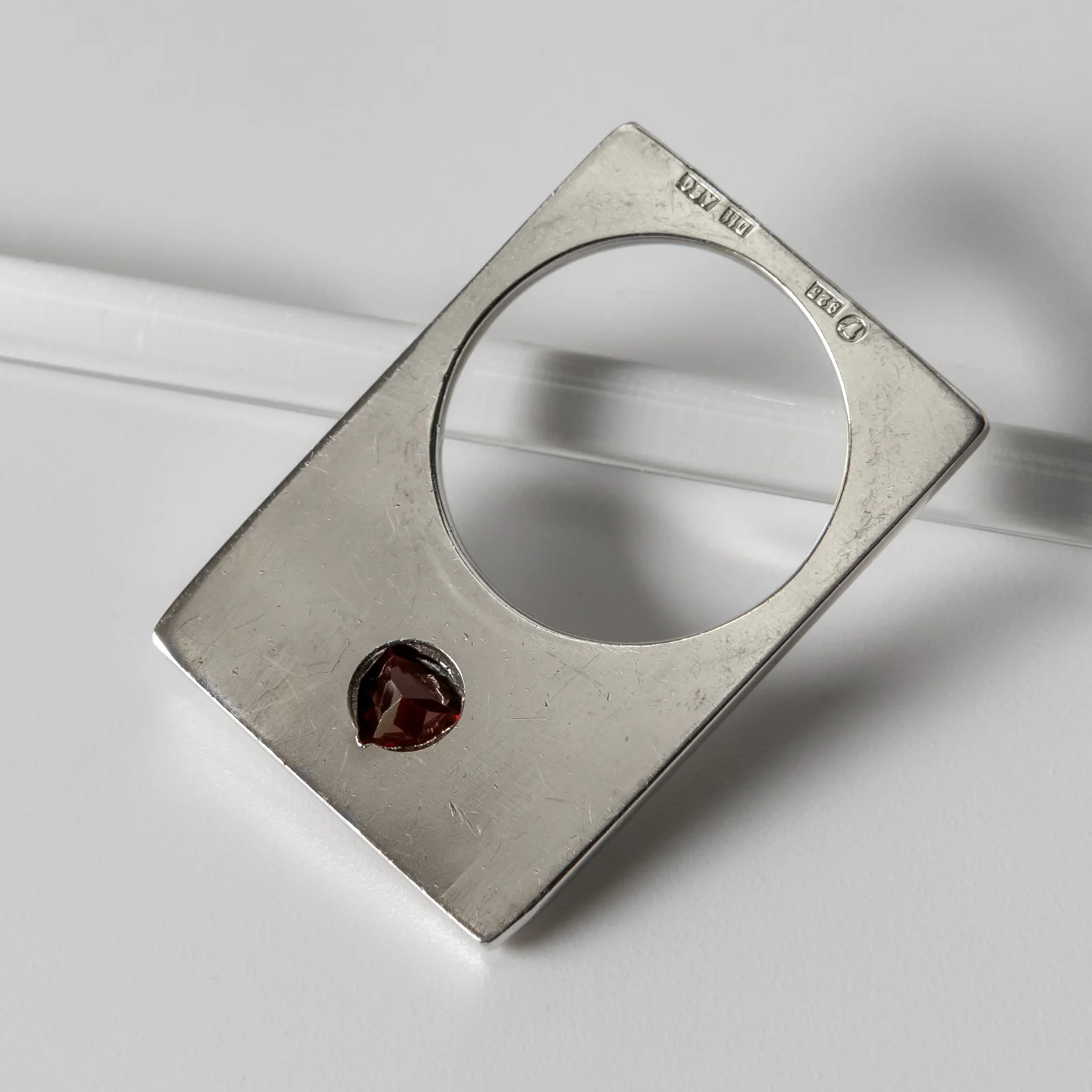
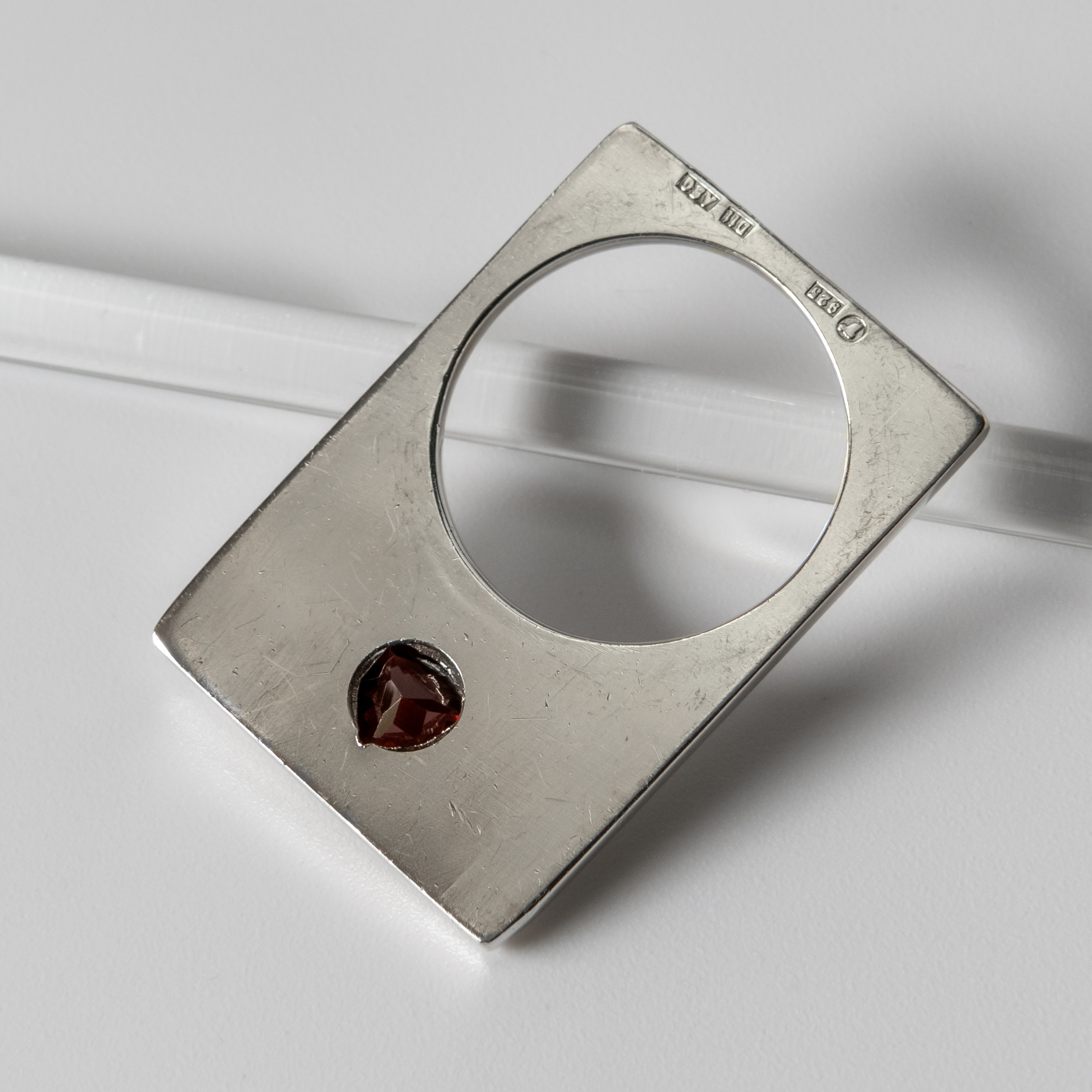
Photo and jewelry design: Ann-Sophie Qvarnström / W.carter, Wikimedia Commons, CC BY 4.0. Resized and encoded as WebP; derivative also available under CC BY-SA 4.0. View original photograph.
The photographed ring is a shape reference; no roll fit has been demonstrated for this piece.
Specify the offered materials and supplied state
Name the actual outer, lining, separator and fastening materials in the request, along with whether the roll arrives flat, folded or packed in an outer sleeve. Descriptions such as soft, leather-like or velvet-feel leave construction details unresolved.
Ask how the intended logo is applied and where it remains visible in the delivered state. A print position that looks clear on a flat panel may sit inside a fold when closed. Review it against the exact folding direction and final closure, with any care or product information included.
Request a representative sample with the offered lining, seams and hardware. A fabric swatch can support a color discussion, but it cannot show the rear space of an earring panel or the way a zipper edge meets the loaded contents. Where a clasp may meet fabric, the pouch contact-route discussion helps frame that specific interaction.
Finish the buying brief with the intended contents, compartment allocation, delivery state, approved artwork and the observations still required. Send the filled layout record through Packrivo’s packaging inquiry to discuss the sourcing scope. This article does not establish that a particular roll is currently offered by Packrivo or that a proposed configuration has passed a handling test.