
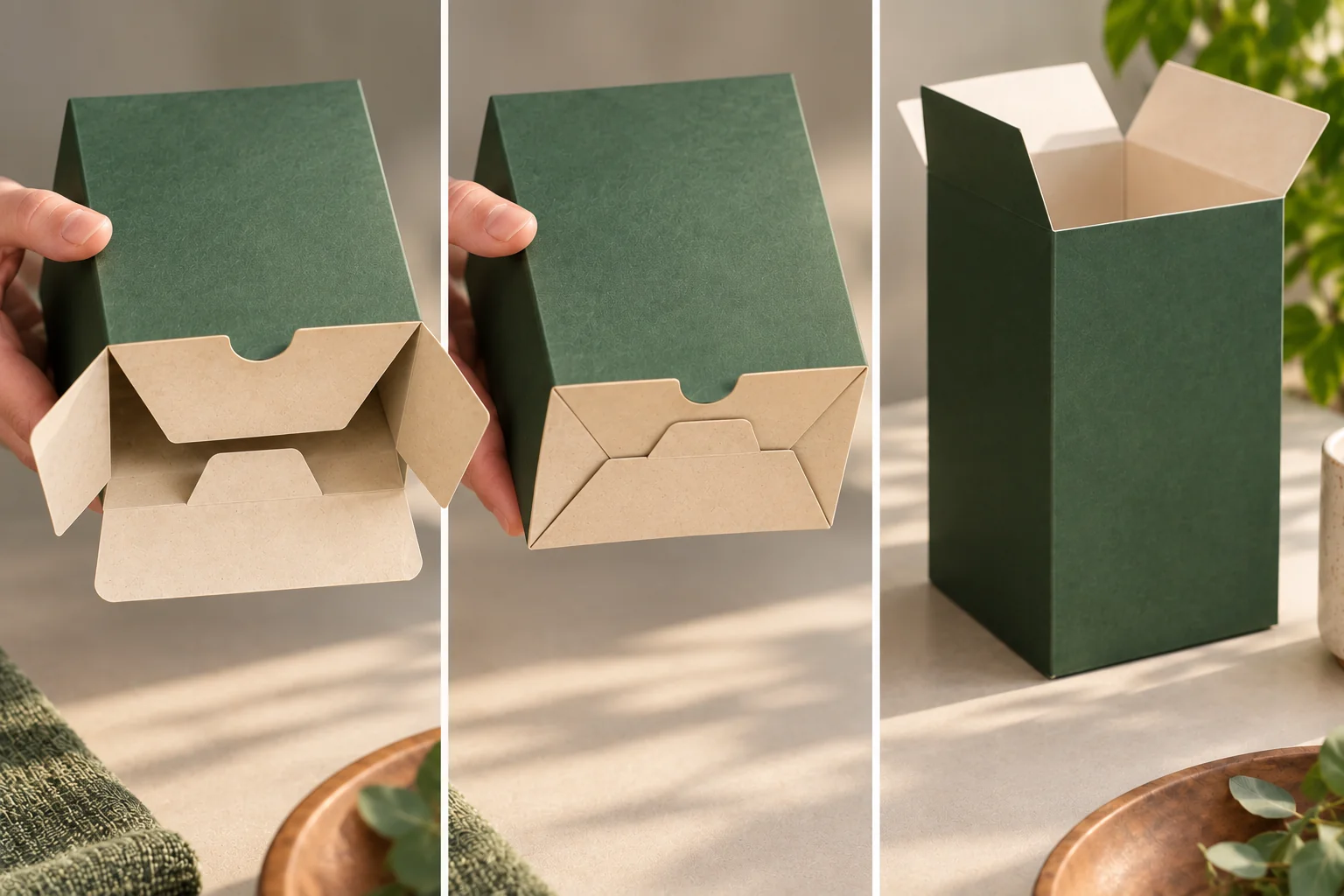
Concept / packaging option. AI-assisted visuals explain the structure; final materials, production details and sample scope are agreed for the project.
Make the bottom sequence visible
The bottom flaps have an intended order and relationship. Ask the supplier to show the proposed locks on a drawing and explain the assembly sequence. This is particularly useful when the retail top and the bottom appear similar while flat: the operator needs to know which end is assembled first and which end receives the product.
Describe how the base should look once its tabs are fully engaged. A diagram can mark the visible overlap, the final tab position and any joint that must be inspected. Avoid asking an operator to judge a correct base from the closed exterior alone.
The product’s contact with the base also matters. A jar, a narrow accessory and a boxed item can bear on different areas. Give the complete weight, shape and intended orientation. If a folded holder is proposed, explain how it loads and where it rests on the bottom, since the holder can alter the base review.
Compare hand locking with other closures
A general folding carton brief leaves the end construction open. A snap-lock option commits the discussion to a specific manual bottom task. Compare it with a prepared auto-bottom proposal when local setup work is important, or with another tuck or glued arrangement when the intended packing process calls for it.
Compare actual steps rather than invented assembly times. Identify whether the operator needs to open the body, fold each tab, insert a holder and then load the gift. A proposal that changes the supplied state changes the local job, even if both quotes use the same carton name.
Write instructions from the proposed structure
| Brief field | Describe the intended job |
|---|---|
| Contents | Loaded weight, base shape, orientation and additional components. |
| Bottom | Drawing version, tab layout, fold order and inspection point. |
| Top | Loading opening, closure and the customer removal route. |
| Supply state | Flat or partly formed, prepared joints and assembly instructions. |
| Files | Artwork panels and finish areas on the current dieline. |
| Project | Quantity by design, destination and sample decisions. |
For an illustrative candle gift, the packing sequence might be base assembly, holder placement, vessel loading and top closure. That is a starting description to review with the supplier, not a claim about an approved design. The delivery scope worksheet helps assign each remaining action to a responsible party.
Review the assembled base with the contents
- Assemble the sample using the proposed tab sequence.
- Inspect the lock engagement from the accessible side.
- Load the complete contents and check the position of the holder.
- Close the top without forcing the product or flattening a component.
- Review the agreed handling task and examine any base movement.
- Record the sample version, observation and correction requested.
Review printed or finished samples for fold appearance as well as layout. If an altered tab changes the drawing, update the artwork relationship before the next proof. Structural and print decisions should refer to the same carton version.
Prepare a comparable proposal
Packrivo’s order planning policy is 500 pieces per product / design. Keep the carton, holder, assembly state and sample work visible in the scope. Final material construction, pricing, production conditions and delivery timing are agreed for the specific project.
The manufacturer’s snap-lock format reference identifies a carton with manually interlocking base flaps. Obtain the supplier’s bottom-tab drawing, mark the folding order and inspect the final tab engagement on the loaded sample. The linked manufacturer’s commercial and performance claims apply to its own products.
Get a Quote with the product and the packing sequence. Packrivo helps turn the bottom construction into clear supplier questions and a reviewable next sample.