
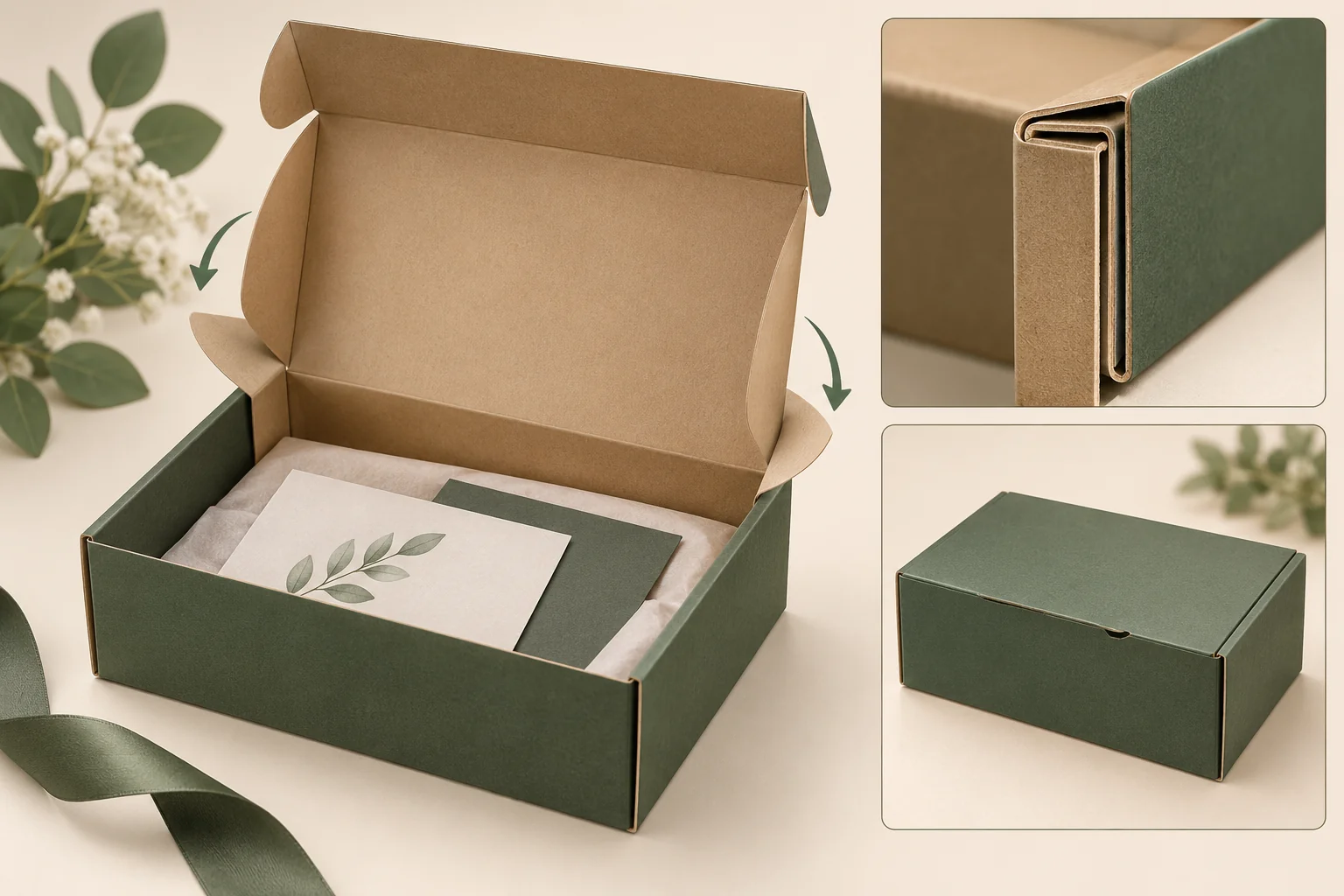
This is a paperboard packaging concept. The proposed blank, board and flap sequence are confirmed with the converter before sample review.
Identify the walls and the moving flaps
PakFactory’s roll-end tuck-top reference identifies a paperboard style with dust flaps. A folding-carton printer reference describes double end walls, double side walls and two tab locks; the dust-flap identity comes from the separate PakFactory reference. Those are construction references, not a shared universal dieline or material specification.
Ask for the actual blank with each roll-end wall labeled. A wall return reduces or reshapes the usable cavity, so record the space after forming. Mark where each dust flap moves during closure and whether it meets a rolled wall, an insert edge or the product itself.
Provide the complete presentation set: product, primary packaging, insert, care card and decorative wrap. Distinguish the tallest local projection from the overall envelope. This helps the converter position a flap question at the actual point of contact.
Review the paperboard presentation route
Form the walls in the offered sequence before loading. Photograph the open cavity with the dust flaps visible, then load the gift. Pause as the flaps move inward and note any catching or displaced card. Finally close the tuck panel and reopen through the planned customer grip.
Compare the tab-lock roll-end corrugated pack only as a different offered construction and packing role. The existing front-tuck corrugated mailer is another outer-pack option. Keep the paperboard carton’s proposed outer shipping pack in the brief rather than assuming the two roles are interchangeable.
Record cavity and flap clearance together
The table uses hypothetical panel names for a small gift set. The fields belong to the final offered drawing.
| Moving part | Input to locate | Evidence for the next decision |
|---|---|---|
| Roll-end wall W1 | Inner return after forming | Open formed cavity view |
| Dust flap D1 | Sweep beside the gift and card | Partly closed loaded view |
| Top tuck T1 | Receiving edge and customer grip | Closed and reopened states |
| Insert I1 | Finished height at the rolled wall | Complete pack dimensions |
| Outer pack | How this presentation carton is shipped | Named packed-system proposal |
Send located questions instead of a general fit request
The converter should confirm the fold sequence and actual cavity on the proposal. Your packing owner should identify the flap and contents at any observed interference. The buyer’s next decision can then be specific: revise the insert position, adjust the card arrangement, request a drawing change or compare another closure.
Use the folding-carton overview to compare presentation formats and the supplied-state guide to name who forms the walls.
Share the drawing, complete contents and located flap question in Get a Quote. MOQ is 500 pieces per design. Material, sampling and commercial details are confirmed for the project, with any shipping evaluation scoped to the complete proposed pack.