
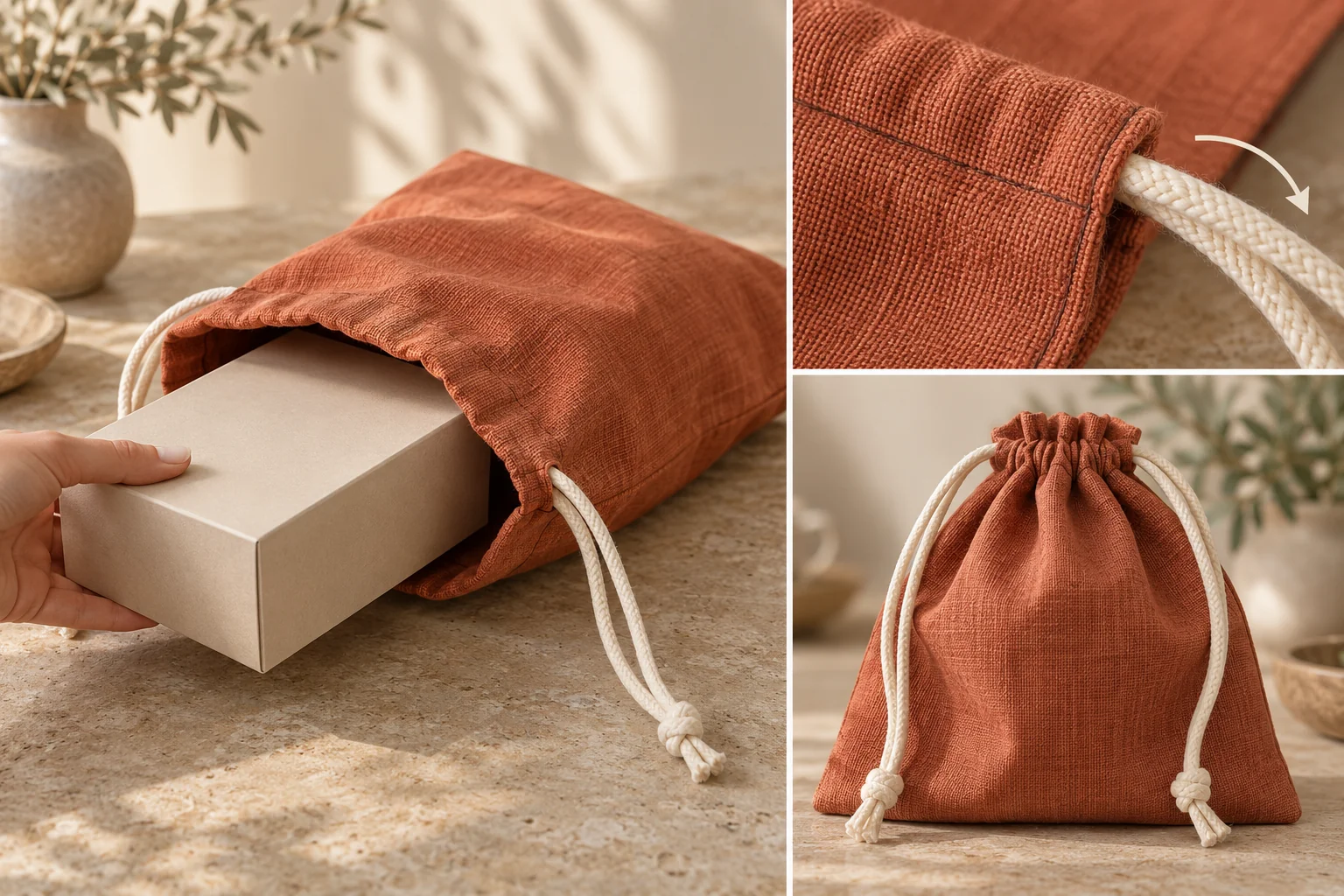
This is an AI-assisted packaging concept for a drawstring construction. The offered fabric, cord and channel details require supplier confirmation.
Separate the flat bag from its open mouth
The original fabric pouch and bag reference lists drawstring among available closure types. A fabric converter leaflet also identifies cord and ribbon fastening options. Use those as closure vocabulary, then request the actual channel and exit drawing for the proposed bag.
Supply the finished primary-pack envelope, including corners and any decoration. State whether the bag receives a small jewelry box, a wrapped component or a boxed gift. Record the opening as a usable loading space, separate from the flat seam-to-seam dimensions.
Mark where the cord leaves the channel and how far the gathered neck sits above the contents. Identify any stopper, knot or other offered termination. The choice affects the closing and release action and should stay connected to the bag drawing.
Review gathering around the packed shape
Load through the open mouth using the intended orientation. Photograph the corners passing the channel and any handle or cord obstruction. Gather the bag through the offered cord route, then check the neck relative to the contents and printed identity.
Open it again using the planned customer grip. Record a corner snag, cord crossing or need to press against the product at its actual location. Ask for a revised opening/channel proposal or a confirmed loading action rather than treating the difficulty as a general fabric question.
Compare the existing textile jewelry pouch for the broad holder choice. The zippered fabric pouch adds a slider and end-stop opening instead. Keep the same primary pack in the comparison so the distinct closure routes can be reviewed.
Use an opening and gathering record
These hypothetical jewelry-box entries leave the actual fabric and cord proposals open.
| Bag interface | Example input | Review evidence |
|---|---|---|
| Usable mouth | Jewelry box in finished packaging | Loading view at its widest corners |
| Channel C1 | Sewn channel and cord entry/exit map | Offered construction detail |
| Cord ends | Termination and customer grip proposal | Gathered and reopened states |
| Closed neck | Space above box lid and decoration | Complete closed bag view |
| Product contact | Box finish and prohibited snag area | Located loading/removal observation |
Assign the remaining closure questions
The fabric converter should identify the channel, cord and seam proposal. The packing owner should show the actual loading and gathering sequence. The buyer should review the closed presentation and customer reopening together, with any corner clearance question still linked to the same primary-pack dimensions.
Use the gift bag and tissue option if a carried boxed gift needs another opening/handle arrangement. Send the usable mouth, channel map and gathered-neck question through Get a Quote. MOQ is 500 pieces per design; materials, samples and commercial details are confirmed for the project.