
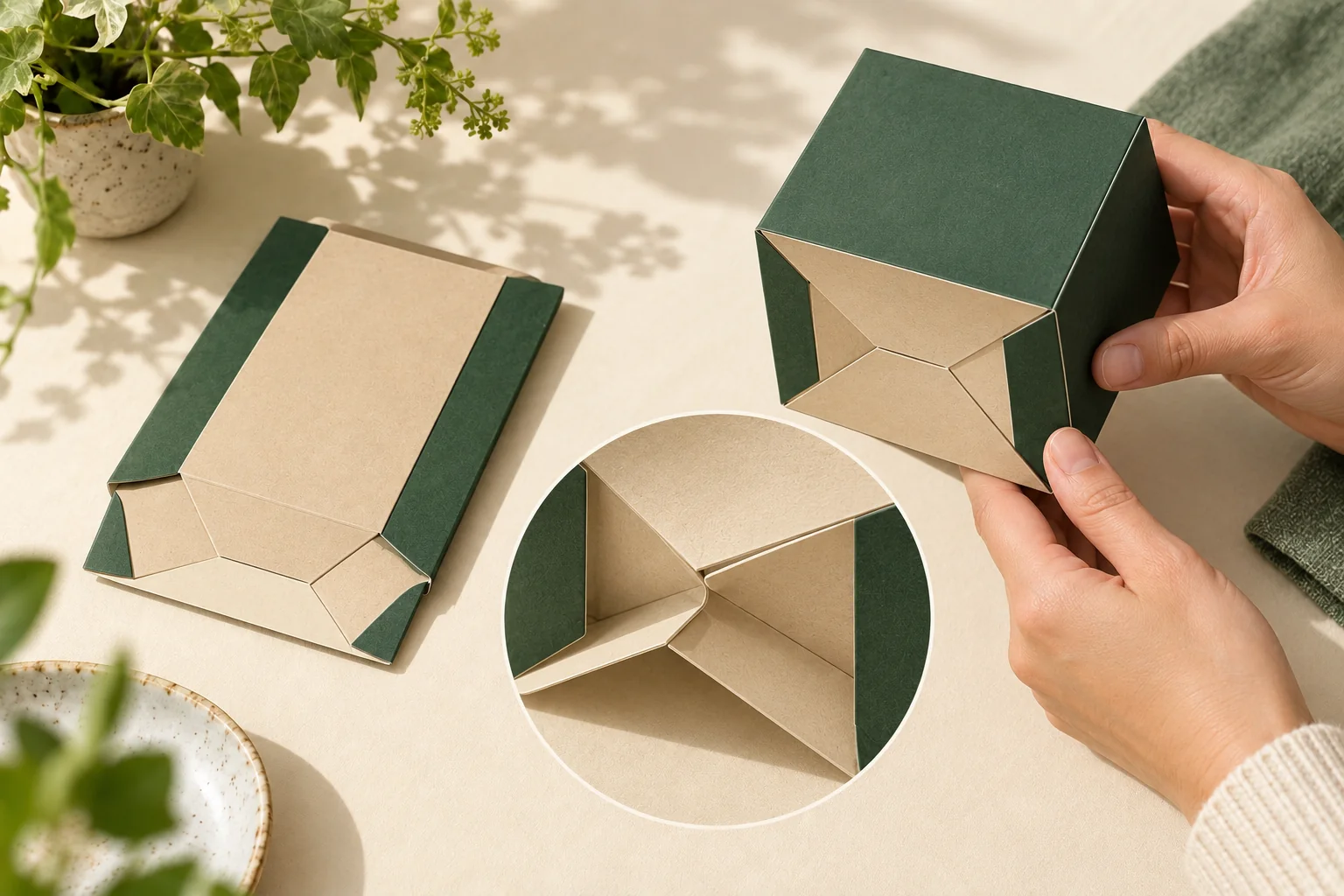
Concept / packaging option. AI-assisted visuals explain the structure; final materials, production details and sample scope are agreed for the project.
Describe the prepared bottom
Ask for the actual bottom drawing and supplied state. A prepared glued arrangement differs from loose flaps that an operator folds and locks by hand. The name alone should not decide what arrives: confirm which joints are already made, which folds move during setup and what a correctly opened base looks like.
Keep the bottom decision separate from the top closure. A tuck top, lock detail or other proposed top can change loading and opening without changing the base principle. Define where the product enters, which end the customer opens and whether a card or insert must be loaded before the product.
For a candle jar, record the complete vessel weight and base shape, including the lid. The bottom review needs the intended loaded configuration. If a holder spreads or relocates contact, show that component in the same section or layout drawing instead of treating it as an optional detail added after the carton is chosen.
Choose by the packing task
The existing tuck-end carton option covers an end-flap closure. An auto-lock bottom adds a particular setup and base task that needs its own evidence. Compare proposals by the steps left to the packing team, the proposed material and the review of the loaded base, rather than assuming a universal speed or load advantage.
A supplier demonstration can explain the intended movement. Then have someone follow the proposed steps with a representative sample. Record an awkward action, an incompletely opened corner or a product that changes the bottom’s position as a specific observation. This gives the next discussion an answerable issue.
Send a base and loading brief
| Field | Required detail |
|---|---|
| Product | Overall dimensions, complete weight, base contact and orientation. |
| Carton | Formed interior, top closure and approved bottom construction. |
| Supply | Prepared joints, remaining folds and packing instructions. |
| Components | Holder, tissue or card and the order in which each is loaded. |
| Artwork | Print panels, seam and folds linked to a named dieline. |
| Quantity | Units by design, destination and packing or sample scope. |
If the product has a heavy or uneven base, identify the support question for the supplier instead of inserting a guessed material grade. The complete candle packaging brief separates the presentation carton, holder and outer parcel pack so their tasks stay clear.
Review setup before approving the appearance
- Open the carton from its actual supplied state.
- Inspect the prepared joints and whether the base reaches the proposed position.
- Load the complete product through the intended end.
- Check that the holder and contents leave room for the top closure.
- Review the agreed handling task with the named sample and record observations.
- Inspect print alignment and folds after the structure has been formed.
A changed base or seam can affect the dieline used for artwork. Keep a structural revision connected to the print file, and repeat the affected review rather than carrying forward an approval for a different configuration.
Agree the scope for this design
Packrivo’s order planning policy is 500 pieces per product / design. List the carton, prepared bottom work, additional parts and sampling in the proposal. The final material, price, production conditions and schedule are confirmed for that configuration.
A manufacturer’s carton-style reference identifies auto-bottom and snap-lock choices as different structures. Use it for naming the proposal, not for transferring supply or performance claims.
Get a Quote with the product’s base, weight and loading sequence. Packrivo helps connect those inputs to supplier questions and a sample review with a clear decision.