
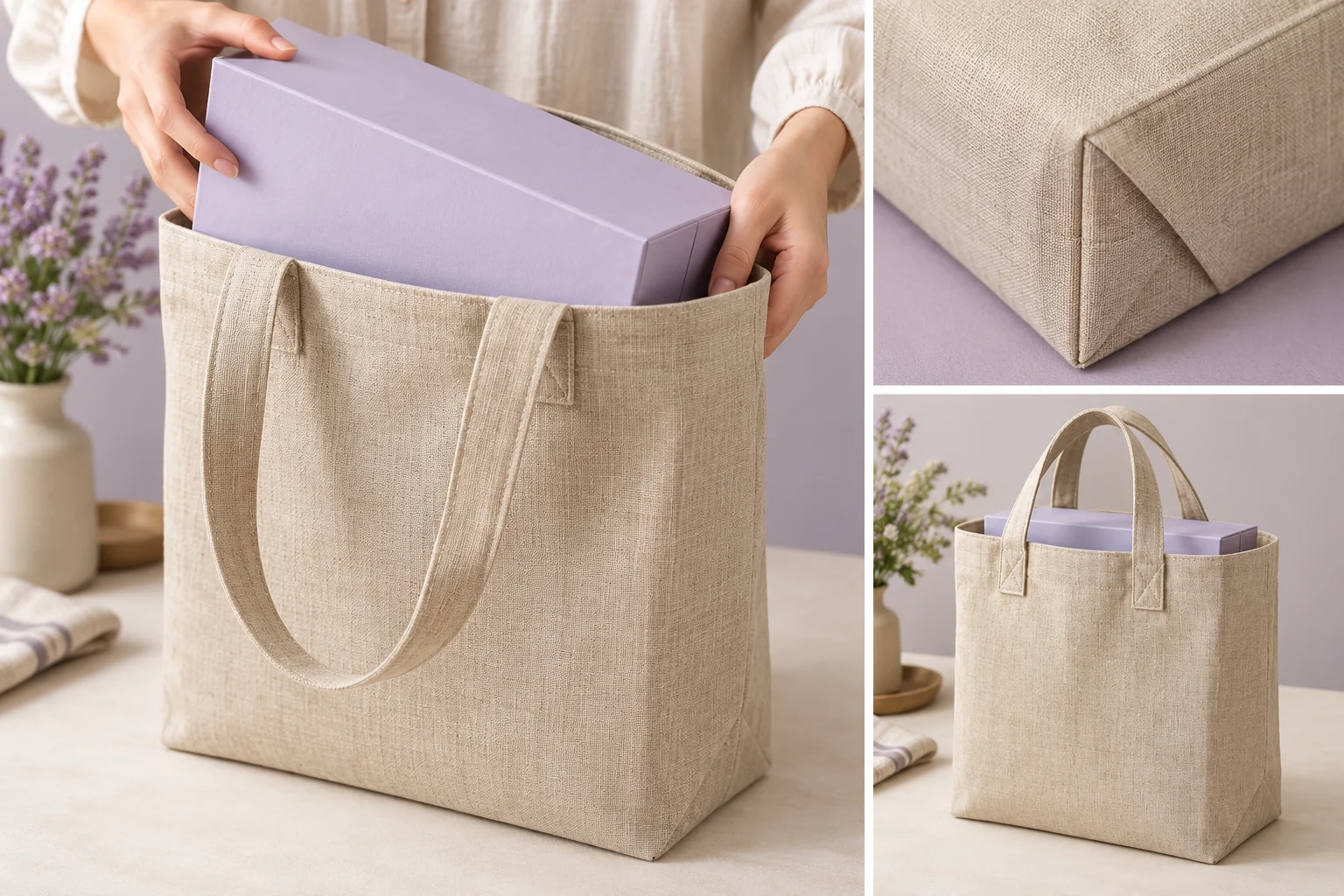
This concept explains a sewn boxed-base form. Fabric, lining, seams and carrying review are confirmed against the offered project construction.
Identify the seams that create the base
The original fabric-maker tote construction pattern illustrates boxed corners formed by joining bottom and side edges, followed by handle attachment. This is a construction reference only; its artwork, pattern dimensions and sewing instructions are not a Packrivo production specification.
Ask the converter to show the proposed boxed-corner and lining construction. Record the formed base length and width separately from the flat bag panels. Also mark which seams sit beneath the gift and which lie beside its corners.
Supply the boxed gift in its final state, including ribbon, wrap and card projections. State whether the tote is for handover of one box or a combination of items. The complete envelope and packed mass give the converter the relevant inputs for its seam and handle proposal.
Review the mouth, base and handle route
Insert the gift through the usable mouth in the intended orientation. Observe its corners at the opening and where it seats on the formed base. A box can have enough base area yet need a different rotation to pass the mouth or handles.
Lift and set down the complete proposed arrangement using the intended handles and agreed review conditions. Record where handle anchors, seams or lining meet the box. Keep any carrying suitability evaluation as a separately confirmed task with its method and evidence.
Compare the existing paper gift bag and tissue set for a different base and handle construction. The drawstring fabric bag has a channel/gathering task instead. A fabric name by itself does not settle either comparison.
Use a formed-base and handoff record
This hypothetical gift-box tote example keeps the loaded shape visible.
| Interface | Example input | Evidence to request |
|---|---|---|
| Boxed corners | Offered base seam and lining map | Formed empty base view |
| Base envelope | Finished gift box seated on the base | Loaded corner/seam view |
| Mouth clearance | Gift corner and ribbon projection | Actual insertion path |
| Handles | Anchor positions and handle drop proposal | Filled grip and lift view |
| Handoff | Packed contents and intended use | Agreed review observation and owner |
Return a complete tote proposal
The converter should identify the boxed seams, base and handle attachment. The packing owner should report the opening orientation and filled arrangement used during review. The buyer should decide whether the tote supports the intended presentation and access route or request a different base/mouth/handle proposal.
Use the gift bag specification method to retain the complete boxed contents and handoff requirements. Keep this tote’s sewn-base and handle drawing with those shared inputs.
Bring the finished box envelope, formed-base sketch, packed mass and loading/handoff questions to Get a Quote. MOQ is 500 pieces per design; materials, sample scope and commercial terms are confirmed for the project.