
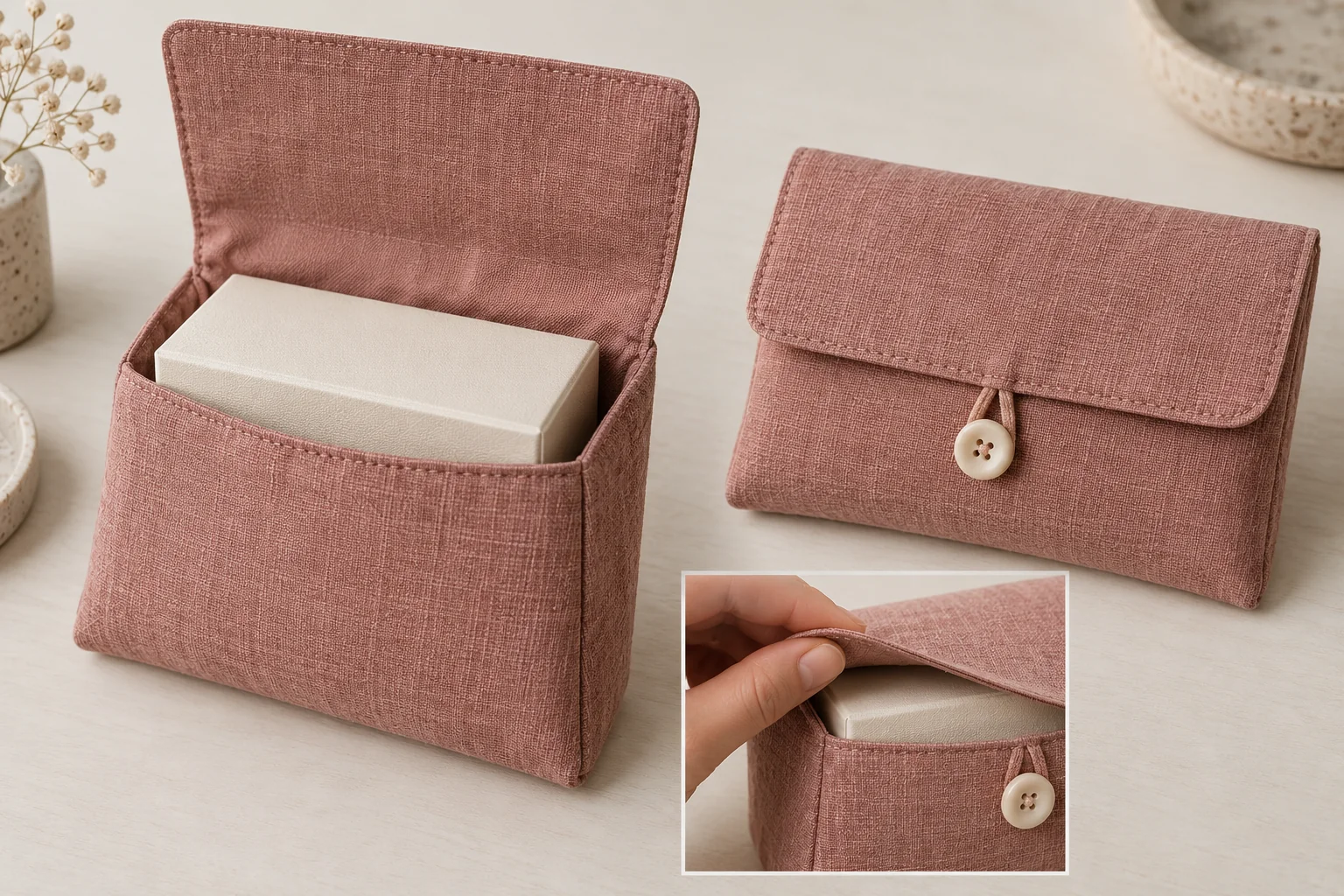
The illustration is a concept reference for a flap closure. The actual fabric, fastening and construction are confirmed by the converter.
Give the flap a defined overlap
The fabric closure catalogue lists flap, tuck and button choices, while the fabric converter leaflet identifies a square flap among fastening options. These references support the construction vocabulary. Your drawing should show the offered flap and actual fastening arrangement.
Provide the finished primary-pack height, width and thickness. Include a backing card, small jewelry box or other component that reaches the flap area. Mark the intended fold and the overlap on the closed pouch rather than specifying only an overall fabric-panel length.
Identify the proposed fastener and its anchors. State whether its location is on the outside face, beneath the flap or elsewhere on the offered construction. Include any lining or seam that contacts the contents near that point.
Review access through the moving flap
Load the actual contents with the flap fully open. Fold it through the proposed route, engage the offered fastening and inspect the complete closed shape. Reopen using the intended grip and remove the primary pack without changing its agreed orientation silently.
If the fastener requires pressure against the product, locate that action and ask for another proposal or a confirmed arrangement. If the flap springs back or obscures a grip in the observed sample, record the condition and revision. The buyer should decide the closing and access route using those specific observations.
Compare the drawstring fabric bag for channel gathering or the zippered fabric pouch for a slider/end-stop route. Keep the same product envelope in the comparison. The existing textile jewelry pouch remains the broad holder overview.
Use a flap-overlap and release table
This hypothetical jewelry primary-pack record keeps fastening as an offered field.
| Closure feature | Example brief input | Decision evidence |
|---|---|---|
| Flap F1 | Fold line and overlap over the complete pack | Loaded closed view |
| Fastener A1 | Type and anchor positions to be proposed | Construction detail and sample |
| Top clearance | Finished primary-pack projection | Flap travel/contact view |
| Lining L1 | Seam and lining beside the fastening | Located contact observation |
| Customer grip | Intended release and removal sequence | Opened loaded pouch view |
Keep fastening changes attached to the drawing
The converter should return flap and fastening identities with the construction revision. The packing owner should report the actual loading and release actions. The buyer can then decide whether the overlap and access suit the primary pack, or ask for a change at a named interface.
Record any moved anchor or changed flap with the sample revision method. Share the complete contents, overlap drawing and open release question through Get a Quote. MOQ is 500 pieces per design; offered materials, samples and commercial conditions are confirmed for the project.