
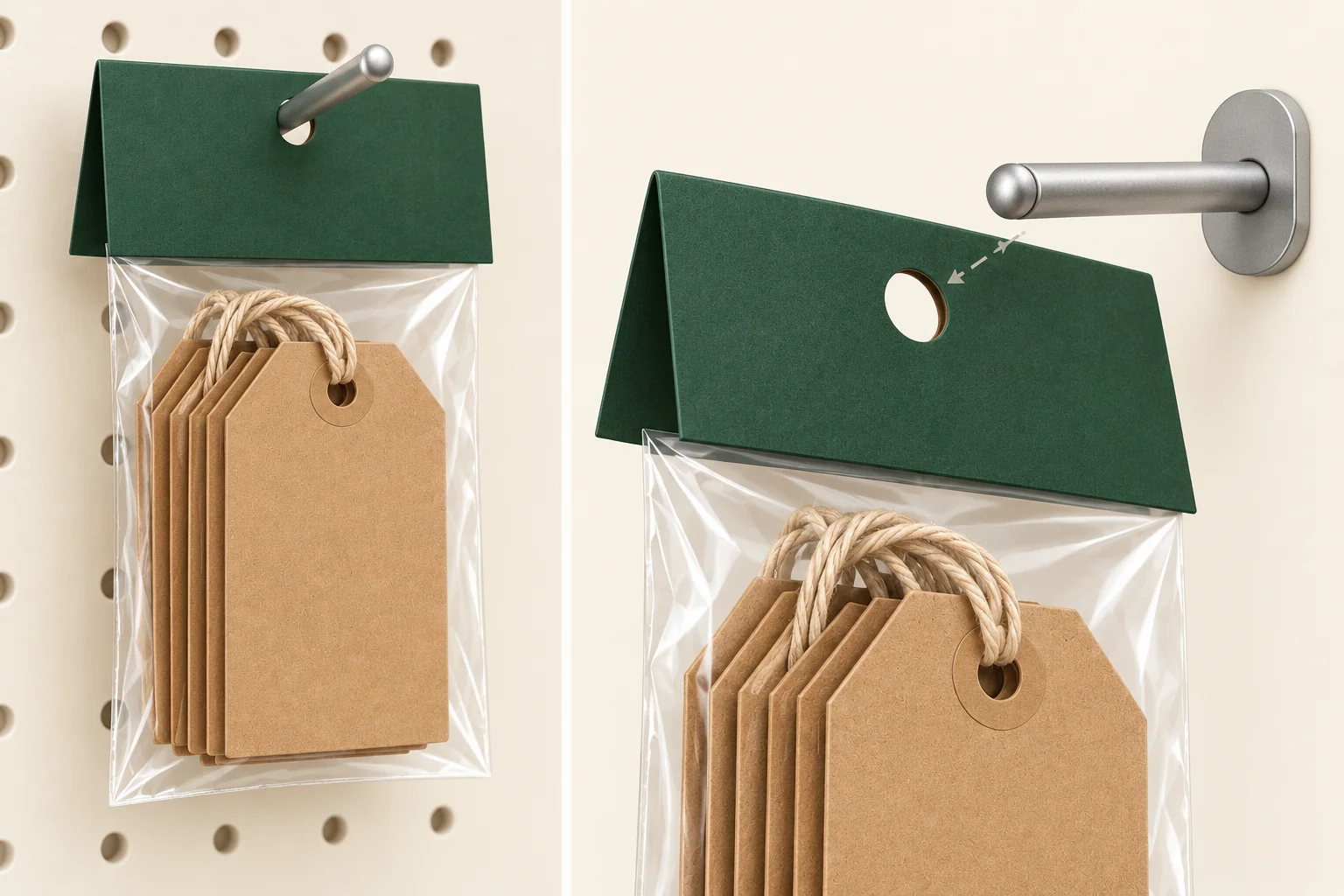
This option is for a product presented in a bag with a separate top card. The proposal must define the bag, card and joining work. A card catalog entry doesn’t confirm a complete bag pack or any hygiene, barrier or tamper-evidence function.
Give the card and bag separate identities
The header card catalogue reference establishes the named component. Use your own drawing to show how it joins your bag. Keep the bag mouth, card fold and attachment points on separate labeled layers.
Measure the filled bag at the point where the card will be fitted. Record any folded bag edge, seam or product bulge near the connection. A flat bag width is insufficient if the mouth changes shape when filled.
Compare this component with folding box options when the product needs a cavity instead of a bag presentation. The header-card job is to define the card-to-bag connection and visible information area.
Choose how the pack will be presented
State whether the pack hangs from a peg, stands in a tray or lies on a shelf. If it hangs, provide the actual fixture geometry or a usable reference. The hole’s position and shape should come from that fixture and the assembled pack, not from a generic artwork template.
A hypothetical bag of decorative gift tags might hang from a store peg. Its header has a front face, rear face and fold at the top. Review the complete pack on the proposed fixture, then lift it off using the action expected from a customer.
Ask who applies the connection and with what method. If staples, adhesive or another joining detail is proposed, confirm its exact location and responsibility. Don’t describe the connection as sealing the bag unless a separate, verified bag closure has been specified.
Check all three interfaces
Fill the matrix with the proposed component revisions. It keeps a card-only artwork approval from closing questions about the bag or fixture.
| Interface | Brief input | Sample action |
|---|---|---|
| Card fold to bag mouth | Filled mouth outline and fold position | Fold around the actual filled bag |
| Attachment to both layers | Joining method and location | Inspect front, rear and bag interior as relevant |
| Hole to fixture | Fixture shape and pack orientation | Place and remove the complete pack |
| Customer to contents | Intended opening instruction | Remove card and access product as proposed |
Record which information is hidden at the fold or attachment. Keep necessary instructions in the visible area rather than expecting the customer to unfold the card while it remains attached.
Agree delivery and assembly responsibilities
State whether cards arrive flat or folded and whether bags are separate. Request a sample of the assembled connection if that work belongs to the proposed supply scope. Keep the product count and orientation fixed during comparison.
Inspect the card after fitting and after customer removal. Note torn edges, misalignment and any attachment that interferes with the bag opening. These are observation fields for a sample review; they do not establish hanging capacity or complete-pack protection.
If the card carries a customer instruction, view it after the pack leaves the fixture but before the connection is removed. This is the moment the instruction may be needed. Record which face remains readable. A message hidden inside the fold should be assigned a later job or placed elsewhere, with the change kept in the card artwork revision.
Send the complete connection brief
Provide the filled-bag photo, card sketch, attachment request, fixture reference, quantity and destination through Get a Quote. The minimum is 500 pieces per design. Component grouping, materials, assembly scope, samples and commercial terms require project confirmation.