
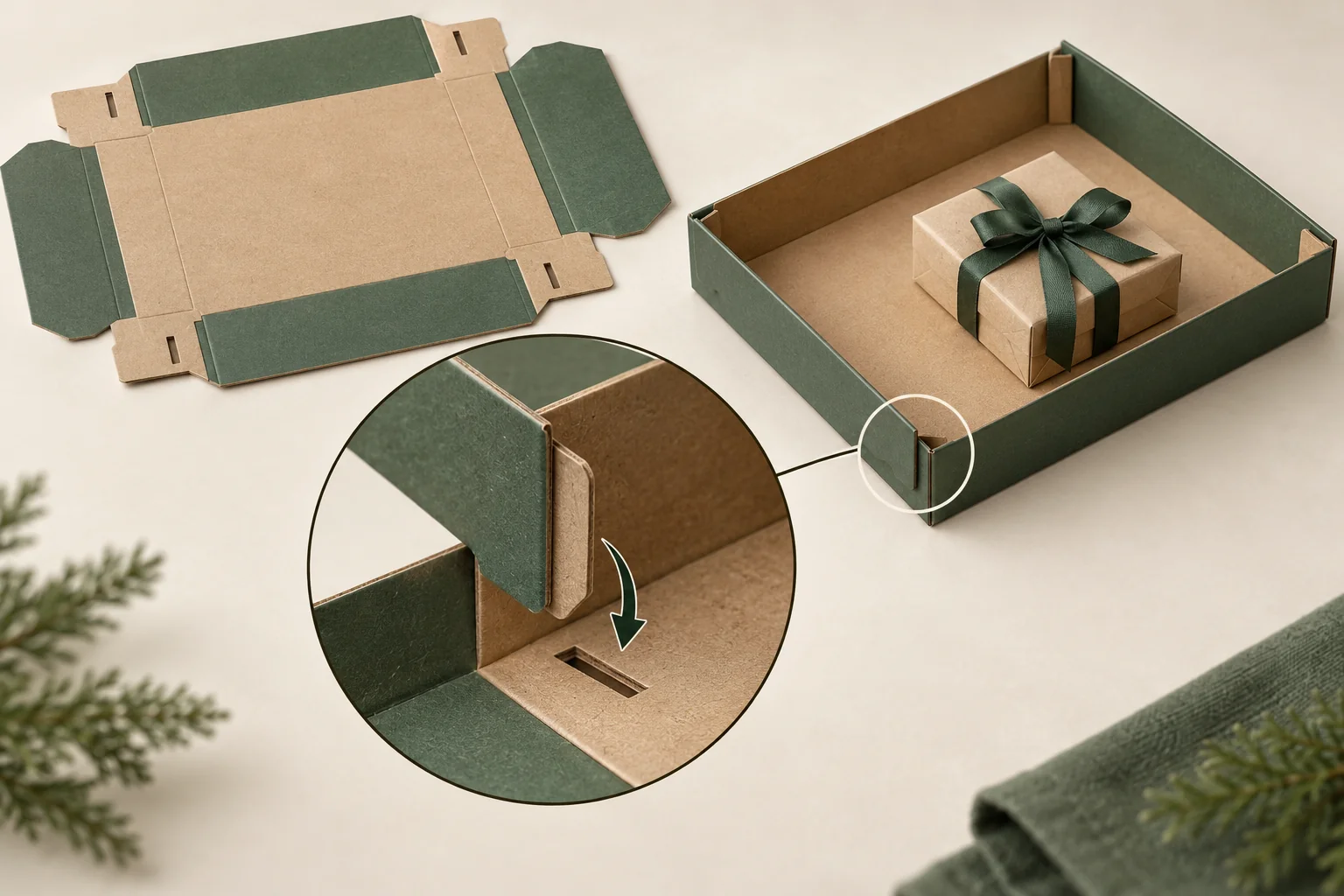
The picture is a concept reference for the tab-and-slot interface; the converter confirms the offered paperboard blank and assembled cavity.
Map the side tab to its receiving slot
The pinch-lock tray description identifies folding-carton sidewall tabs engaging base slots. The converter’s tray library also lists pinch-lock as a named tray construction. Request the project blank so each tab and matching slot can be named rather than inferred from a finished photograph.
Mark a corner after the tray is formed. The product footprint should be drawn inside the usable wall envelope, including any lock feature that enters the cavity. A rectangular outside size alone does not show whether a primary gift box touches that corner or whether an insert covers the lock.
Specify whether the tray will sit inside another gift box, be covered by a separate component or remain open for handoff. Include any card, tissue or band added at that stage. The outer relationship affects where staff can grip the tray and where the customer removes the product.
Keep the lock seated through loading and removal
Use the offered instructions to raise the walls and engage the tab/slot pairs. Identify the lock seating before the product is added. Then load the real primary pack and record whether a corner needs a change of angle, a wall moves or an insert hides the seating point.
Removal is a separate observation. State whether the customer lifts the product directly, uses a finger gap or lifts an insert. Review that action with the tray in its intended outer box. If staff must pull on a wall to reach the contents, mark the affected lock and ask for a proposal that addresses the grip.
Compare the existing folding gift box when a lid/base enclosure is required. The pinch-lock option introduces open corner-lock and cavity access questions; it does not substitute for every gift-box closure.
Use a corner-lock and access table
This hypothetical jewelry presentation tray uses named locks rather than assumed material performance.
| Tray feature | Example brief detail | Review evidence |
|---|---|---|
| Lock T1/S1 | Side tab enters base slot at rear corner | Empty formed corner view |
| Product corner | Finished jewelry primary pack reaches this area | Loaded corner/contact photograph |
| Holder I1 | Holder ends clear of the seating point | Holder and tray drawing overlay |
| Customer grip | Finger access at the front of the product | Actual removal route |
| Outer box | Tray sits in the proposed gift-box cavity | Complete seated-pack view |
Make the sample question specific
Have the converter return a tab/slot map and material proposal. Ask the packing owner to retain the empty-corner and loaded-access views under the same sample revision. The buyer can then resolve the corner, grip or outer-box fit separately instead of accepting a broad statement that the tray fits.
The dimensions and review-method guide helps name the feature being measured. Bring those locations and the complete contents to Get a Quote. MOQ is 500 pieces per design; offered material, structure, sample scope and commercial details are confirmed for the project.