
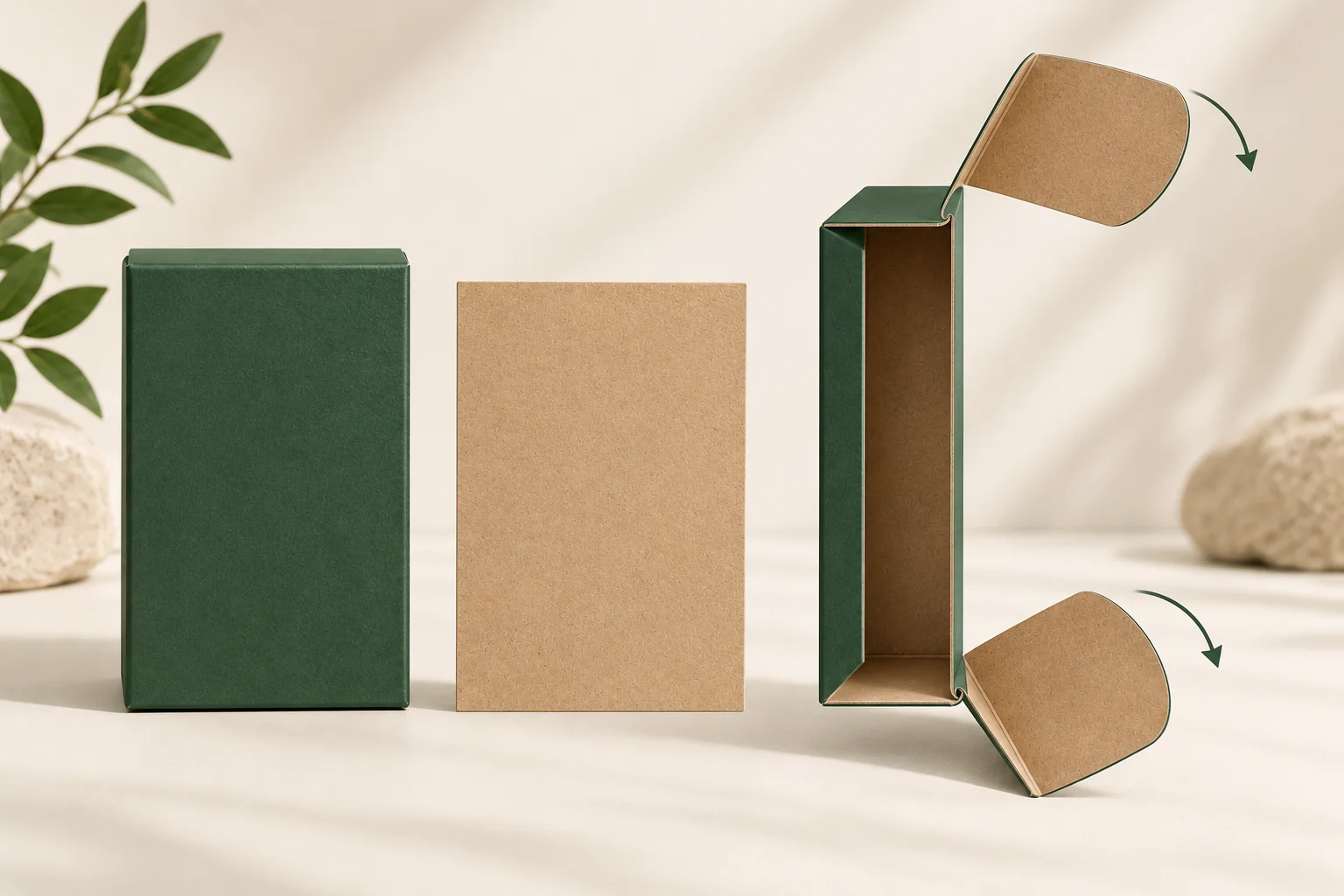
This option suits a brief where the end-flap layout matters to the printed front and packing action. It remains a concept until dimensions, material and the actual dieline are agreed. A style name cannot replace that drawing.
Use the front panel as a fixed reference
The PakFactory straight tuck catalogue names this structure. Its public text doesn’t define all flap details, so ask for a marked drawing of the proposed version rather than importing a supplier’s marketing claims.
Choose the front face before reviewing the end openings. Show its reading direction and identify the two end-flap hinge positions against it. Request a drawing with both end-flap hinges on the intended side and identify the dust flaps and receiving features. Check that arrangement against the formed sample.
Compare the proposed layout with a reverse tuck configuration only if opposite-end orientation could change your packing sequence. Keep the comparison on flap positions and access. Neither name is a claim about measured security or shipping suitability.
Size around the whole packed envelope
Measure the sale-ready product with its holder, bag or card attached. The maximum outline may occur at a cap, hook or folded tag rather than across the main body. Show which way that outline faces when it enters the carton.
For a hypothetical gift accessory on a backing card, the folded top tag extends above the accessory. A carton proposal should show the tag’s position under the closed upper end. Ask for a formed view if the flat drawing leaves that relationship unclear.
Keep internal space and external carton dimensions separately labeled. Include proposed board caliper in the structural review. The supplier should resolve fold and flap allowances on the actual construction; don’t add a universal clearance figure to the artwork file.
Review the two ends against the same front face
This table is a brief tool for comparing drawings and samples. Fill it with the actual proposal revision and named product configuration.
| Reference | Information to mark | Review action |
|---|---|---|
| Front face | Reading direction and display position | Stand the loaded carton as sold |
| Upper end | Hinge face, tuck entry and inside flap edges | Close with the packed contents present |
| Lower end | Hinge face and final closed position | Open without turning the front away |
| Product envelope | Highest and widest packed points | Check contact with both closed ends |
If a folded tag touches a flap, record the exact location and whether the contact happens during insertion or only after closure. Those observations lead to different revision questions.
Confirm the supplied state before a packing trial
Ask whether the carton arrives as a blank, a prepared side-seam tube or another agreed form. Identify who completes the lower end, inserts the product and closes the upper end. Use the same sequence for all comparison samples.
Open each end, inspect the fold lines, and repeat product removal in the intended sales orientation. A crease pressed against a card edge should be photographed before the product is removed. Avoid treating an empty carton that closes neatly as evidence of loaded fit.
If both ends remain available to the customer, identify whether the pack includes a preferred opening instruction. Review that instruction in the fixed front view. A reviewer who always opens the easiest end may miss the action you intended. Keep the preferred end and any permitted alternative written in the closure brief.
Turn the marked drawing into a brief
The existing tuck-end gift box page covers the broader option. For this configuration, send the front-face drawing, packed dimensions, delivery-state request, quantity and destination through Get a Quote. The minimum is 500 pieces per design; final construction, samples and commercial terms require project confirmation.