
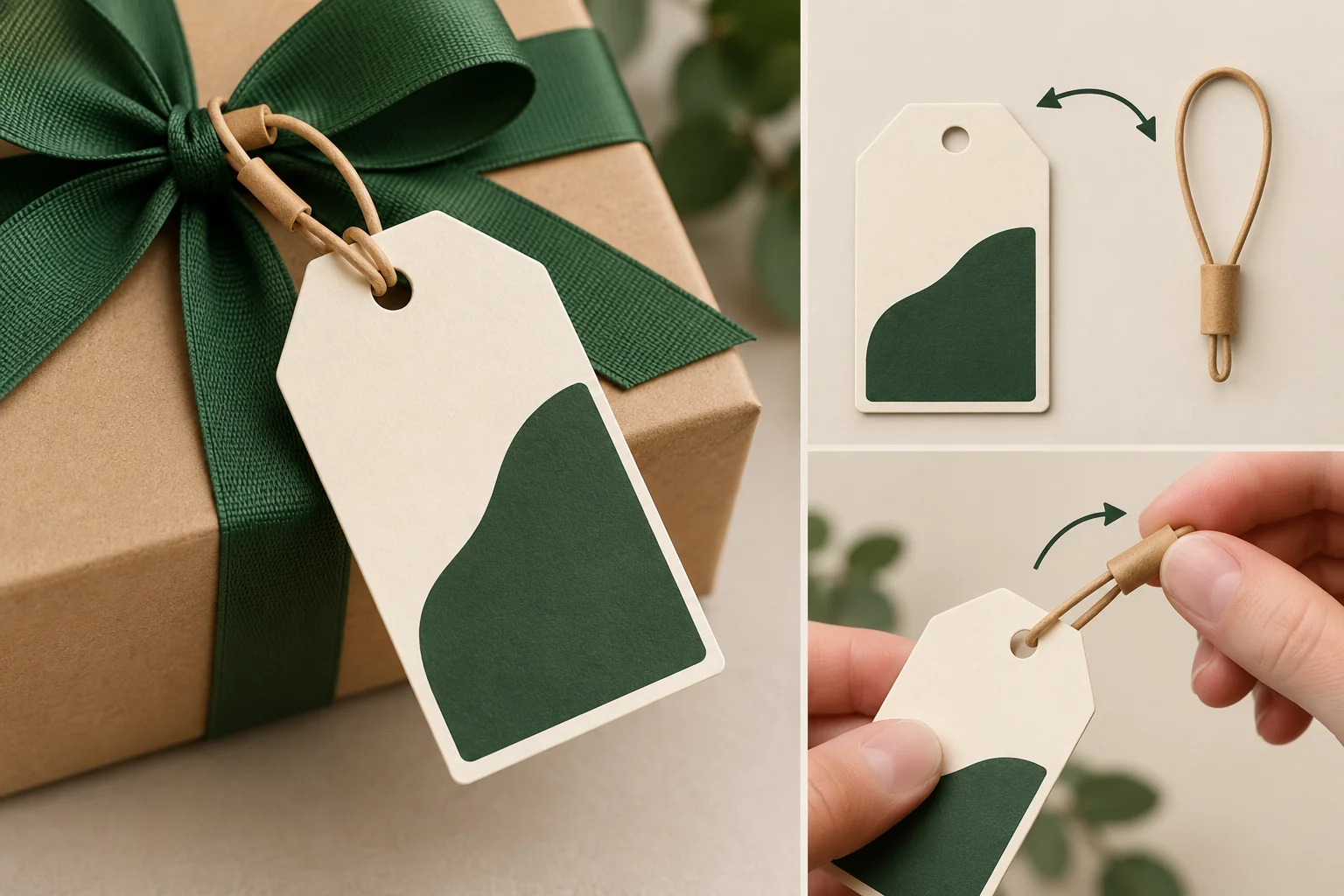
This concept needs confirmation of tag material, hole and attachment supply. Keep the joining component identified rather than assuming it is included with the printed card.
Draw the hole and attachment separately
The paper tag reference describes a die-cut attachment hole. Ask for its position and outline on the proposed tag drawing. Identify the cord, loop, tie or other fastener as a separate component with its own supply scope.
Show where the attachment goes on the product or gift pack. Mark sensitive or finished surfaces as questions for review if they meet the connection. The tag should not be treated as the same component as an unattached information card.
Locate copy in the assembled view
Provide the actual required wording and artwork owner. Show the tag’s front, back and packed orientation. If the tag turns while attached, decide which information must remain available without assuming a fixed face.
For a hypothetical gift box, a tag could hang from a ribbon outside the lid. Review the face shown before opening and the route for removing the tag. The attachment knot or loop may cover a different area from the hole itself.
Use the artwork handoff method to keep hole placement and copy tied to the current drawing. A changed hole or tag shape can reopen artwork without changing the words.
Use a tag connection record
Keep tag, attachment and gift-pack identities together. The table records the visible relationship at each stage.
| Connection field | Input | Review evidence |
|---|---|---|
| Hole | Outline and drawing position | Current tag dieline |
| Attachment | Separate component and joining method | Assembled front/back view |
| Pack location | Gift part or ribbon connection | Packed tag position |
| Copy | Supplied wording and reading face | Visibility at intended stage |
| Removal | Customer action | Detached tag and pack afterwards |
A supplier reply confirming the tag stock doesn’t close the cord or fastener field. Keep component counts and matching design grouping visible in the quotation scope.
Check a specific hidden-copy question
In the hypothetical map, call the hole H1, loop L1 and care message C1. If L1 covers C1 while the tag hangs, record that assembled view before moving the copy. Ask whether the attachment route or artwork should change.
Review the proposed material sample with the actual hole and connection. If the tag shape changes, inspect the attachment and removal again. Avoid presenting a clean concept hole as evidence of a finished production edge.
Any retention, compatibility or handling requirement needs a separate agreed method. This record covers the connection and information view without claiming tamper evidence or a rated attachment.
Send the tag and joining component
Submit the drawing, attachment request, required copy, packed view, quantity and destination through Get a Quote. Packrivo’s minimum is 500 pieces per design. Final materials, component supply, samples and commercial terms require project confirmation.