
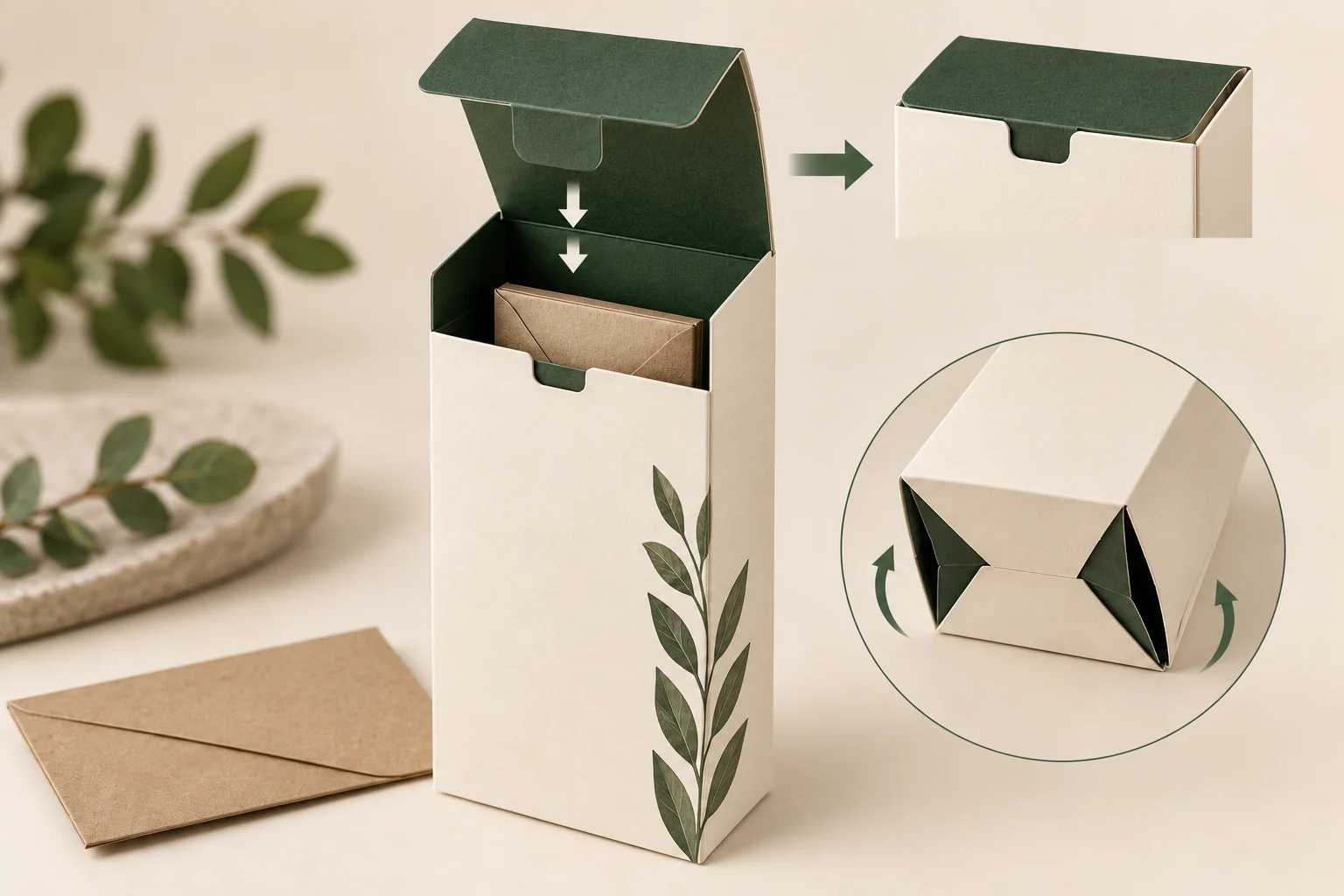
This packaging concept uses an offered cap and base drawing; the supplier confirms the actual tabs, receivers and material.
Give the top cap its own interface
The lock-cap auto-bottom catalogue supports the named construction. Ask the converter to point to the cap tab and the matching receiver on the proposed blank. A lock name does not tell your packing team where to press, which panel moves first or how the customer releases it.
Show the carton both open and fully closed. On the open view, mark the final contents height, the cap sweep and any inside panel or slot receiving the lock. On the closed view, mark the grip used to release the cap. Keep a printed front label separate from those mechanical identities.
A care card can become part of the top-contact question. State whether it lies flat over the product, stands behind it or sits in a separate holder. Include its final folded size rather than only its artwork dimensions. The cap should be reviewed against the complete arrangement, not against an empty cavity.
Form the base before testing the cap
The auto-bottom carton focuses on prepared-base erection. The full-flap auto-bottom option adds a base coverage question. This lock-cap option adds upper engagement and customer release; record those as different actions instead of treating every automatic-bottom name as the same choice.
Have the packing owner form the bottom using the offered instructions and load the contents. Stop just before cap engagement and photograph the upper clearance. Then close and reopen using the intended grip. If a tab presses against the card or requires moving the product, locate that contact and ask for a drawing-based change. Do not hide the adjustment inside an informal packing habit.
Keep a cap and base action table
For a hypothetical jewelry gift carton, the following record separates the empty setup from the loaded closing step.
| Action | Brief entry | Who confirms it |
|---|---|---|
| Base erection | Prepared joint/base folds on drawing BX1 | Converter and packing owner |
| Contents height | Jewelry holder plus the care card in its final position | Buyer supplies the complete set |
| Cap engagement | Tab T1 enters receiver R1 on offered drawing | Converter identifies the mechanism |
| Customer release | Named grip and opening movement | Buyer reviews loaded sample |
| Card contact | Record any contact before changing the card position | Packing owner returns located evidence |
Make the closure decision reviewable
The converter’s next response should identify the tab, receiver and cap clearance, not simply confirm that a lock cap is available. The packing owner’s response should describe the sequence used with the actual contents. Your approval should reference both, with the sample and drawing revision named.
Read the general tuck-end carton option if a simple tuck closure is also being considered. Use the delivery-state record to keep factory preparation and local packing actions clear.
Bring the complete contents height, cap grip, offered lock drawing and unresolved contact to Get a Quote. MOQ is 500 pieces per design. Packrivo helps prepare the brief and coordinate questions; the offered construction, sample arrangements and commercial terms are confirmed for the project.