Key takeawaysA change from scattered logos to a full background can change the offered paper specification.A logo visible on the reverse does not establish that both faces were printed.Compare the same jewelry presentation before judging two tissue proposals.Paper weight and print coverage do not establish suitability for contact with jewelry.Plan your tissue packagingShare your artwork and the jewelry box it will wrap.Discuss your tissue brief
What changes when branded tissue paper gets a full background?
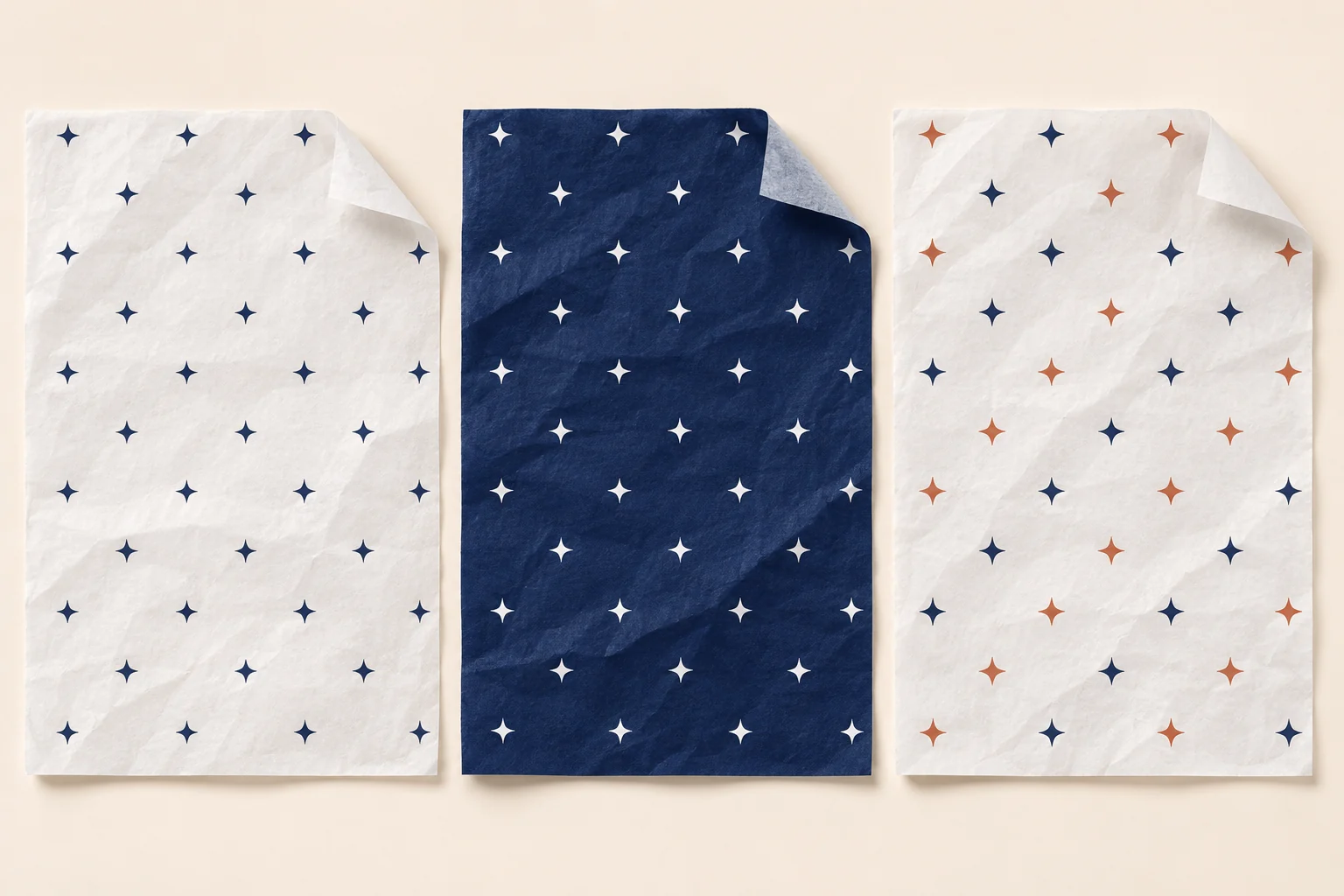
A full background can change more than the appearance of branded tissue paper: it may move the order onto another paper specification within the supplier’s range, so keep the stock reference, ink coverage and color count together before comparing that proposal with a sparse logo pattern.
noissue’s Custom Tissue Paper specification gives a concrete example. Its TC-1 range lists 17 gsm for one-color work and 28 gsm for one-color, full-background and two-color options. Its table separates one-color coverage below 50% from a full background above 50%; the FAQ associates the heavier stock with the higher ink load.
Those are this supplier’s product rules, not general limits for tissue printing or a Packrivo specification. Here, gsm means mass per square meter. It is not a measurement of physical thickness, even though the source places the figures under a thickness heading.
Use the printed tissue paper direction to identify the commercial component in the brief. If your jewelry-box concept changes from scattered wordmarks to an all-over brand color, reopen the paper line in the quotation. A new artwork file alone does not tell the buyer whether the quoted sheet stayed the same.
Scroll horizontally if columns extend beyond the view.
| Proposed appearance | Keep visible in the offer | Purchase question |
|---|---|---|
| Sparse, one-color logo repeat | Named stock, color and coverage category | Which sheet accompanies this artwork? |
| One-color full background | Background coverage and offered stock | Did the paper change with the background? |
| Two-color repeat | Both colors and the specified sheet | Is this the same stock as the one-color alternative? |
The table defines comparison questions, not universal production requirements. A different supplier may offer another combination.
Does a logo visible on the back mean two-sided printing?
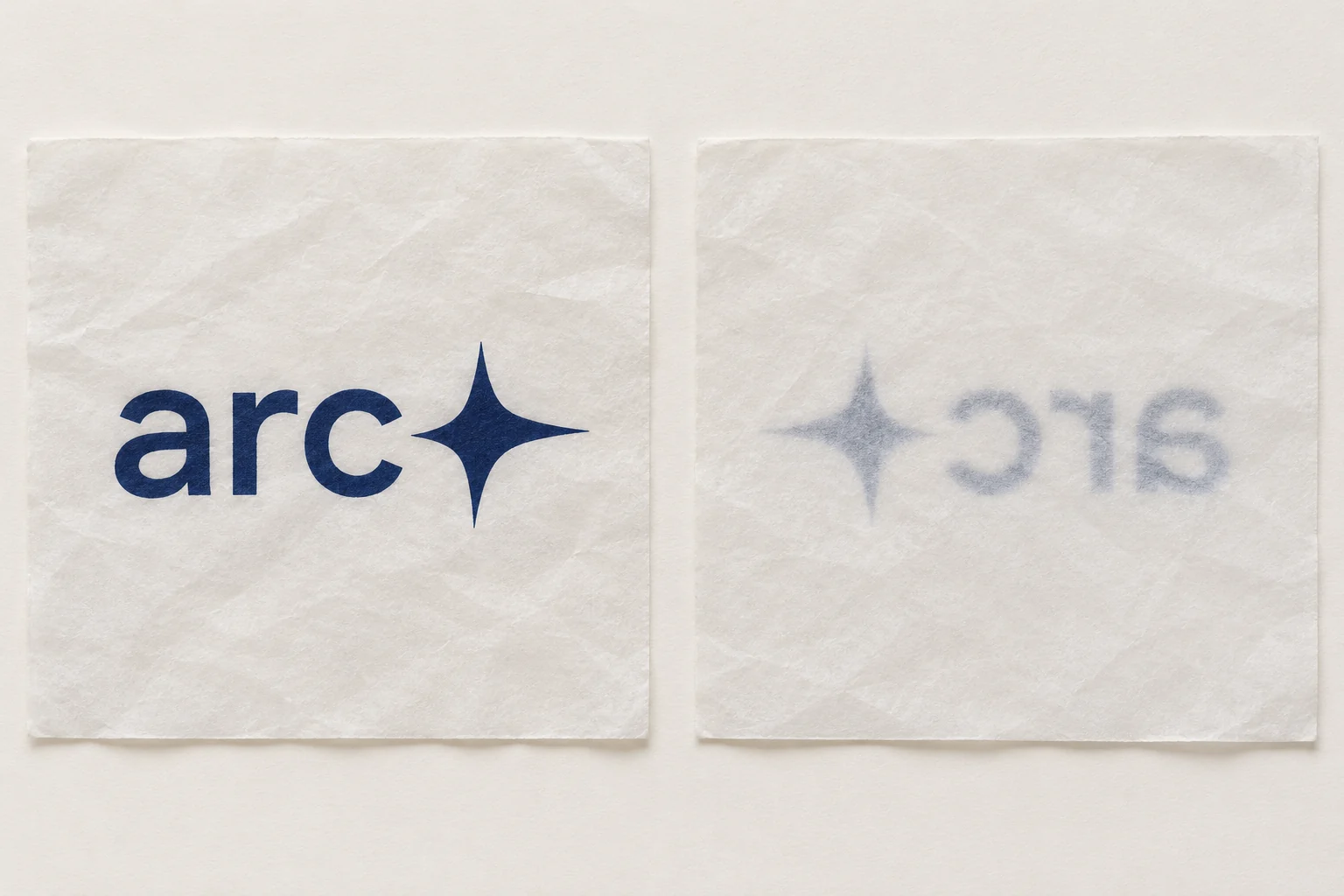
A visible reverse can be the image showing through a single-sided sheet rather than a separately printed second face, so name the actually printed face and check whether the reverse appearance is acceptable in the jewelry presentation before asking for the same artwork on both sides.
The noissue FAQ describes its one-sided tissue as showing a softer, reversed image through the unprinted face. That distinction matters when the design includes readable words. An abstract repeat and a wordmark give the buyer different reverse-face questions; neither appearance should be inferred from a flat digital proof.
CompanyBox’s tissue product also specifies one-sided printing. That is evidence of another offered print configuration, not evidence that its reverse looks like noissue’s sheet. Its published weight uses pounds; this article does not convert that number into gsm without the necessary basis information.
For a jewelry gift, decide which face is presented when the customer opens the box and which may appear as the tissue is lifted away. If readable branding is required at both moments, state that requirement explicitly. A reverse image does not establish a separately printed back.
How should two tissue offers be compared around the jewelry box?
Compare both tissue candidates in the same intended jewelry presentation, with the same box orientation and agreed visible face, so a change in paper or print remains distinguishable from a different arrangement; then record the printed face, reverse appearance and outstanding physical evidence beside each proposal.
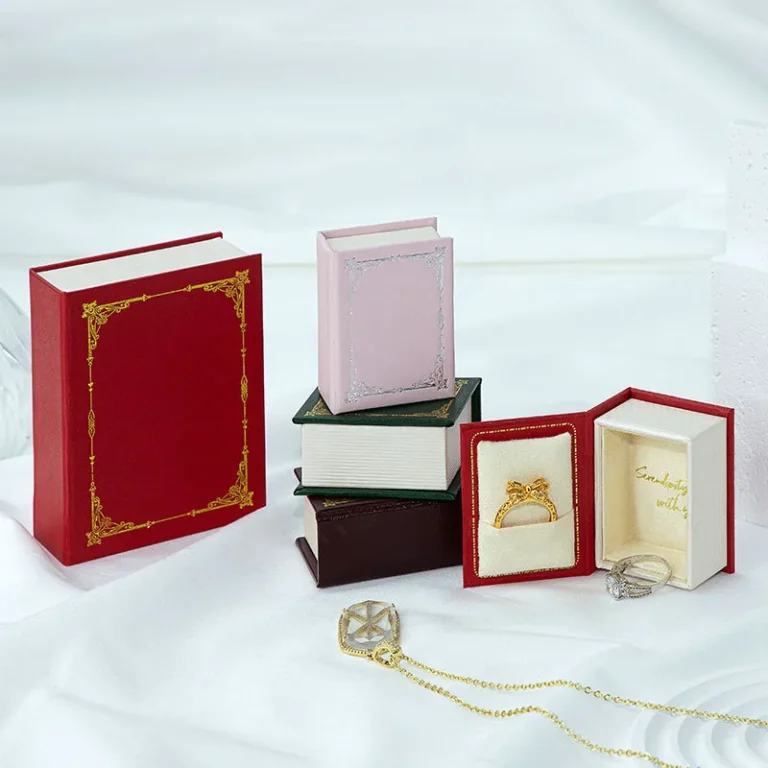
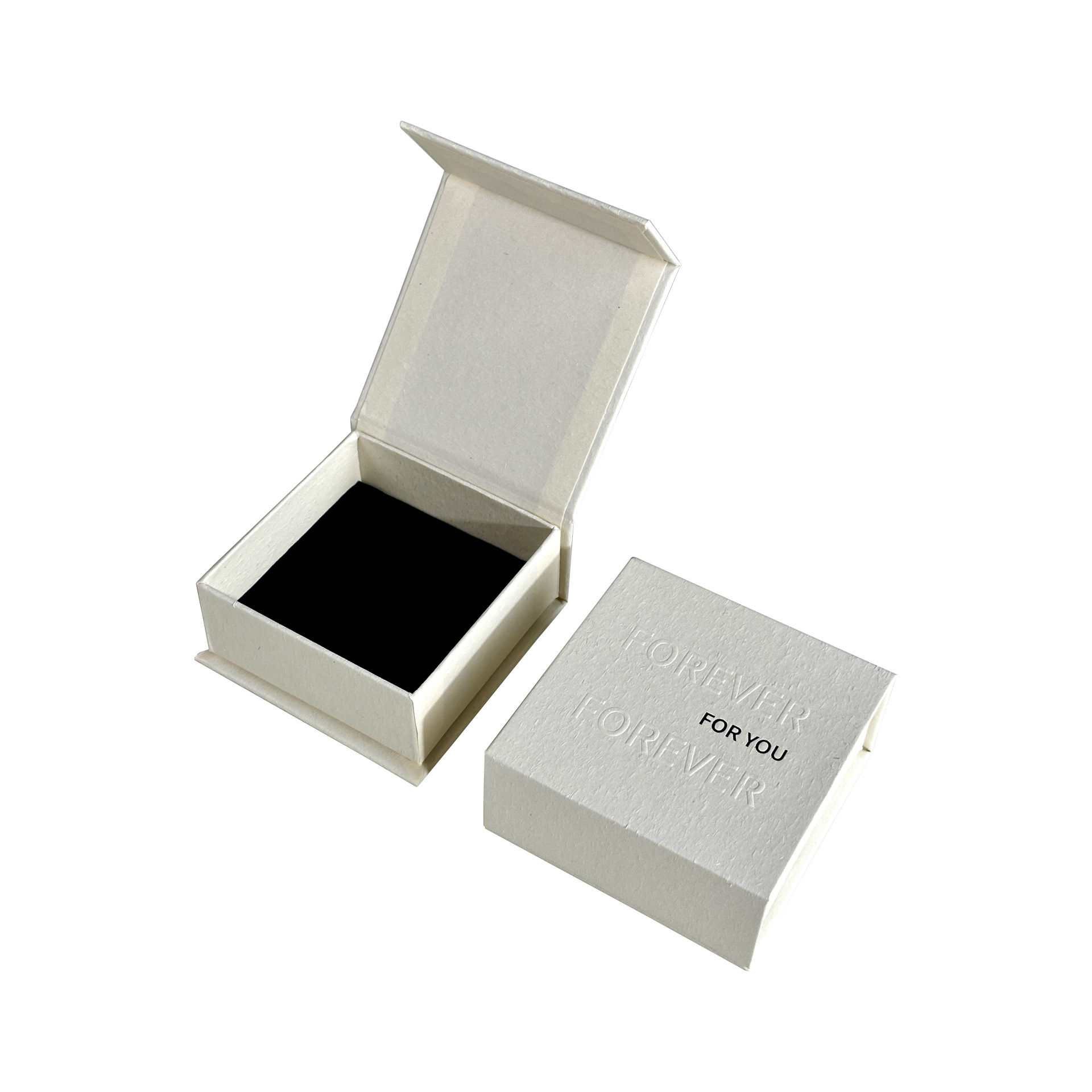
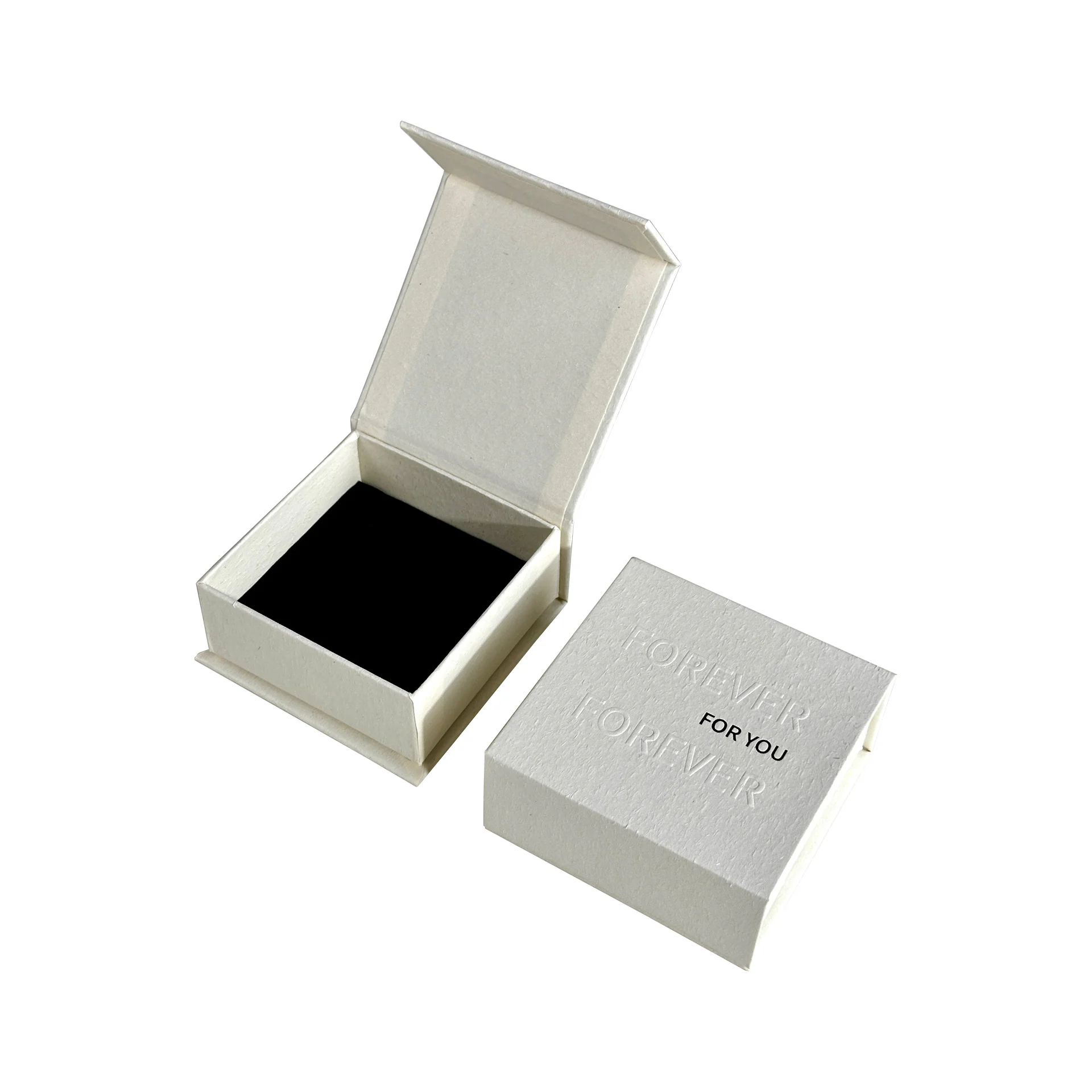
Use the actual outer dimensions of the selected jewelry gift box. If the tissue surrounds that box inside a bag, keep that role constant. A sheet used as an interior reveal layer is a different comparison from a sheet gathered above a shopping bag.
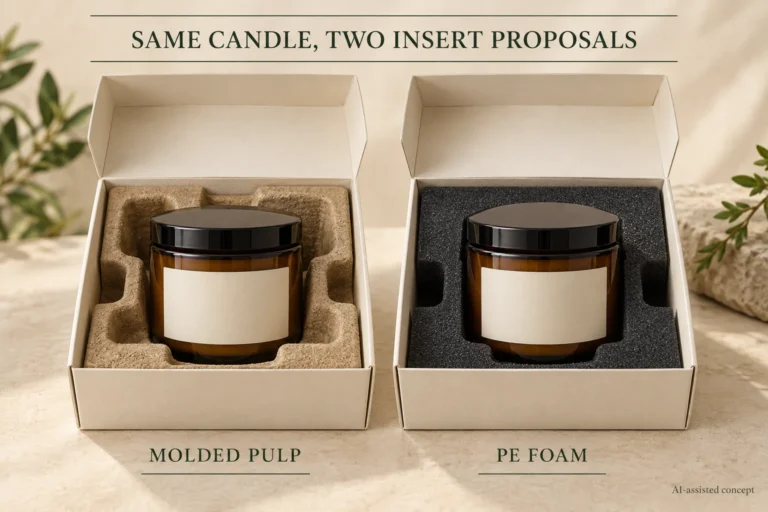
The supplier photo shows the box format. The two illustrations show the print decisions without simulating a particular stock or ink.
View the full-size supplier photo.
Consider an editorial example: a jewelry brand requests a sparse dark wordmark on white tissue and a solid dark background with a contrasting mark. No samples or quotations have been obtained. If the supplier assigns different stocks, the buyer now has two paper-and-print proposals, rather than two pictures on an identical sheet.
Keep the desired first view unchanged while examining them. Record whether words on the lifted reverse need to be readable or may appear reversed. Leave the result unresolved until a relevant physical example is available; a rendered mockup can communicate the preference but cannot establish show-through.
The tissue fold and print-position guide handles a separate issue: where a mark ends up after folding. Use that map after identifying the offered sheet and printed face, rather than treating a successful fold sketch as print approval.
Compare the sheet and print together. Bring both artwork directions and the same jewelry presentation to Packrivo’s packaging inquiry.
Which sample answers the remaining purchase question?
Choose the evidence around the unresolved difference: a general paper swatch can introduce a stock, a relevant printed example can show its print appearance, and the intended presentation can reveal which face the recipient sees, but none should silently stand in for the other two questions.
If the open issue is reverse visibility, ask for front and back views of the same identified printed sheet and retain any difference from the proposed stock or artwork. If the issue is how the sheet looks around the box, request that arrangement too. Keep a sample from another paper family identified as a reference.
Review contact separately. Tissue that looks appropriate around a closed box has not thereby been established as appropriate against a silver necklace or another sensitive surface. The silver-jewelry packaging review explains that materials and storage need their own evidence. Neither paper weight nor a one-sided print specification settles that question.
FAQ
Can a single-color design still need another paper?
Yes, within some offered ranges. A sparse repeat and a full background can have different coverage categories and stock requirements; use the actual product specification.
Is a reversed logo on the back a printing error?
Not necessarily. It may be show-through from the printed face. Compare it with the agreed print configuration before describing it as a separately printed reverse or a defect.
Does heavier tissue make the logo fully opaque?
A weight figure alone does not establish that result. Request relevant print evidence for the named paper and artwork rather than assigning an appearance from gsm.
Can a screen proof approve contact with the jewelry?
No. It communicates artwork. Direct-contact suitability remains a separate materials-and-use question for the actual jewelry and packaging.
Describe one complete tissue proposal
Send the sheet reference and artwork direction together to make the next sourcing discussion specific.
- Packrivo coordinates with independent suppliers.
- Reply within 6 hours.
- Dieline with every quote.
Discuss the jewelry packaging brief