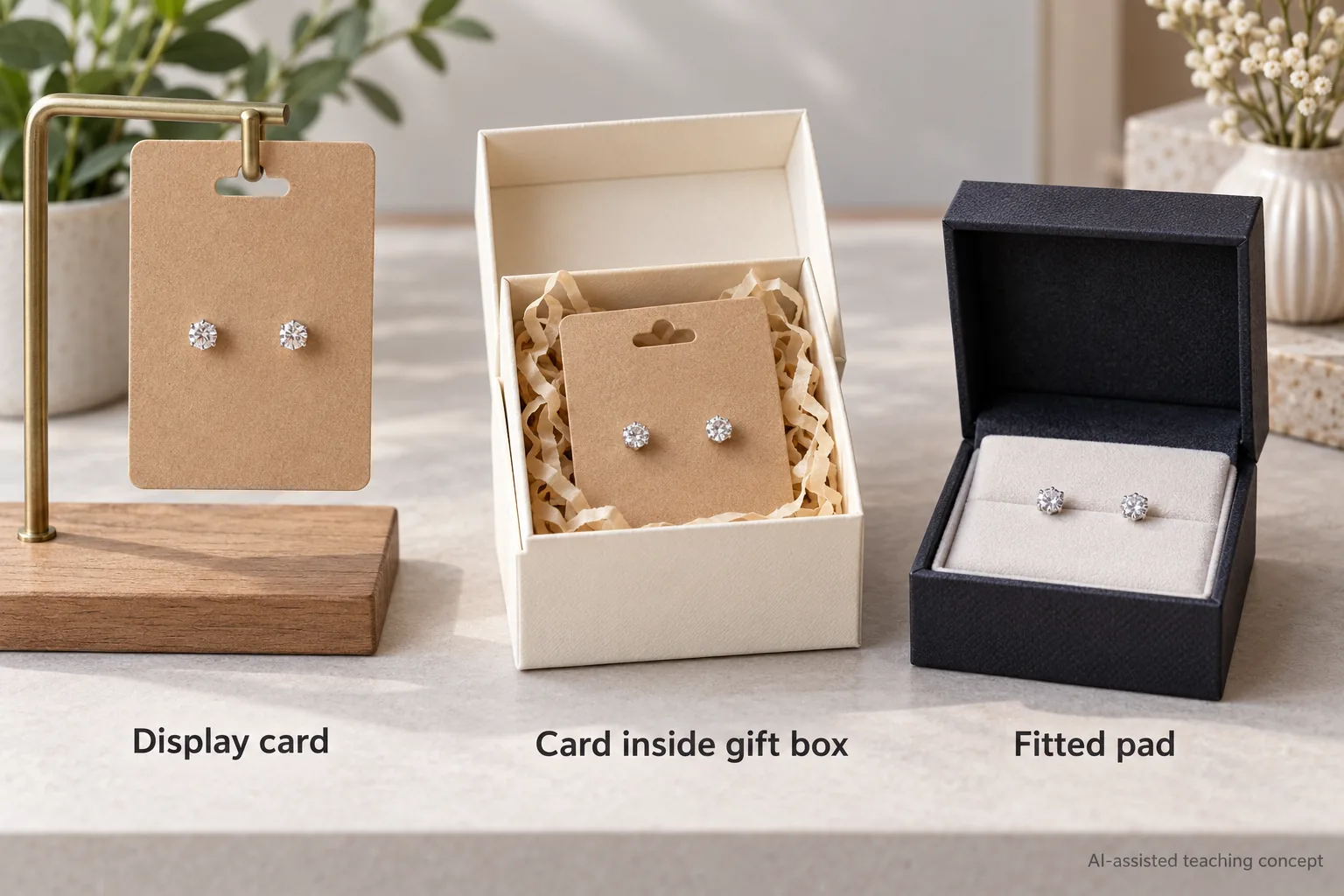
Buy earring packaging around the customer's next action. A display card is a candidate when the pair must remain visible on a retail fixture. A gift box is a candidate when presentation starts with opening a lid. Brands serving both settings should compare a card that transfers into a box with separate retail and gift configurations.
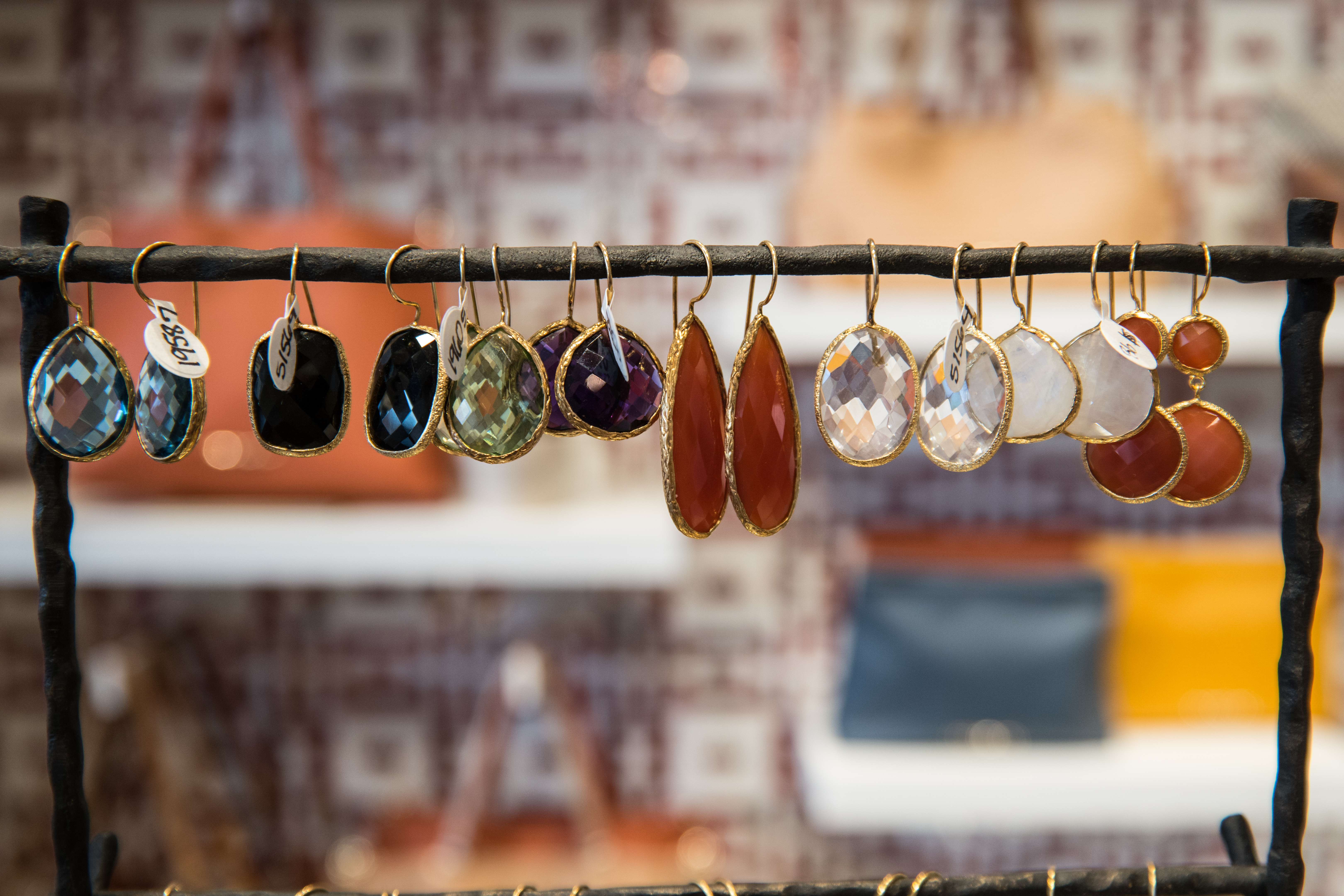
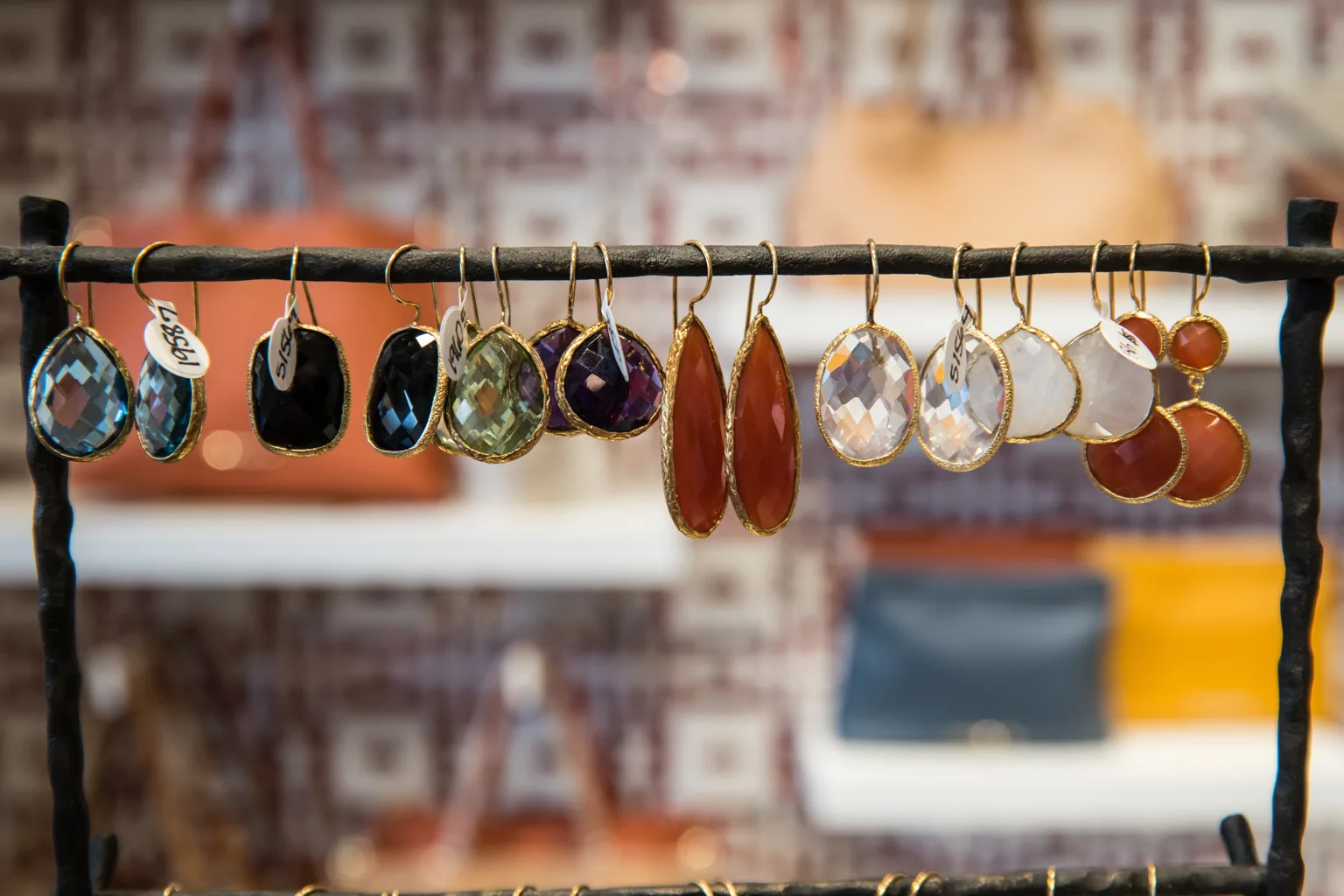
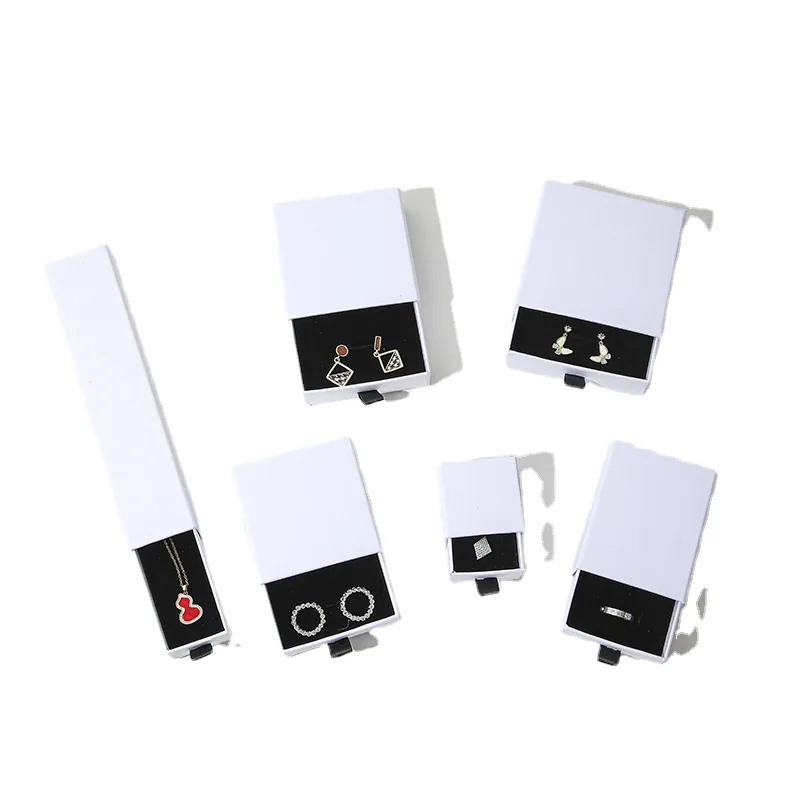
Retail-display reference photograph by Nan Palmero, CC BY 2.0, via Wikimedia Commons. Resized and WebP encoded; not Packrivo stock or a packaging approval.
Photo by Nan Palmero, CC BY2.0. Resized and WebP encoded. Full original reference photograph. Supplier and third-party photographs are references, not Packrivo samples; teaching concepts are visibly identified.
Those are different purchases, even when the earrings and printed logo stay the same. Begin with the sales setting, then choose the mounting arrangement and enclosure. This guide helps a small jewelry brand decide what to request before commissioning packaging artwork.
Start at the place where the pair is selected
A shop display asks the packaging to help someone identify and compare pairs. The buyer needs to know whether the retailer uses hooks, a tabletop stand or a tray. A card intended for one fixture should not be ordered for another on the strength of a front photograph. Ask the retailer for the actual display arrangement before making its hanging feature part of the design.
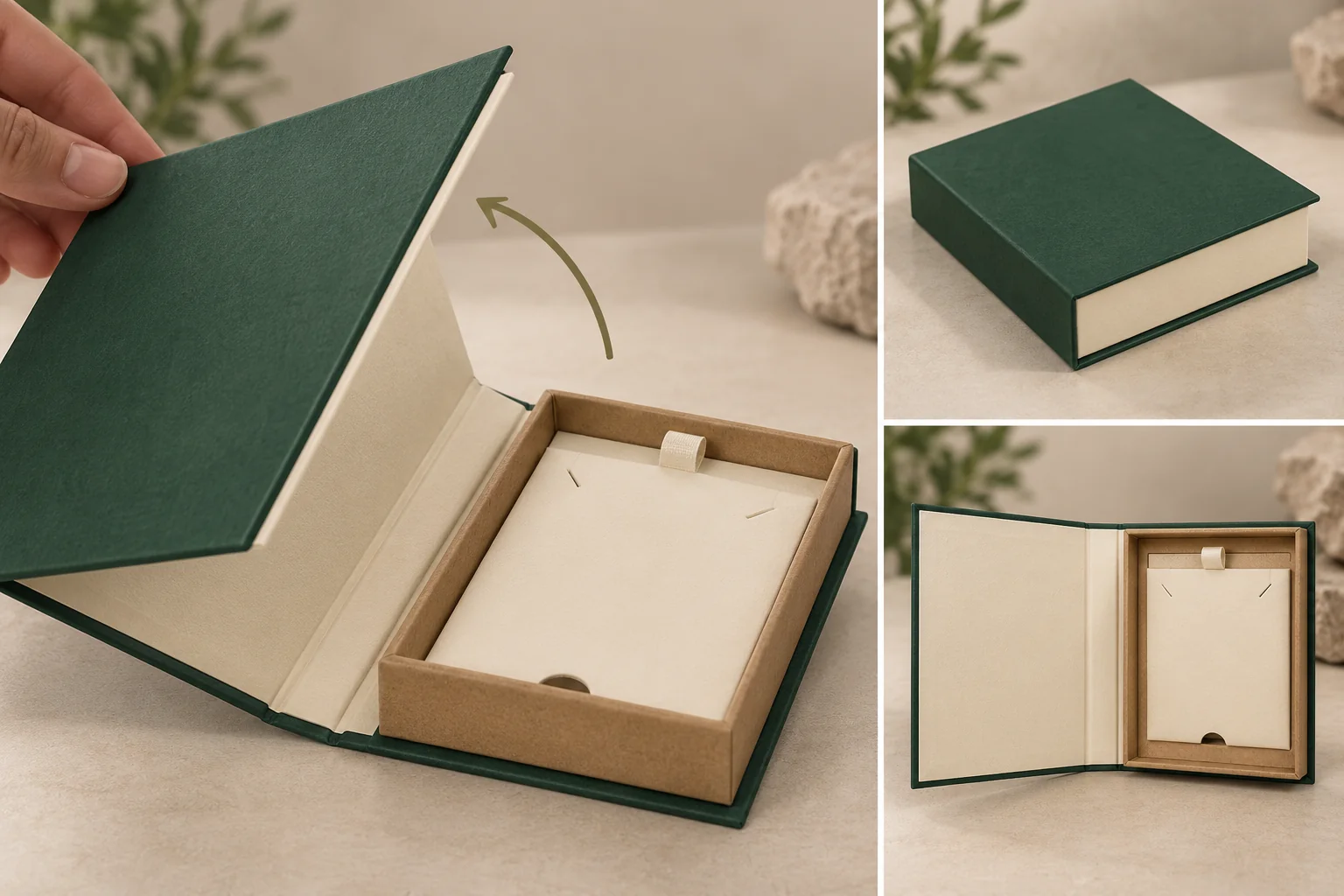
A gift order starts elsewhere. The customer may have chosen the pair online and now expects a complete presentation at handover. A box can be worth developing for that opening experience, but the box does not decide how the earrings attach. Its interior still needs an identified card or holder.
Keep delivery as a third question. A retail card and a presentation box describe display and gifting functions. Neither name establishes a suitable parcel configuration. If orders will be mailed, review the complete shipping package separately rather than silently treating a branded box as a tested mailer.
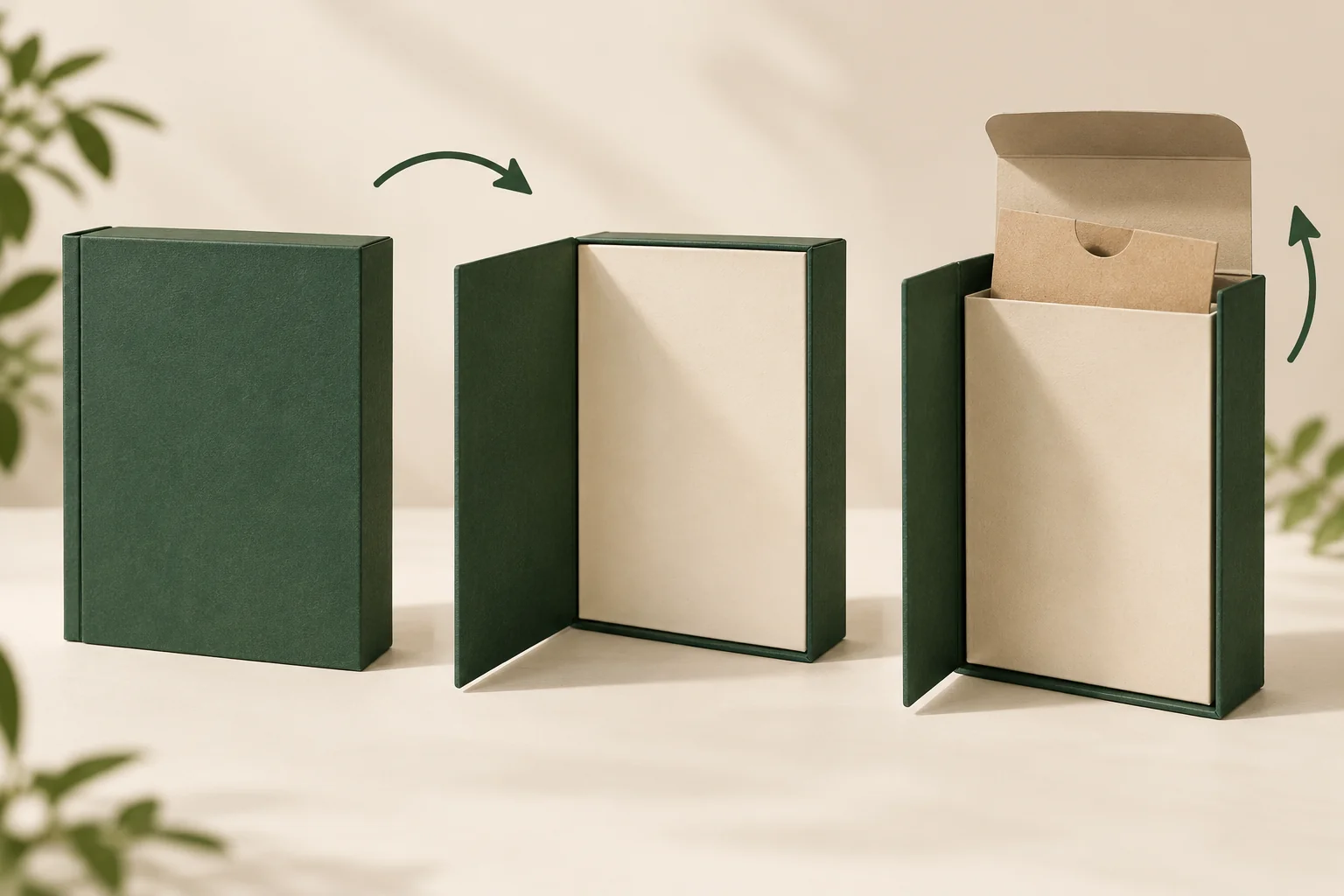
The jewelry box structure comparison addresses opening relationships. Select that structure after deciding whether the purchase is primarily a display item, a gift enclosure or a combination.
Compare the three purchases by their handoff
Use the following table to narrow the requested format. The conditions are planning questions, not universal rules about price or protection.
| Purchase route | Suitable starting condition | What the quotation must include | Decision still open |
|---|---|---|---|
| Display card without a gift box | The retailer wants the mounted pair visible on its fixture | Card shape, mounting features, actual display connection and printing | Whether the intended fixture and jewelry work with that card |
| Display card transferred into a box | One mounted pair should move from retail display to gift handover | The same identified card, its position in the box and the complete enclosure | Whether the card can be packed without changing or disturbing the mounting |
| Box with a dedicated interior | Gift presentation is primary and a retail hanging feature is unnecessary | Box, specified interior holder and required branding | Whether the pair can be loaded and removed as intended |
A transfer route is useful only if the complete mounted card remains suitable inside the chosen box. Otherwise it creates an extra repacking task. Conversely, a dedicated holder may suit gift orders without serving a shop hook. Neither route should be described as interchangeable until its actual configuration is checked.
For a shared mounted card, use a specific stop condition: the earrings must remain attached in their reviewed positions throughout the move from display to gift enclosure. If packing requires removing the backs, unhooking a hoop, repunching the card or taking the pair off and mounting it again, the proposed route is no longer a transfer of the original mounted unit. Record it as repacking and price the required work separately.
The existing retail hang-slot review handles the actual fixture. The broader ecommerce-versus-retail guide separates channel jobs. Here, preserve the accepted retail mounting as the starting condition and ask whether that exact mounted unit can enter a gift box without becoming a new jewelry-assembly task.
Buy the mounting arrangement along with the enclosure
Real suppliers separate these products. Grant Austin's medium hoop-earring card describes different holes for different earring attachments. NoblePack's hoop-earring insert is sold for coordinating boxes that are supplied separately. These examples show why “earring packaging” does not identify a complete purchase. They do not establish suitability for your pair or availability through Packrivo.
Send the actual attachment type, not just “small earrings.” Include a front and rear view with posts, backs, hooks or closed hoops in their intended state. For a transfer card, also show the card after the earrings are mounted. That is the item the gift enclosure must receive.
Use the earring-card post and backing check for that detailed physical review. Its questions are downstream of the format choice here: first decide whether the card remains part of the sale, then check the proposed card and box together.
Do not specify a material solely because it is advertised as soft or premium. Jewelry-surface compatibility, tarnish behavior and transit protection need their own product-specific evidence. A packaging photograph cannot settle those claims.
Follow one pair through two different orders
Consider a hypothetical brand selling the same hoop design through a boutique and through its own online gift orders. The boutique requests visible pairs on a specified stand. Online buyers select a boxed gift presentation. No real customer, order volume or approved sample is represented by this example.
The brand initially asks for a transferable card. Its proposal must show the card on the boutique stand and the same mounted pair inside the gift box. The retailer-facing front carries the product identity; the box provides the separate gift opening. The supplier is asked to identify whether the card needs an additional support inside that box.
Suppose the retail hanging feature protrudes above the proposed enclosure. The brand has a decision, not an instruction to trim every card. It can request a revised transferable design, choose a different enclosure, or retain separate retail and gift holders. Each option changes a different part of the purchase.
For this fictional brief, the buyer keeps separate holders as the comparison baseline and requests a transferable alternative. The reason is specific: the retail fixture is fixed, while the shared card's enclosed arrangement is unresolved. If a revised proposal demonstrates a workable transfer, that alternative can be reviewed without changing the boutique requirement.
The useful output is a route for each sales setting and one unresolved question. It is not a declaration that separate packaging is cheaper or that a shared card saves a known amount of packing time.
Ask for comparable component schedules
A box quotation can exclude its interior. A card quotation can exclude printing, mounting work or retail identification. Before comparing totals, ask each supplier to list what arrives and what your team still adds.
For the display route, identify the printed card and any separately supplied attachments or covering. For the gift route, identify the outer enclosure, card or dedicated holder, and any other component actually required by the proposed presentation. Do not add a pouch, ribbon or tissue merely because it appears in a styled image.
Keep the scope legible with three lines: supplied components, supplied assembly, and buyer work remaining. For example, a proposal may supply empty boxes and loose printed cards while leaving jewelry mounting to the brand. That is different from a proposal that includes a fitted empty interior. Neither description means the supplier will handle your jewelry.
State quantity by requested packaging configuration and ask how the supplier groups designs. A shared outer appearance does not automatically combine card artwork, holder configurations or order quantities. The multi-SKU fit matrix can organize the individual pairs after the sales-route choice has been made.
Send a brief that names the sales route
The brief should identify the earring pair, sales setting, required visibility and chosen route: display card, transferable card-and-box proposal, or dedicated gift interior. Add photographs, measurements of the actual mounted arrangement, requested quantity and destination. Name the retailer's fixture where relevant and separate confirmed requirements from preferences.
Ask for a sample scope that answers the remaining decision. A printed card proof checks copy and layout; it does not settle the mounted pair's position inside a finished box. Keep the proposed configuration available for a physical review, including loading, removal and closure. No candidate in this guide has been tested.
Before asking for a shared card-and-box proposal, write down the transfer condition: remove the already-mounted card from its identified display position, place it in the enclosure, and retrieve it without detaching or remounting the earrings. If the proposed action cannot preserve that unit, request a revised transferable design or an explicitly separate gift holder. That is the decision to carry into the earring packaging sourcing brief. Packrivo coordinates independent suppliers; format, samples and commercial terms need project confirmation.
Sources were checked on 29 October 2026. Supplier examples support only the product distinctions stated above. The sales-route method and worked example are editorial planning aids, not measured outcomes or quotations.