
Concept render
Local Gift Personalisation: Count the Complete Work
Plan local gift personalisation from printing through matching and retries. Use a hypothetical workload and record the actual route before setting a cutoff.
Read the article
Practical notes about formats, samples, materials, print and supplier-ready briefs for small jewelry, candle and gift brands.
Concept renders illustrate packaging decisions; they are not physical samples or completed customer projects.
Search by question or choose a topic.
Articles may appear in more than one topic.
118 articles · Showing 49–72 · Page 3 of 5
Concept render
Plan local gift personalisation from printing through matching and retries. Use a hypothetical workload and record the actual route before setting a cutoff.
Read the article
Concept render
Compare actual permitted production stages with repeated setup and validation work, separately from sample scope.
Read the article
Concept render
Separate spent, contractually committed and unauthorized future costs when a packaging project stops.
Read the article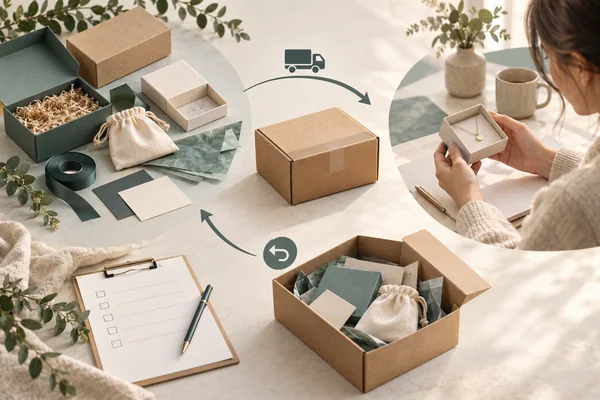
Concept render
Send products for packaging samples with identified specimens and agreed handovers. Record counting units, permitted review work and return questions.
Read the article
Concept render
Build a backup packaging supplier plan from usable stock, demand and time to approved supply. Keep qualification work and any uncovered demand visible.
Read the article
Concept render
Compare integrated and specialist procurement using the same finished gift and explicit merge-point work.
Read the article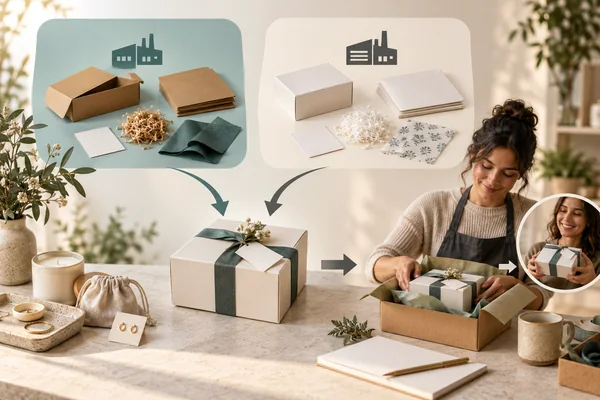
Concept render
Changing packaging suppliers starts with a controlled-feature comparison. Record materials, process proposals and the new evidence each accepted feature needs.
Read the article
Concept render
Reconcile source, usable, held and unresolved packaging quantities across a partial receipt and issue without deciding legal ownership.
Read the article
Concept render
Compare repeated setup savings with earlier stock, artwork-change exposure and the same total demand.
Read the article
Concept render
Reconcile channel reservations with physical box consumption using a linked issue example, without duplicating one shared stock pool.
Read the article
Concept render
Plan packaging component delivery dates against complete gift sets. Track usable arrivals and consumed stock without subtracting the same dispatch twice.
Read the article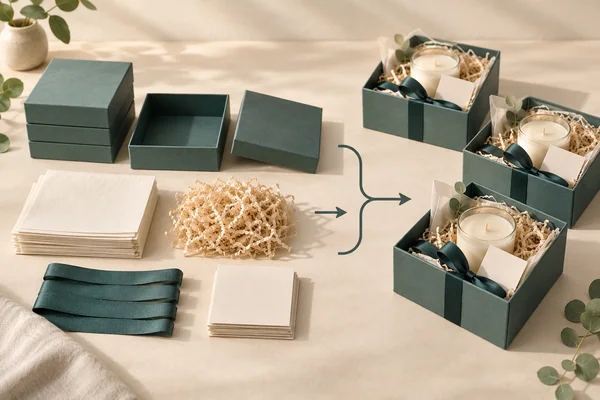
Concept render
Apply explicit component delivery ranges to complete-set requirements before planning available gift quantities.
Read the article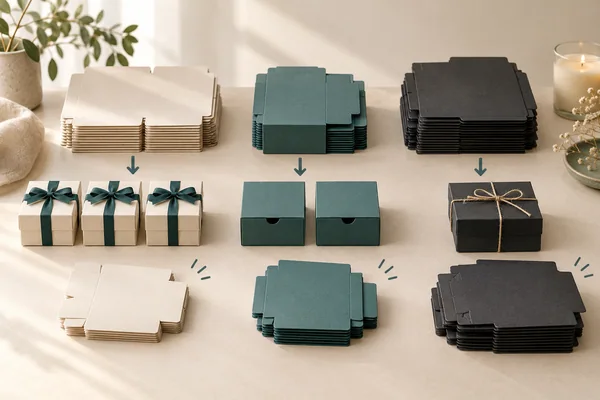
Concept render
Round component demand to each offered purchase multiple and keep the surplus separate by line.
Read the article
Concept render
Count complete gifts by variant when a common box uses non-interchangeable inserts.
Read the article
Concept render
Compare freight legs and central handling for the same final packaging quantities at each site.
Read the article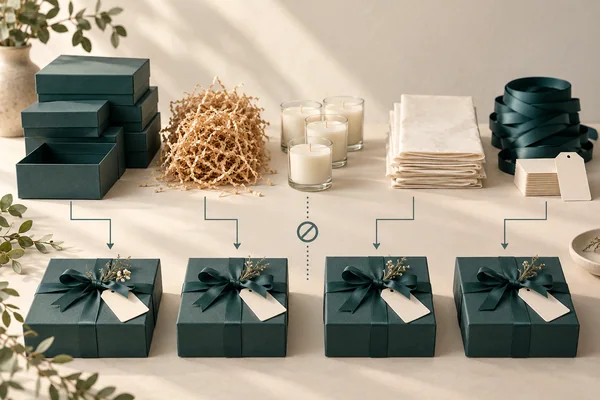
Concept render
Divide usable component stocks by per-gift requirements and use the smallest complete-set capacity.
Read the article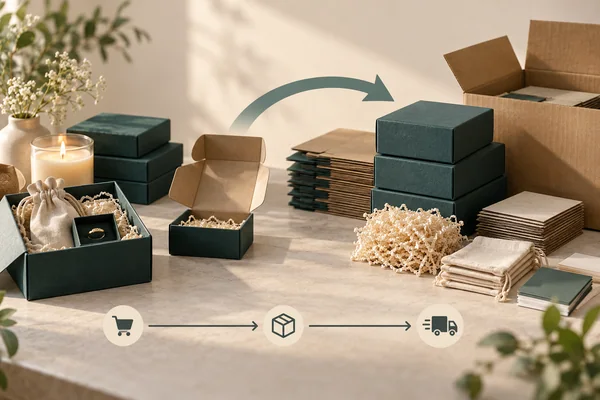
Concept render
Compare inventory position with replenishment demand and a named reserve before placing a packaging reorder.
Read the article
Concept render
Calculate gift-service contribution from actual selections and keep initial packaging purchases separate from consumption.
Read the article
Concept render
Compare redesign cost with supported recurring reductions over the packaging's remaining use horizon.
Read the article
Concept render
Compare staged receipts with storage needs, extra handoffs and actual supplier release terms.
Read the article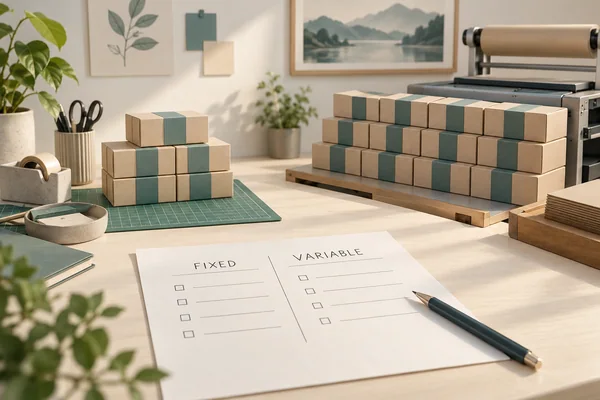
Concept render
Compare buyer-owned components with assembler-supplied material including transport, receiving and sorting work.
Read the article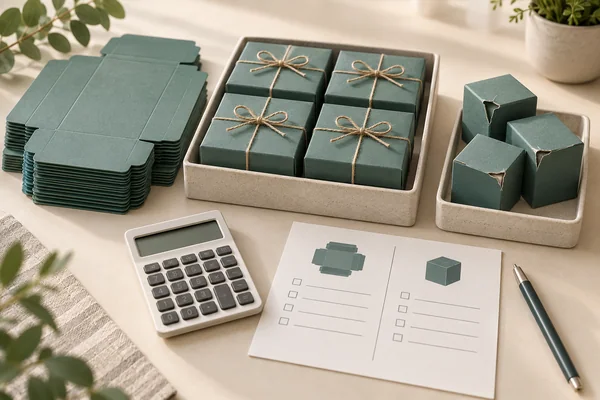
Concept render
Calculate cash per released packaging unit while keeping held stock and possible replacements separate.
Read the article
Concept render
Separate setup and variable print costs within actual offered price regions and technically comparable scope.
Read the article
Concept render
Compare sample fees and later credits using their actual design, quantity and timing conditions.
Read the articleStill working out the details? Prepare a brief first.