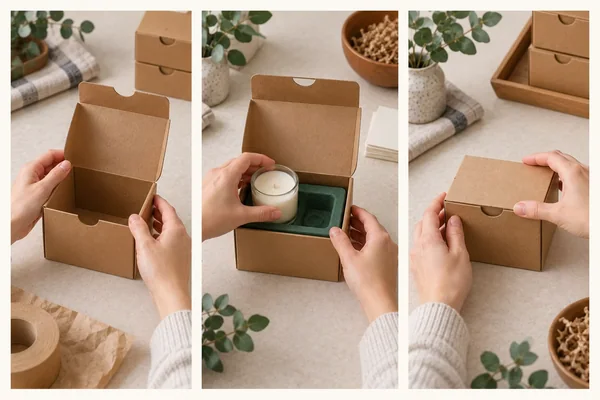
Concept render
Record a Packing Trial Without Promising a Universal Speed
Keep a hypothetical120-second gross trial and 30-second retrieval pause visible when defining a 90-second net interval or comparing another start state.
Read the article
Practical notes about formats, samples, materials, print and supplier-ready briefs for small jewelry, candle and gift brands.
Concept renders illustrate packaging decisions; they are not physical samples or completed customer projects.
Search by question or choose a topic.
Articles may appear in more than one topic.
343 articles · Showing 241–264 · Page 11 of 15
Concept render
Keep a hypothetical120-second gross trial and 30-second retrieval pause visible when defining a 90-second net interval or comparing another start state.
Read the article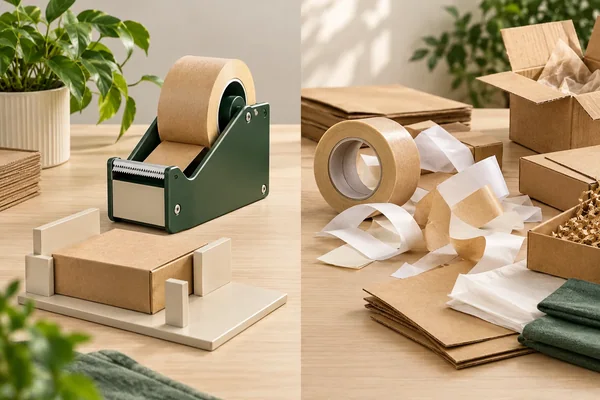
Concept render
Keep component demand, one-station equipment and tape consumption distinct, with an unknown-use branch and a separate hypothetical unit calculation.
Read the article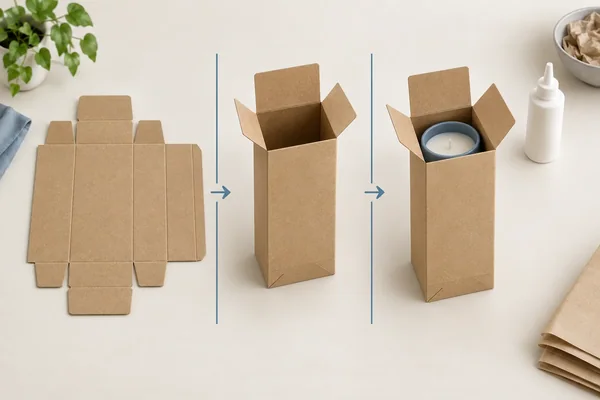
Concept render
Identify who loads and seals the carton and what equipment and consumables the packing location has.
Read the article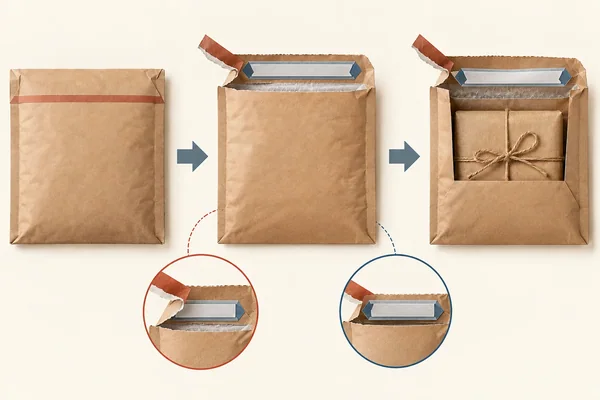
Concept render
Show first closure, customer opening and the remaining return-seal surface on the same proposed mailer.
Read the article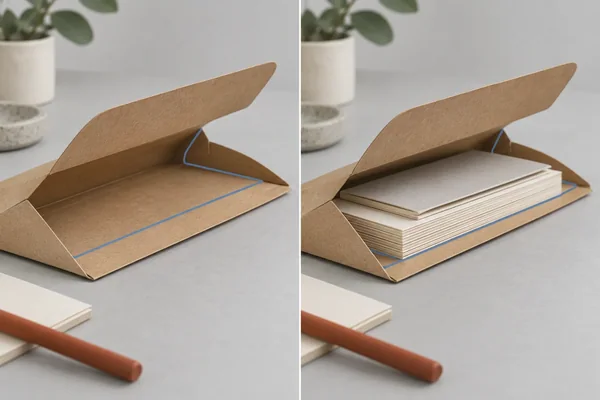
Concept render
Compare invented flap-length and path-demand inputs while keeping signed reach arithmetic separate from actual closure, sealing and opening evidence.
Read the article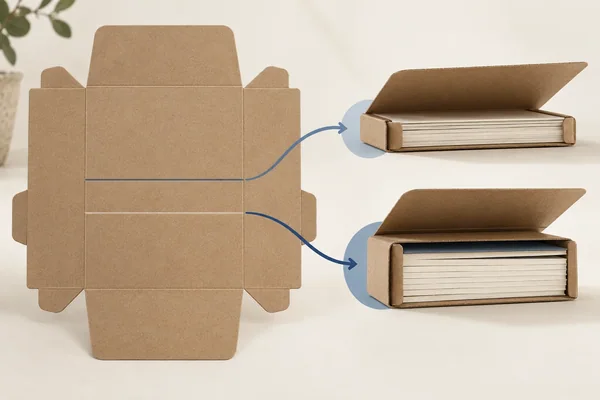
Concept render
Keep each fill linked to its own blank, fold-setting and instruction revision, and leave an added-card fill unmapped until confirmed.
Read the article
Concept render
Use a clearly hypothetical local section model to distinguish middle-span fit from a corner overlap and a proposed liner-joint change.
Read the article
Concept render
Link an end-A attachment revision to its new support candidate while retaining only the valid end-B reference and reopening the complete pair.
Read the article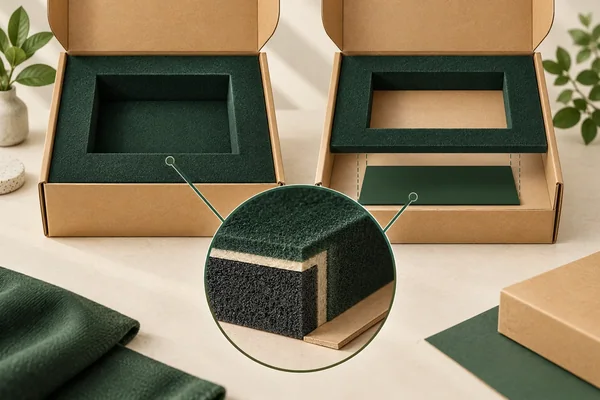
Concept render
Request a component section showing cuts, backing, adhesive, flocked faces and delivered assembly before sampling.
Read the article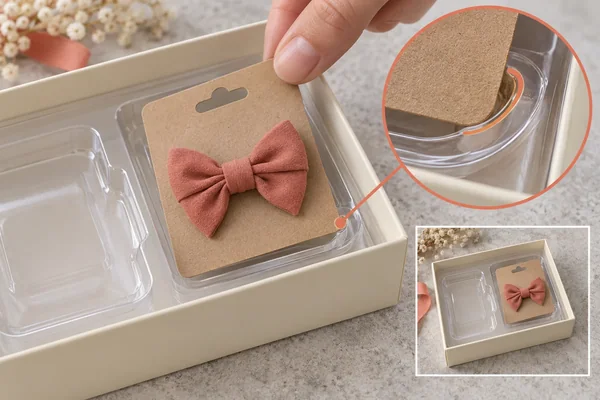
Concept render
Compare material-only and edge-geometry proposals at the same E3/CC1 removal interface while leaving actual edge condition and judgement open.
Read the article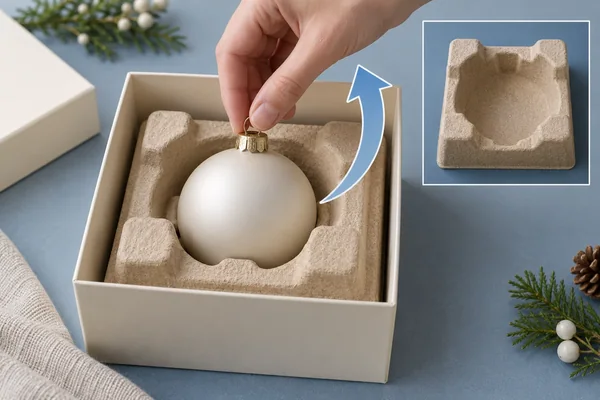
Concept render
Separate product release inside the box from a proposed loaded-holder-first sequence, retaining the extra grip, support and exit questions.
Read the article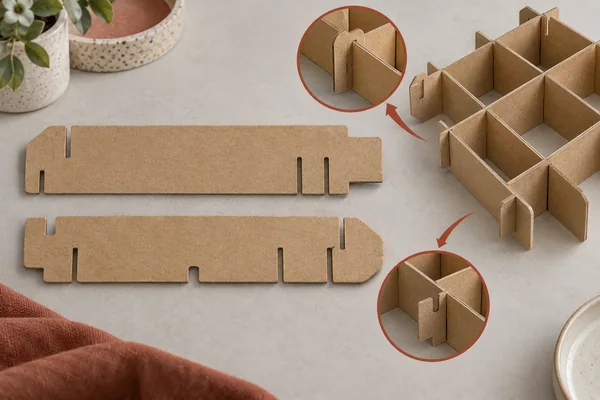
Concept render
Map handed and proposed common divider parts to both installed positions so one shared ID is not mistaken for one strip per assembly.
Read the article
Concept render
Separate relocating a removal tab from moving the product first, with initial reach, connection, supported travel and end state reviewed independently.
Read the article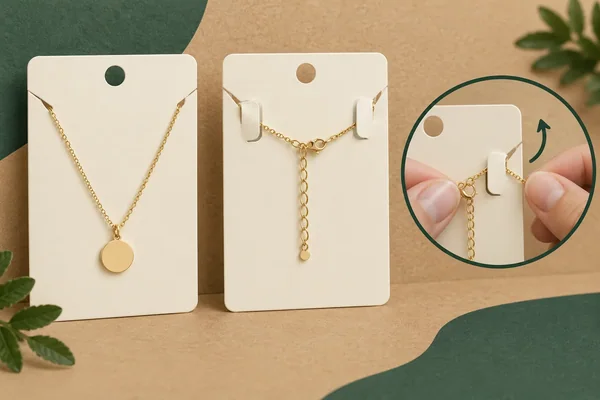
Concept render
Link jewelry, clasp and instruction revisions to matched front and back states, even when the visible front appearance remains unchanged.
Read the article
Concept render
Compare a moved tissue mark with a changed fold order using fixed edge, print-side and product references and separate visibility evidence.
Read the article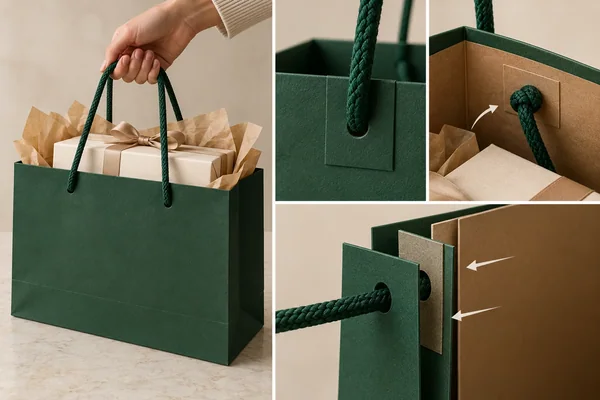
Concept render
Keep visible handle and hidden joint revisions linked so evidence for two mixed combinations cannot approve an unreviewed fourth construction.
Read the article
Concept render
Compare complete-gift entry with a proposed decorate-inside sequence while retaining the same final box and bow and a separate customer exit review.
Read the article
Concept render
Compare bag, gable and tote proposals with fixed gift contents, and identify a bow omission as a new packout rather than equivalent evidence.
Read the article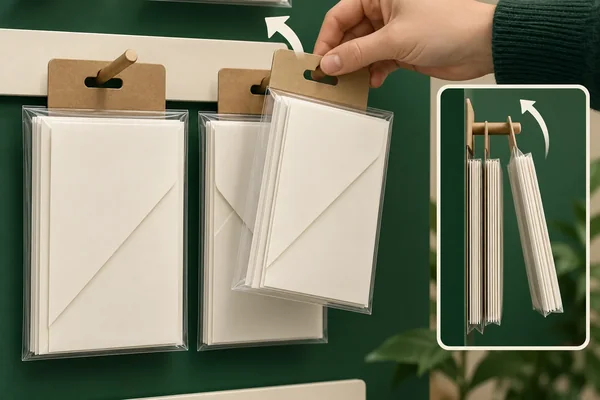
Concept render
Keep neighbour presence and lift, travel and exit pairs explicit when comparing spacing revisions with a cleared-stock workaround.
Read the article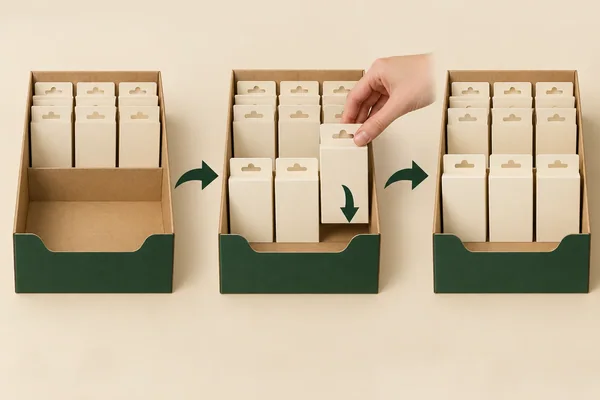
Concept render
Map old and new stock to final display positions so a full reset photo cannot hide advancing work or a changed refill route.
Read the article
Concept render
Compare display front-wall proposals across full, half and last-unit layouts while keeping staff repositioning separate from a profile change.
Read the article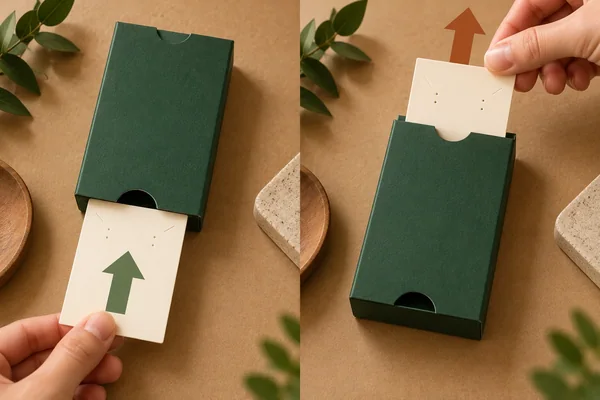
Concept render
Keep packer and customer ends distinct, including shared-end proposals, and check whether an opening message is visible before the action it explains.
Read the article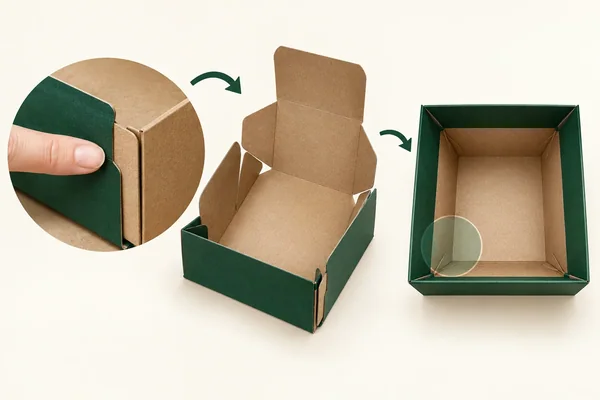
Concept render
Separate delivered joint identity, final empty position and loading authorization while distinguishing instruction clarification from a changed bottom construction.
Read the article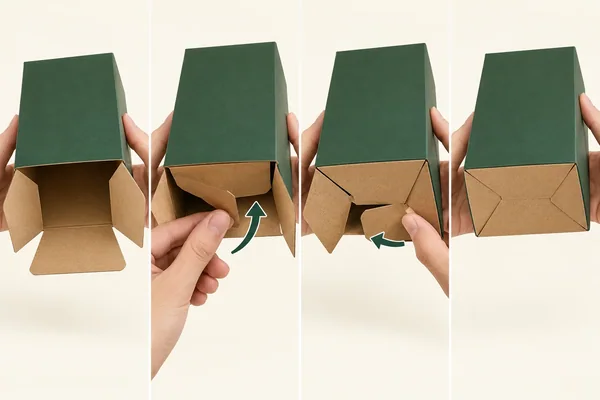
Concept render
Keep an unclear bottom-tab frame tied to the confirmed carton sequence, distinguishing a required added action from an unapproved workaround.
Read the articleStill working out the details? Prepare a brief first.