Concept render
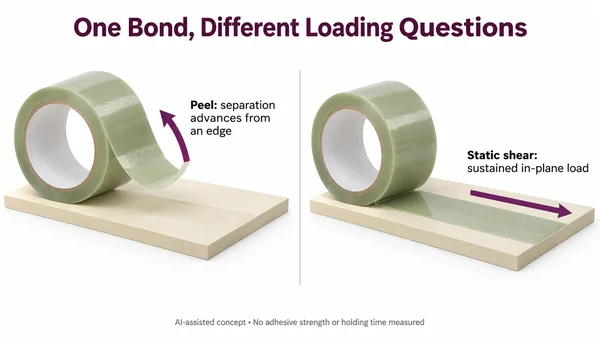
Peel Adhesion or Static Shear for Packaging Tape
Match tape evidence to peeling or sustained in-plane loading on the actual sleeve joint.
Read the article
Practical notes about formats, samples, materials, print and supplier-ready briefs for small jewelry, candle and gift brands.
Concept renders illustrate packaging decisions; they are not physical samples or completed customer projects.
Search by question or choose a topic.
Articles may appear in more than one topic.
95 articles · Showing 25–48 · Page 2 of 4
Concept render
Match tape evidence to peeling or sustained in-plane loading on the actual sleeve joint.
Read the article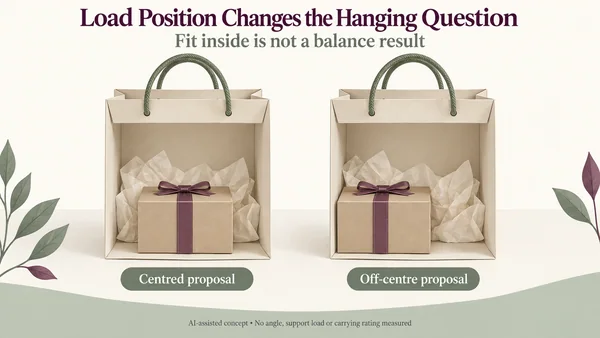
Concept render
Distinguish fit, static balance and carrying strength when the gift is placed off-centre in a bag.
Read the article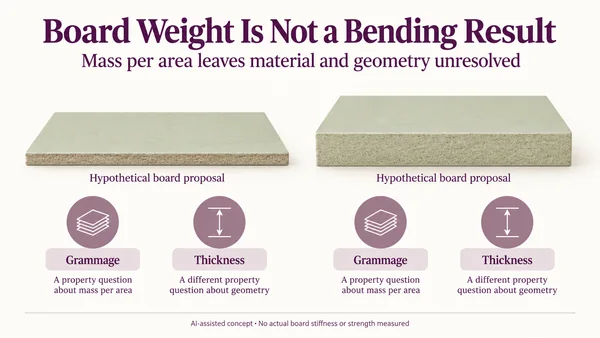
Concept render
Compare thickness, material direction and support as well as grammage when selecting a bending-resistant panel.
Read the article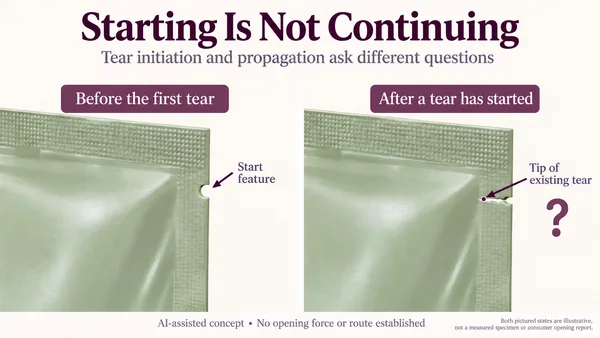
Concept render
Compare hypothetical initiation and propagation evidence in MD with a proposed TD propagation question, keeping all actual film performance unknown.
Read the article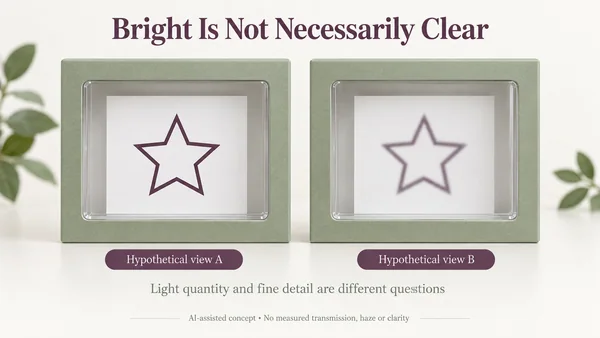
Concept render
Define silhouette, colour or fine-detail visibility before treating window transmittance as a complete viewing score.
Read the article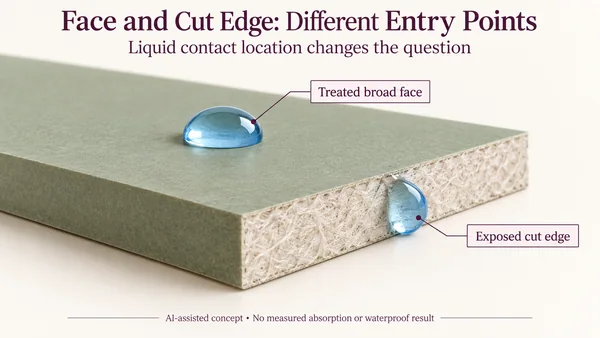
Concept render
Locate plausible liquid contact on faces and cut edges before extending a face-absorption result to the sleeve.
Read the article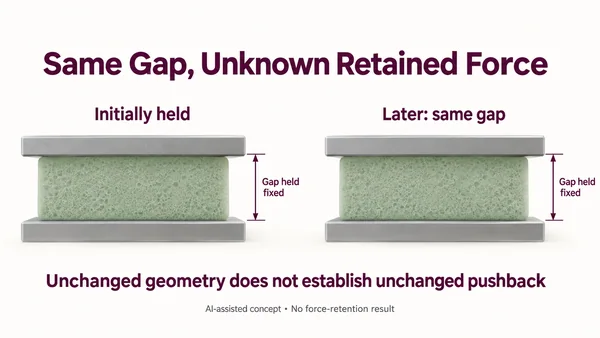
Concept render
Calculate hypothetical held-force retention separately from unloaded residual height loss, without inferring foam lifetime or jewellery retention.
Read the article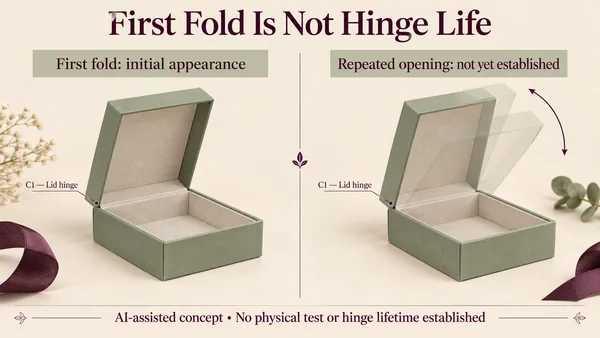
Concept render
Review the finished hinge and actual opening route rather than converting a clean first fold into a life claim.
Read the article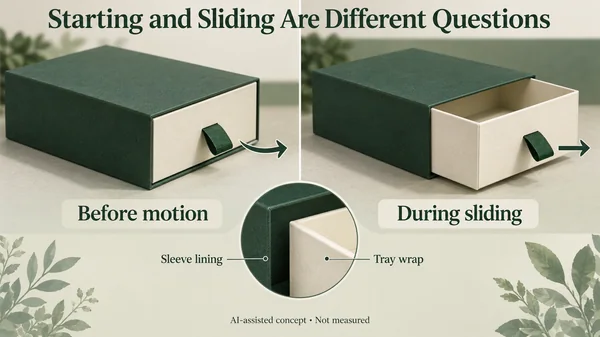
Concept render
Distinguish the first pull from resistance later in travel when investigating a sliding gift box.
Read the article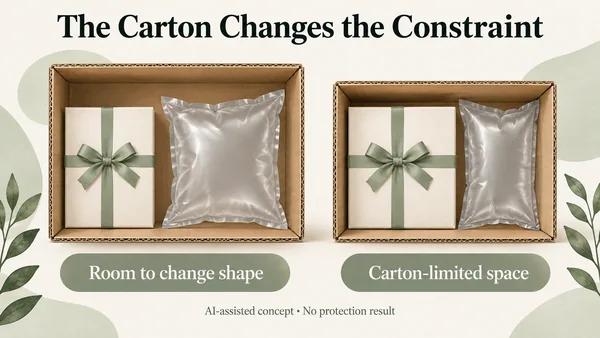
Concept render
Use a rigid ideal-gas example to distinguish a 10% absolute-pressure increase from a larger pressure-difference change without predicting a real air pillow.
Read the article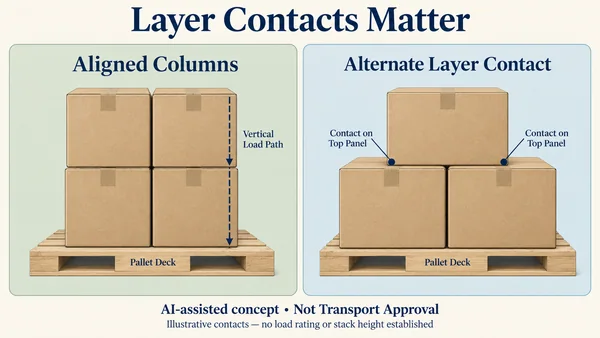
Concept render
Compare carton contacts, pallet deck and restraints rather than maximizing cartons per layer alone.
Read the article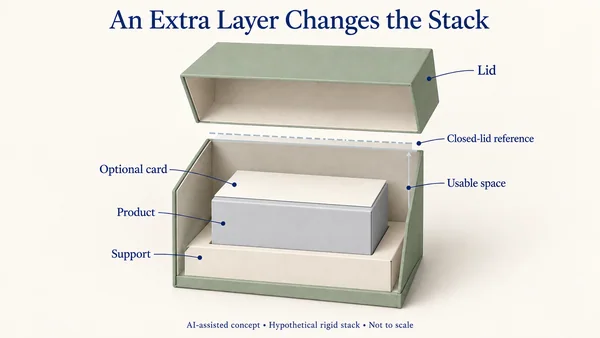
Concept render
Calculate minimum and maximum assembled lid clearance rather than relying only on nominal component dimensions.
Read the article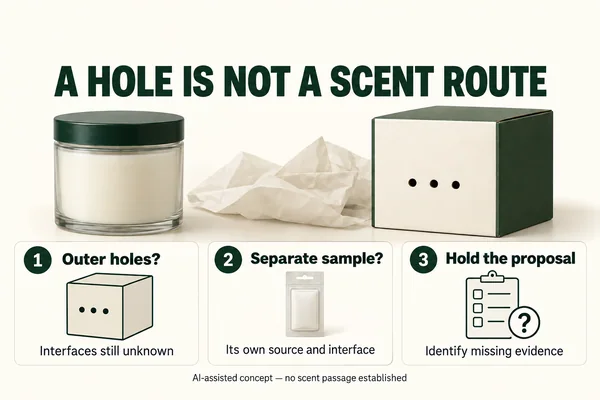
Concept render
Compare the closed-pack scent route, a separate sampler and holding sampling before specifying box holes.
Read the article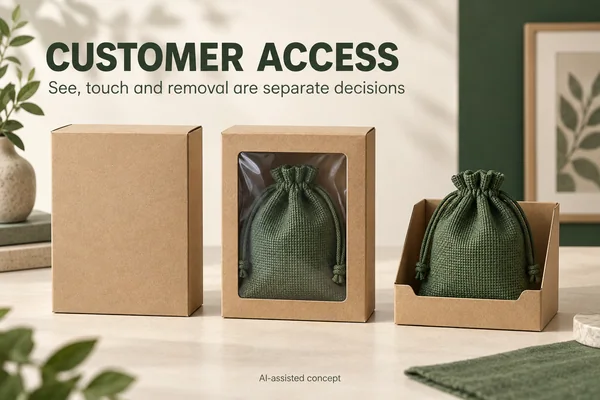
Concept render
Define permitted shopper actions before choosing an opaque carton, film window or open display.
Read the article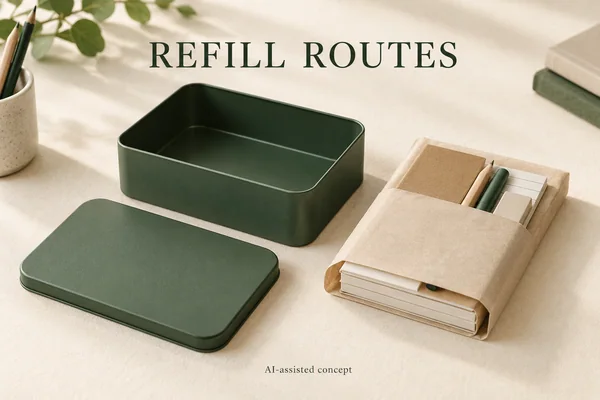
Concept render
Compare a hypothetical refill product against container identity, market availability and customer instructions before transferring refillable wording.
Read the article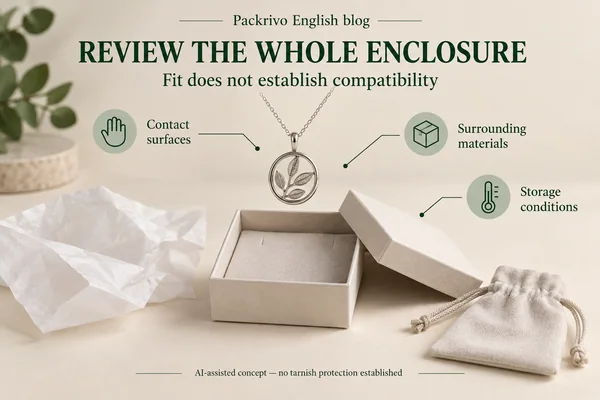
Concept render
List the metal finish, contact materials and storage conditions before asking what evidence supports the complete enclosure.
Read the article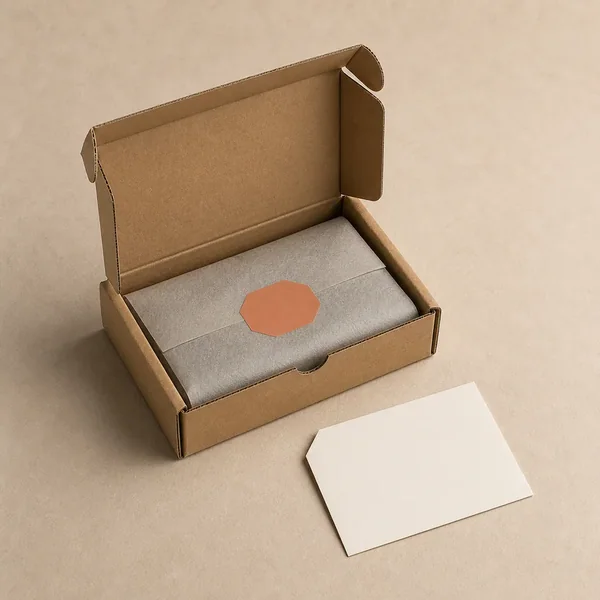
Concept render
Choose shipping box sizes for a small business from recurring order combinations. Compare stock-line costs and retain a defined route for unusual orders.
Read the article
Concept render
Plan seasonal packaging sleeves around one unchanged gift box. Separate base stock, artwork quantities and leftover sleeves with a worksheet.
Read the article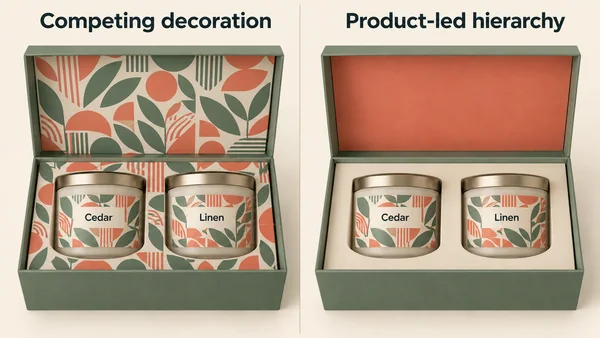
Concept render
Identify the leading surface and product arrangement, then bring one clear exterior and interior intention to the brief.
Read the article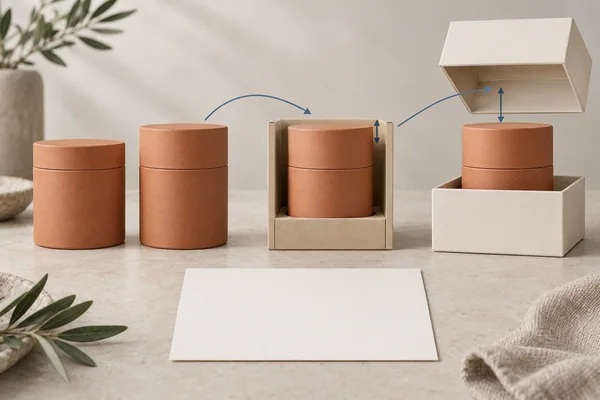
Concept render
Link a hypothetical higher cap to holder display and loaded-lid review while keeping unchanged artwork and unknown mass outside unsupported conclusions.
Read the article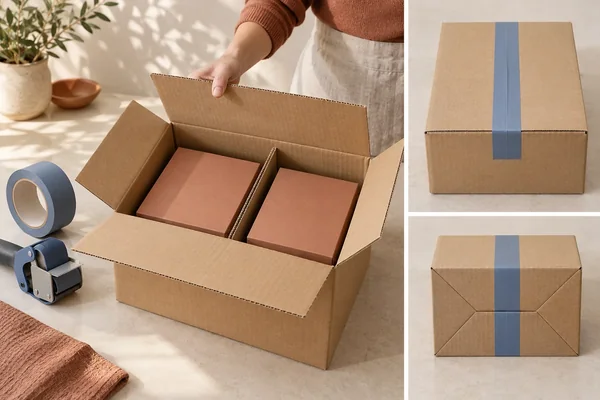
Concept render
Separate bottom forming/sealing, contents loading and top sealing across two fictional offer scopes so supplied rolls cannot stand in for included work.
Read the article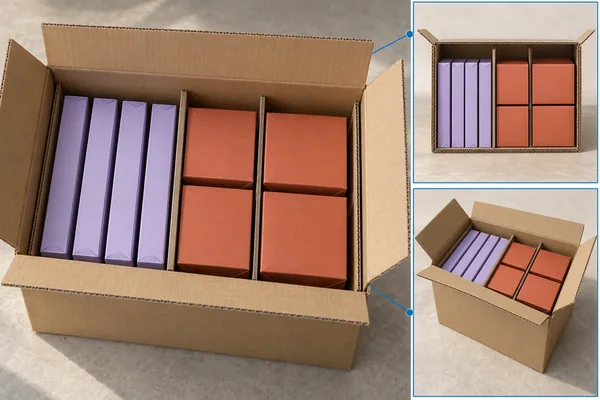
Concept render
Track one rotated retail unit against fixed carton walls, preserving the other positions and separating loading preference from transit performance.
Read the article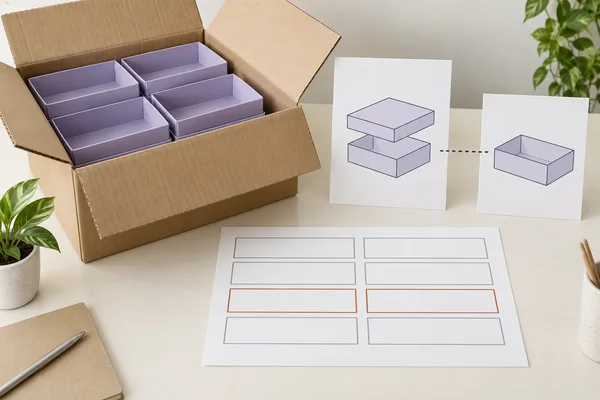
Concept render
Separate quantity, unit and version mismatches so a correct printed total cannot hide bases described as sets or an earlier packed revision.
Read the article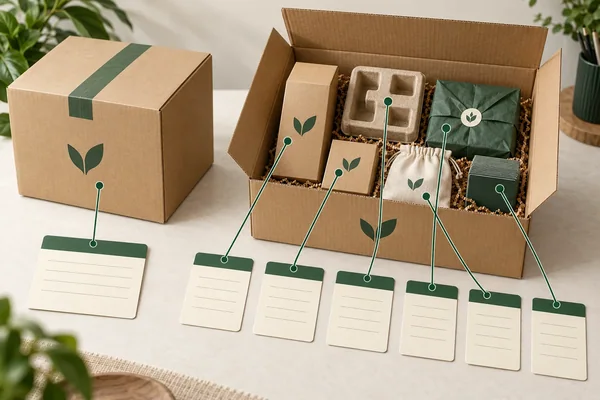
Concept render
Map fictional component quantities to individual cartons, preserving two insert revisions in CT2 instead of replacing packed history with a later file.
Read the articleStill working out the details? Prepare a brief first.